Clear Sky Science · en
A chromosome-scale genome assembly of the striped fruit fly Zeugodacus scutellatus (Diptera: Tephritidae)
Why a tiny fly matters to our food
The striped fruit fly may be no bigger than a sesame seed, but it can devastate fields of pumpkins, squash, and other gourds, wiping out more than half a harvest during severe outbreaks. This study delivers a detailed genetic blueprint of this insect, giving researchers and farmers new tools to understand how it spreads, adapts, and resists control measures. In the long run, such knowledge could lead to smarter, more targeted ways to protect crops while reducing reliance on broad-spectrum pesticides. 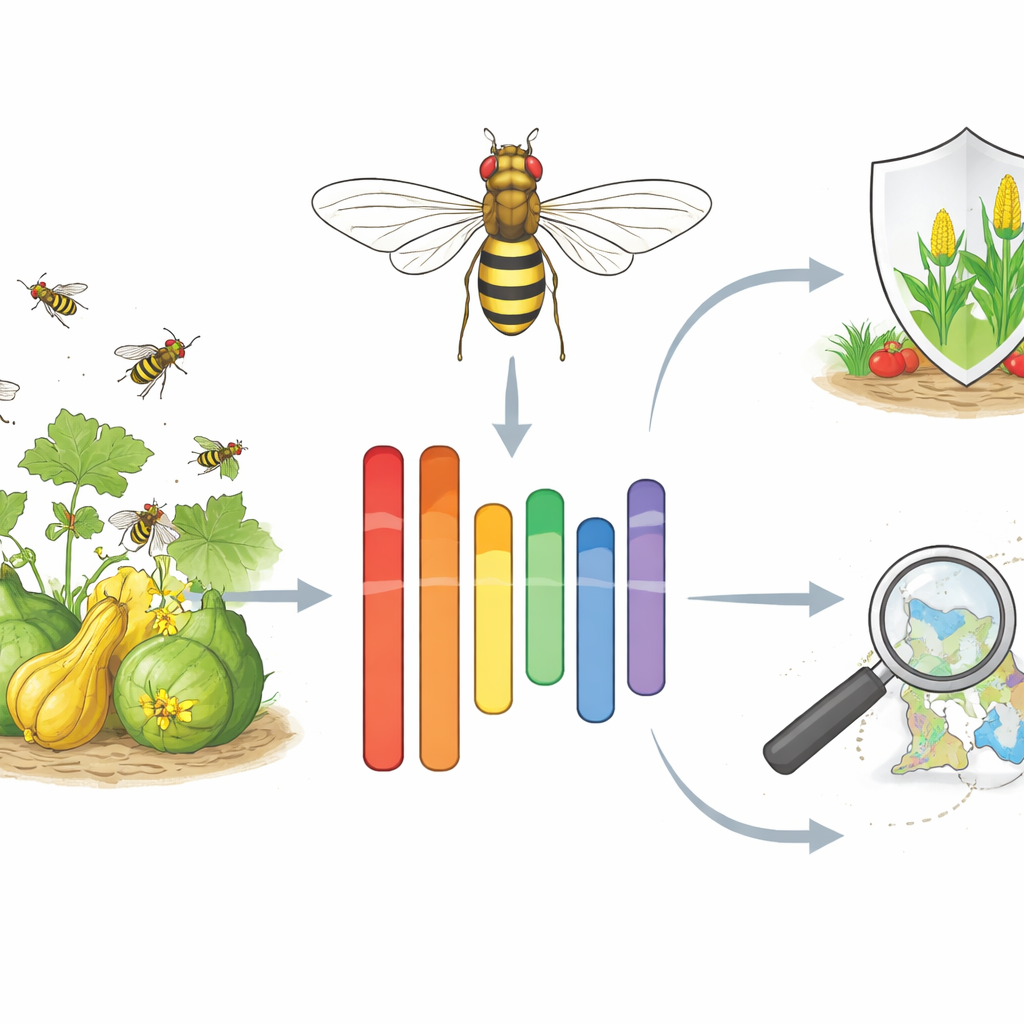
Meet the striped fruit fly pest
The striped fruit fly, Zeugodacus scutellatus, is a major pest of cucurbit crops like pumpkins, luffa, and cucumbers across many Asian countries. Adults survive the winter hidden under leaf litter, and their numbers peak twice a year, aligning with vulnerable stages of crop growth. The larvae tunnel through flowers and other plant tissues, causing heavy yield losses and making produce unmarketable. Beyond damaging farms, the insect is a quarantine concern: its ability to move into new regions makes it important to track and manage before infestations take hold.
Building a genetic roadmap
Until now, scientists lacked a complete, high-quality reference genome for this species, limiting efforts to study its biology in depth. The authors tackled this by combining several cutting-edge DNA sequencing methods. They used short, highly accurate DNA fragments, long continuous reads that help span difficult regions, and a technique called Hi-C that captures how DNA folds and interacts inside the cell nucleus. By merging these data, they assembled the fly’s DNA into six large chromosome-scale pieces with very few gaps and verified that nearly all expected insect genes are present.
What the genome reveals
Once the genome was pieced together, the team cataloged its major components. They found that roughly one-third of the DNA is made up of repeated elements, including many mobile genetic pieces that can copy and paste themselves around the genome. They predicted more than 13,000 protein-coding genes and confirmed their structures using RNA from adult flies, ensuring that the gene models match molecules the fly actually produces. The researchers also identified thousands of non-coding RNA genes, which help control how and when other genes are turned on. Together, these features form a rich reference for exploring how the insect senses host plants, detoxifies chemicals, develops, and reproduces. 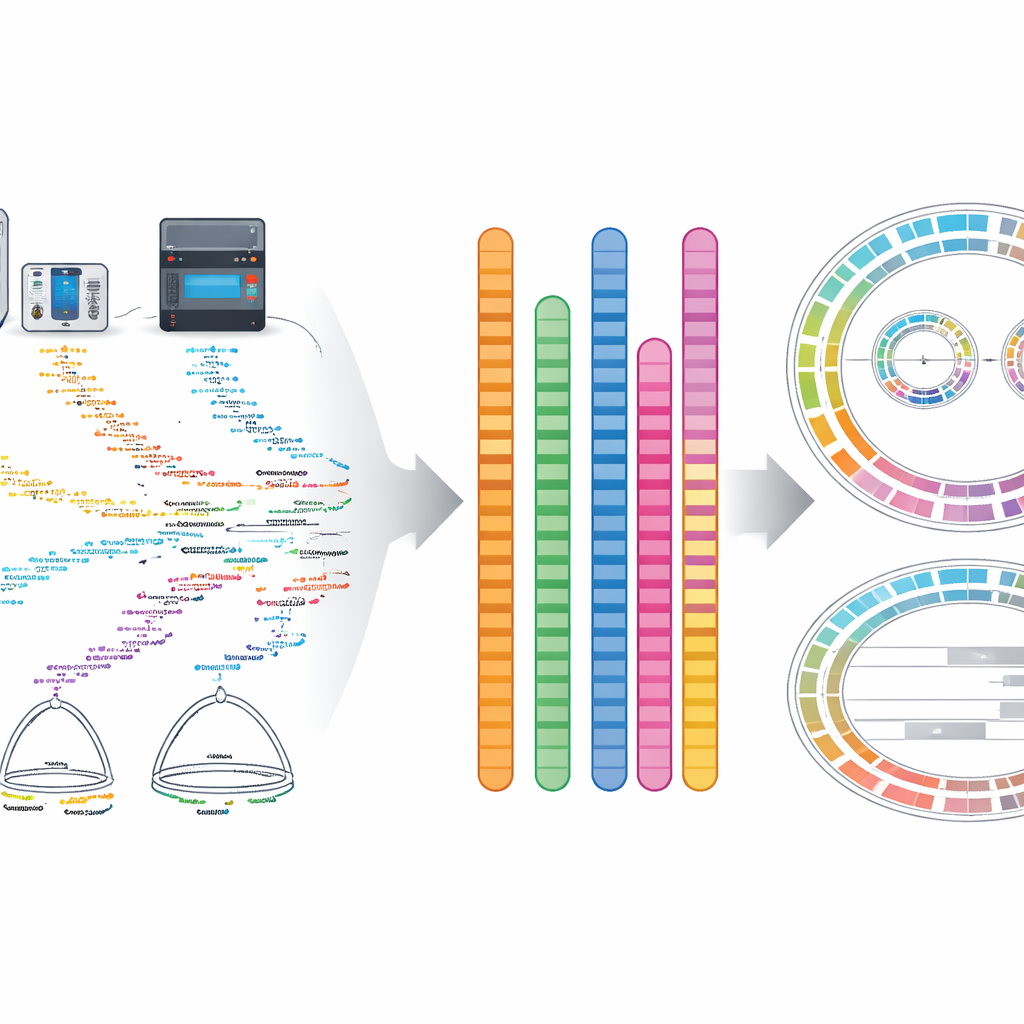
Placing the fly in the insect family tree
To understand how the striped fruit fly compares with its close relatives, the scientists aligned its chromosomes with those of another well-studied fruit fly pest, Zeugodacus cucurbitae. Long stretches of DNA matched in order and content, showing that much of the chromosome structure has been conserved through evolution. One of the assembled chromosomes closely mirrors the X chromosome of the related species, strongly suggesting it plays the same role here. Such comparisons help pinpoint which parts of the genome have stayed stable and which have changed in ways that might underlie differences in host range, behavior, or invasiveness between species.
Why this resource matters for the future
By making all of their raw data, assembled chromosomes, and gene annotations publicly available in major genome databases, the authors have created an essential foundation for future work on this pest. With a complete genome in hand, researchers can now search systematically for genes linked to insecticide resistance, environmental tolerance, or attraction to particular crops, and can track how populations move and mix across regions. For non-specialists, the key takeaway is that this chromosome-scale genome turns the striped fruit fly from a black box into a map we can read—paving the way for more precise, sustainable strategies to keep this tiny but costly foe in check.
Citation: Zhang, JM., Jia, XY., Zhou, SX. et al. A chromosome-scale genome assembly of the striped fruit fly Zeugodacus scutellatus (Diptera: Tephritidae). Sci Data 13, 413 (2026). https://doi.org/10.1038/s41597-026-06828-w
Keywords: striped fruit fly, genome assembly, agricultural pests, cucurbit crops, comparative genomics