Clear Sky Science · en
Chromosome-level genome assembly of the social amoeba Heterostelium pallidum
Tiny Creatures with Big Stories
When we think about the evolution of complex life, our minds often jump to dinosaurs, forests, or early mammals. But some of the most revealing clues come from much smaller organisms. This study focuses on a social amoeba called Heterostelium pallidum, a microscopic creature that can live alone as single cells and then join forces with its neighbors to build intricate, branched “fruiting bodies.” By decoding this amoeba’s complete set of DNA, scientists are opening a new window onto how simple cells cooperate, specialize, and take the first steps toward multicellular life.
From Lone Cells to Living Trees
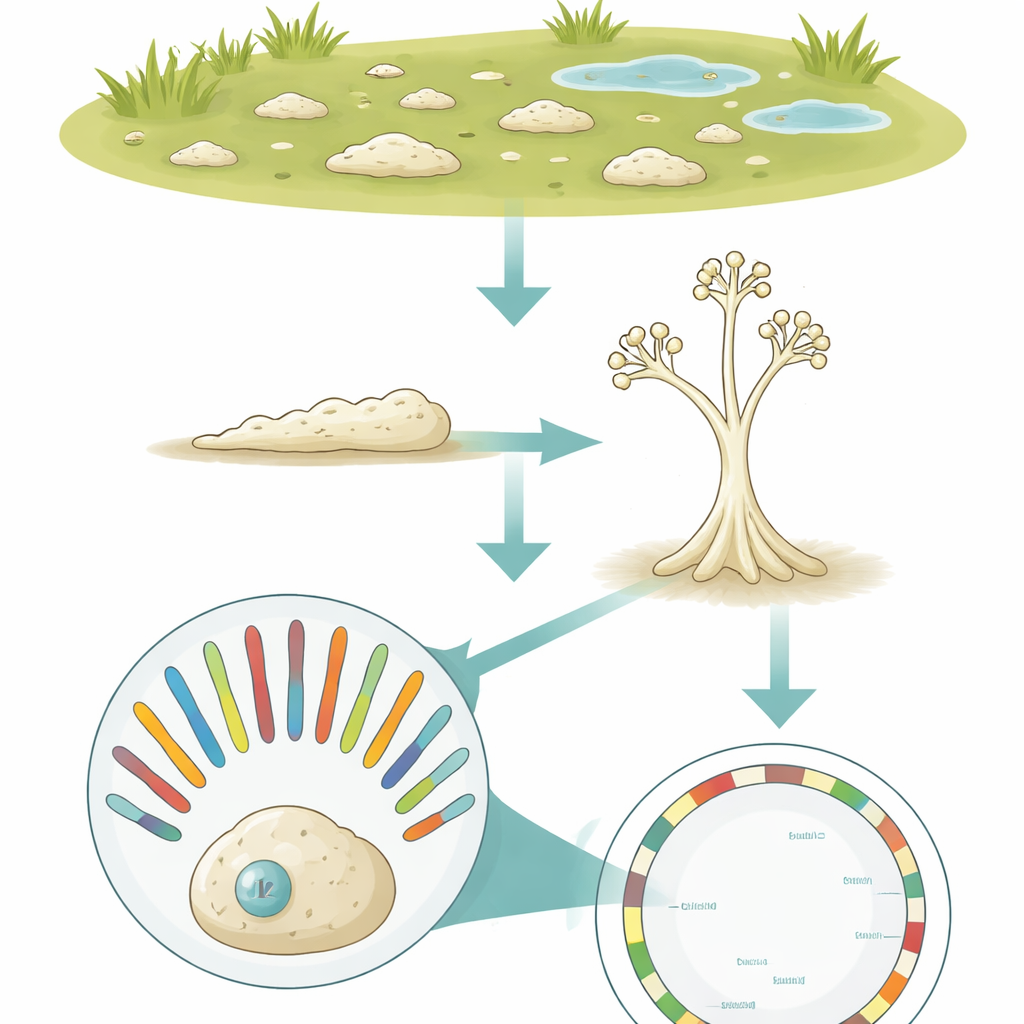
Social amoebae are tiny single-celled organisms that normally crawl around on soil and decaying leaves, feeding on bacteria. When food runs out, something remarkable happens: thousands of cells aggregate, forming a slimy moving slug, which then reshapes itself into a tower-like structure called a sorocarp. In Heterostelium pallidum, these towers are not simple spikes. Instead, they branch like miniature trees, ending in clusters of spores. This unusual architecture makes the species especially interesting to scientists studying how new body forms and developmental programs evolve.
Why Its DNA Map Matters
To understand how H. pallidum builds its branched structures, researchers need an accurate, nearly gap-free map of its genome—the long strands of DNA that carry all its instructions. Earlier genome maps for related amoebae were often fragmented, like books torn into many pieces and shuffled. This made it hard to compare species and link specific genes to traits such as branching. The team behind this study set out to create a chromosome-level genome for H. pallidum, meaning they wanted to place nearly all pieces of DNA into their correct long, continuous chromosomes, the cell’s main DNA packages.
Piecing Together a Genetic Puzzle
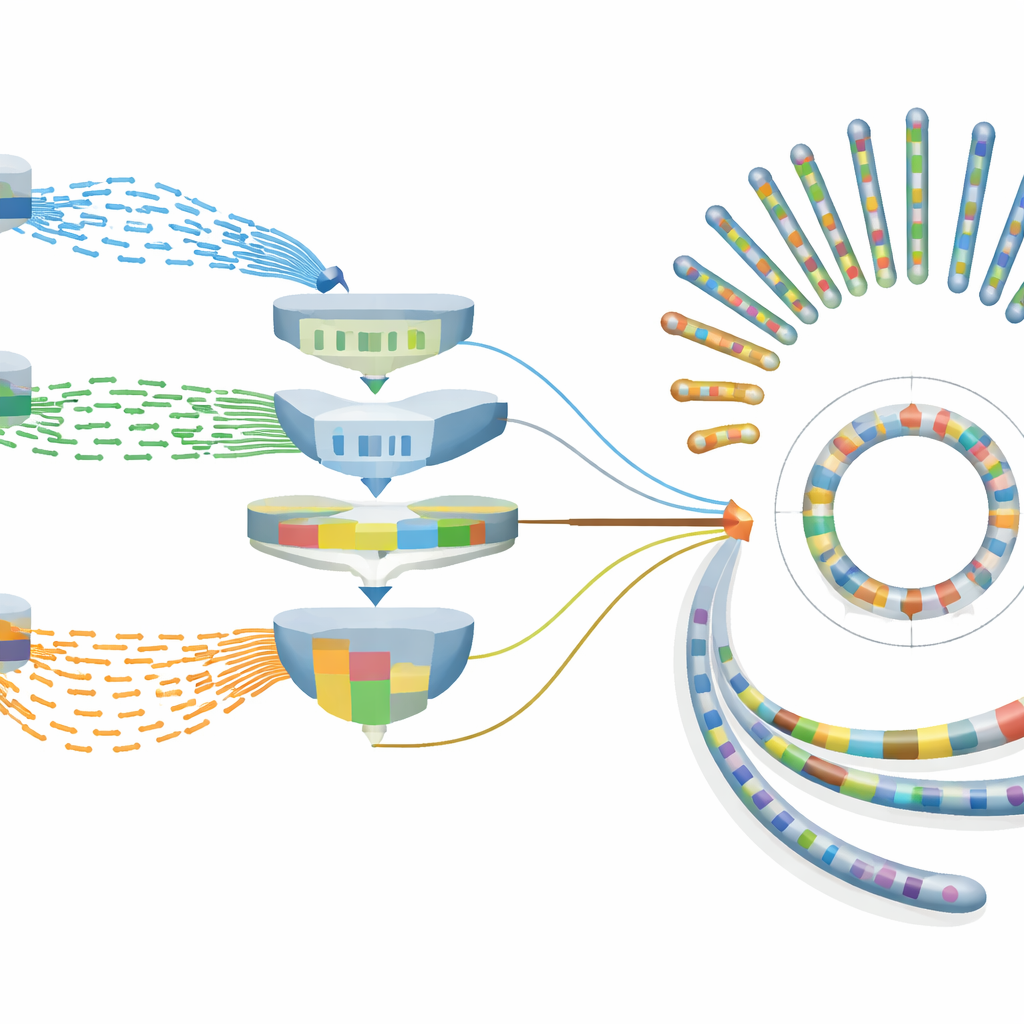
The researchers combined three powerful DNA sequencing approaches to build this map. One technology produced very long, highly accurate reads of DNA, which help bridge repeated or tricky regions. Another generated shorter but abundant reads useful for checking accuracy and filling small gaps. A third method, known as Hi-C, measured which DNA segments tend to sit close together in the cell nucleus, information that helps arrange the pieces into whole chromosomes. Using specialized computer programs, they first assembled long stretches from the long reads, then used the Hi-C contact patterns to stitch these stretches into 12 chromosomes, and finally polished the result with the short reads to correct remaining errors.
What the Finished Genome Reveals
The final genome of H. pallidum spans about 33 million DNA “letters,” roughly distributed across 12 chromosomes. Tests show that more than 90 percent of the standard core genes expected in complex cells are present and complete, indicating that very little is missing. The team cataloged repetitive segments of DNA, which make up about one-sixth of the genome, and predicted 10,854 protein-coding genes, the blueprints for the cell’s working parts. A circular view of the chromosomes highlights patterns of gene-rich and repeat-rich regions and the overall chemical composition of the DNA, providing a structural overview that can be compared directly with other social amoebae.
A New Foundation for Studying Cooperation
This chromosome-scale genome is the highest-quality DNA resource yet produced for the genus Heterostelium and only the third such map for any social amoeba. By making all data and annotations publicly available, the authors provide a foundation for biologists worldwide to probe how genes and chromosomes shape the amoeba’s distinctive branched fruiting bodies and to explore how cellular cooperation and simple multicellularity evolved. For non-specialists, the message is clear: even tiny slime molds can teach us big lessons about how individual cells learn to live, build, and evolve together.
Citation: Sun, D., Tao, L., Stephenson, S. et al. Chromosome-level genome assembly of the social amoeba Heterostelium pallidum. Sci Data 13, 410 (2026). https://doi.org/10.1038/s41597-026-06820-4
Keywords: social amoeba, genome assembly, multicellularity, chromosomes, evolution