Clear Sky Science · en
Genome Assembly and Characterization of the Endangered Long-armed Scarab Beetle, Cheirotonus jansoni
A Giant Beetle With a Big Problem
The long-armed scarab beetle, Cheirotonus jansoni, looks like something out of a fantasy novel: adults are palm-sized, with males sporting forelegs longer than their bodies. Once thought extinct, this striking insect now clings to survival in scattered mountain forests of southern China and nearby regions. The study described here delivers a powerful new tool to help protect it—a complete, chromosome-level map of its DNA—opening the door to understanding why it is in trouble and how best to conserve it.
A Forest Giant on the Brink
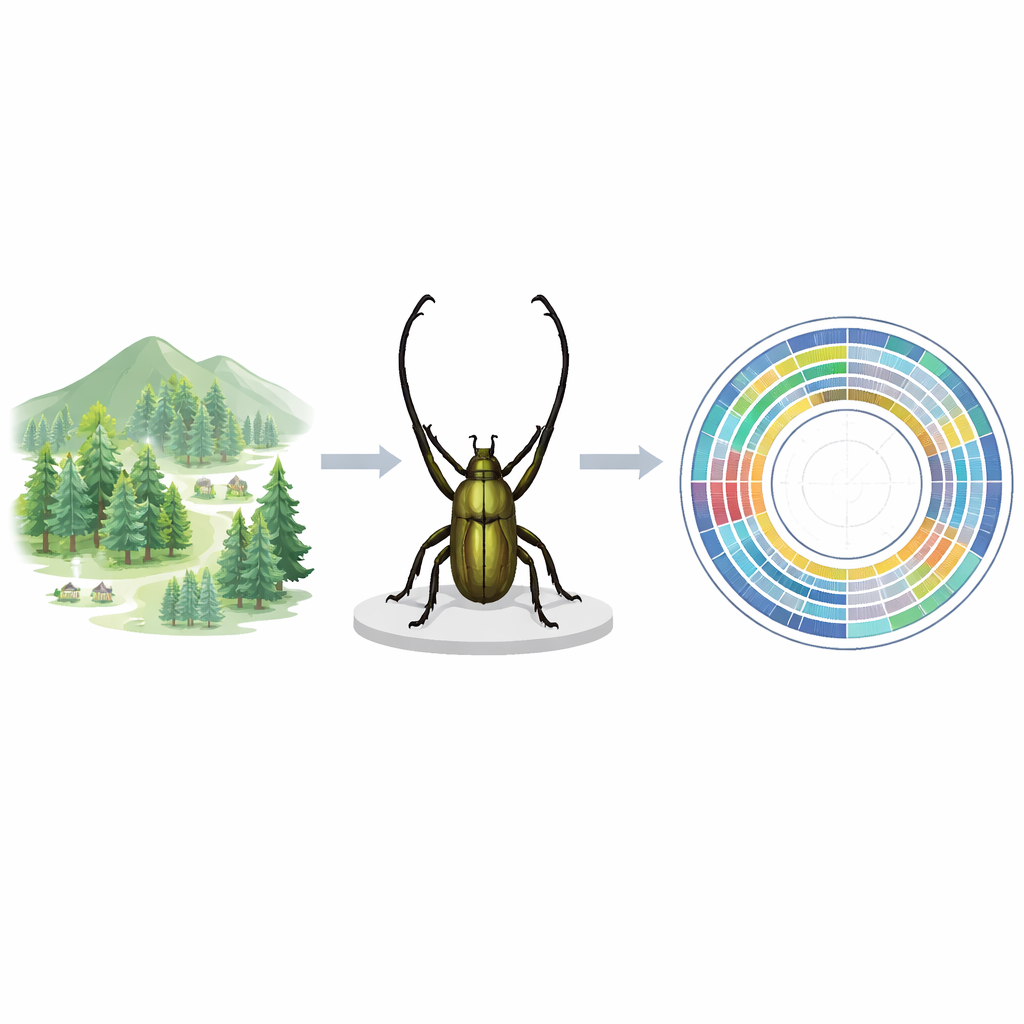
C. jansoni lives high in moist mountain forests, where its larvae feed inside rotting wood and adults sip tree sap and are strongly attracted to light. These beetles help recycle dead trees and keep forest ecosystems healthy, but their own world is shrinking. Logging, land conversion, and expanding tourism have chopped their habitat into isolated patches. Night lighting lures adults away from safe breeding sites, and the exotic pet trade prizes their large size and bright colors, driving overcollection. Although new records show the beetle is more widespread than once feared, its populations are small, fragmented, and officially listed as nationally protected in China. To move beyond simple head counts and museum specimens, scientists need to see what is written in the beetle’s genes.
Turning Beetles Into Data
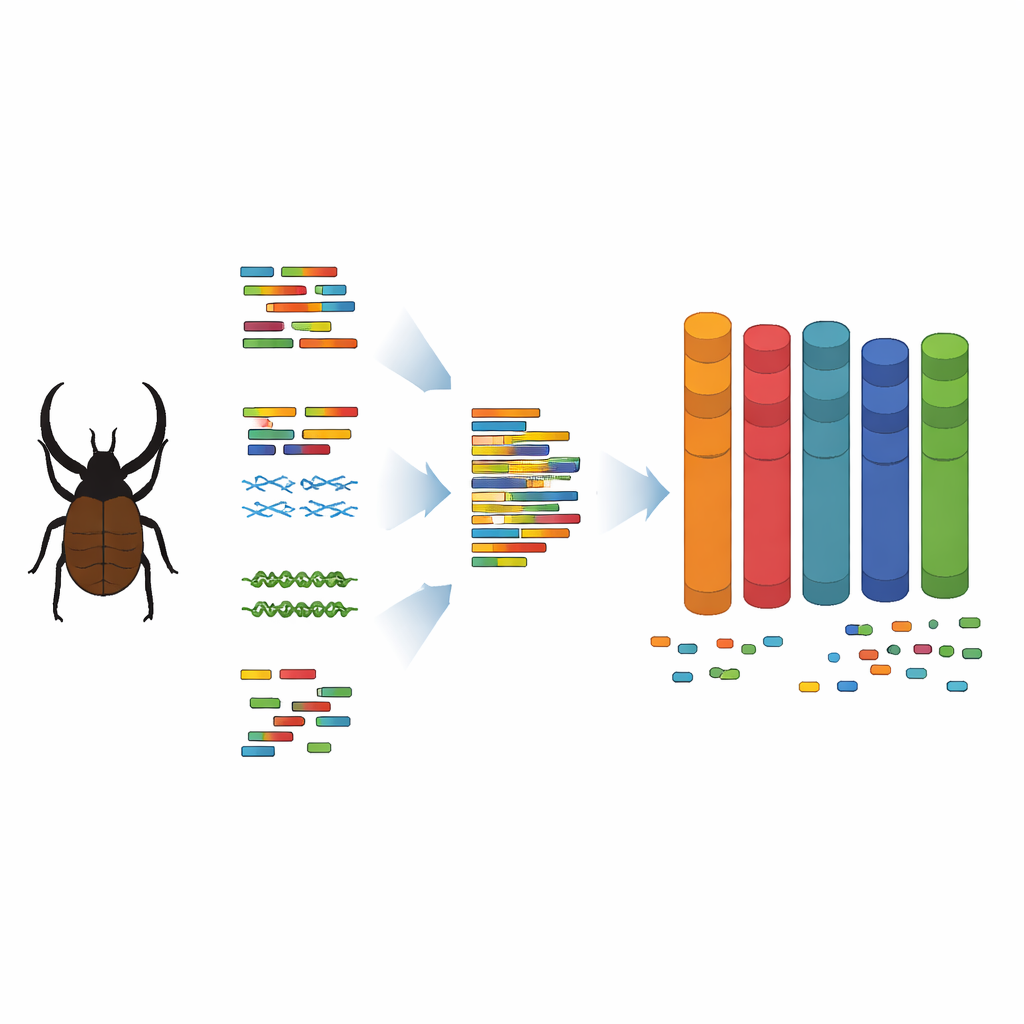
To build this genetic blueprint, researchers collected two male beetles from a protected reserve in eastern China, taking advantage of their attraction to light traps at night. They carefully froze the specimens and extracted high-quality DNA and RNA from different body parts. Using several cutting-edge sequencing technologies, they generated huge amounts of data: accurate short stretches of DNA, much longer DNA reads that can bridge gaps, and special "3D" data that capture how distant pieces of DNA are folded together inside the cell. They also sequenced RNA, the molecules copied from genes when they are active, to help locate genes in the finished map.
Assembling a Genome Puzzle
Piecing together a genome is like reconstructing a shredded encyclopedia with no reference copy. The team used the long DNA reads to build an initial draft of the beetle’s genome and then checked it against independent estimates of genome size. The first attempt was noticeably larger than expected and contained many small, unplaced fragments, hinting at contamination or duplicated pieces. To clean this up, the researchers applied a series of checks: they looked for odd patterns in how often each segment was sequenced, examined how well each fragment linked into the 3D folding map, and checked whether well-known insect genes were present. Suspicious pieces were removed or flagged, and the remaining sequences were then stitched together using the 3D contact information to form long, continuous stretches matching whole chromosomes.
What the Beetle’s DNA Reveals
The refined genome covers about 620 million DNA letters, with almost all of this assigned to ten chromosomes. Standard benchmarks show that over 93% of expected core insect genes are present, indicating a highly complete reference. Nearly half of the genome is made up of repeated DNA, especially a single family of mobile elements that alone accounts for more than a fifth of the sequence. By combining DNA and RNA evidence, the team identified over 14,000 protein-coding genes and more than 4,000 non-coding RNAs, including many small regulatory molecules. When they compared the beetle’s chromosomes with those of a related scarab species, they found extensive reshuffling of chromosomes, especially in the first five, hinting at a dynamic evolutionary history.
A New Toolbox for Saving a Forest Icon
This chromosome-level genome turns C. jansoni from an enigmatic forest curiosity into a species that can be studied in genetic detail. Conservation biologists can now search for signs of inbreeding, detect how isolated different populations are, and identify genes linked to adaptation to high-altitude forests or sensitivity to light pollution. Wildlife managers can use these insights to design corridors between habitats, guide breeding programs, or monitor illegal trade using genetic fingerprints. In short, this work delivers a high-quality genetic roadmap that will help scientists understand why the long-armed scarab is declining and provide a scientific foundation for keeping this extraordinary beetle in the forests where it belongs.
Citation: Liu, L., Guo, R., Lei, Q. et al. Genome Assembly and Characterization of the Endangered Long-armed Scarab Beetle, Cheirotonus jansoni. Sci Data 13, 409 (2026). https://doi.org/10.1038/s41597-026-06814-2
Keywords: genome assembly, endangered beetle, conservation genomics, forest biodiversity, scarab insects