Clear Sky Science · en
35 metagenomic datasets from the northern and southern parts of the Yap trench sediments
Life in the Ocean’s Deepest V-Shaped Valleys
Far below the reach of sunlight, the seafloor descends into narrow, V-shaped valleys known as ocean trenches. These places are among the most extreme habitats on Earth, yet their mud is packed with microscopic life that quietly helps drive the planet’s chemical cycles. This study explores one such site, the Yap Trench in the western Pacific, and delivers a rich, publicly available catalog of genes and genomes from the microbes that live in its deep sediments. 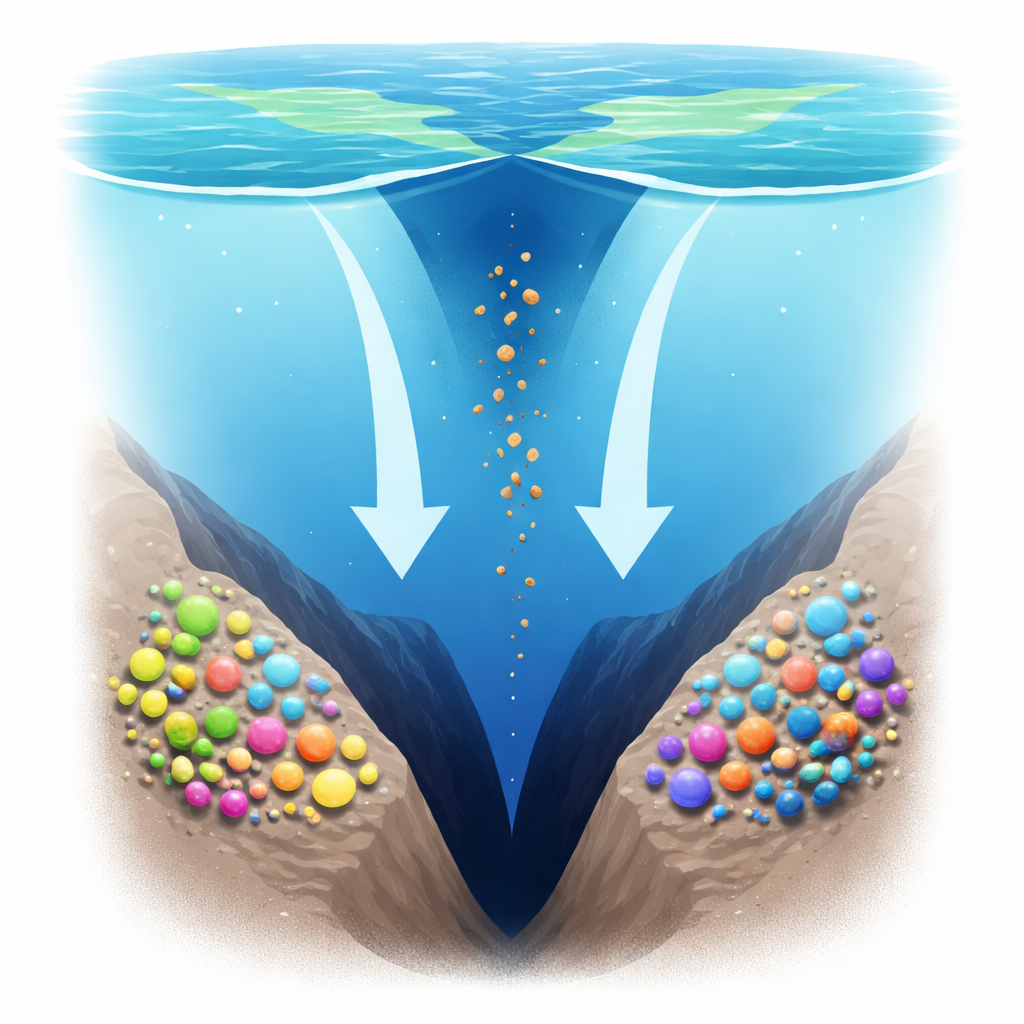
A Hidden World at Crushing Depths
The hadal zone begins around 6,000 meters below the surface and occupies only a small fraction of the seafloor area, but it makes up nearly half of the ocean’s depth range. These depths are sculpted by the collision and sinking of tectonic plates, forming steep, isolated trenches with intense pressure, low temperatures, and unique chemistry. Earlier work showed that hadal mud hosts abundant microbes that can break down complex organic material and may even fix carbon in the dark. Yet, for most trenches, scientists still lack broad, detailed genetic data needed to understand who these microbes are and what they can do.
A Natural Laboratory Split North and South
The Yap Trench lies between the better-known Mariana and Palau trenches, where several tectonic plates meet. Its narrow, sharp profile and division into northern and southern sections create a natural experiment. The southern slope has gentler walls, weaker earthquakes, and higher organic matter in its sediments than the north. Such contrasts are expected to shape distinct microbial communities. To probe this, the researchers used a crewed submersible to collect three sediment cores from the trench’s western slope, spanning both abyssal depths and the deepest trench floor, and sliced each core into thin layers from the surface downwards.
Turning Mud into Digital DNA Maps
From 35 sediment subsamples, the team extracted DNA and sequenced it using high-throughput methods. Instead of studying microbes one by one in the lab, they applied a metagenomic approach, assembling all DNA fragments from each sample into longer stretches and then sorting those stretches into bins that represent partial or near-complete genomes. They applied several binning tools and strict quality checks to reduce contamination and ensure reliable genome reconstructions. In total, they predicted about 32 million non-redundant genes across the samples and recovered 404 metagenome-assembled genomes, many of them of high quality. 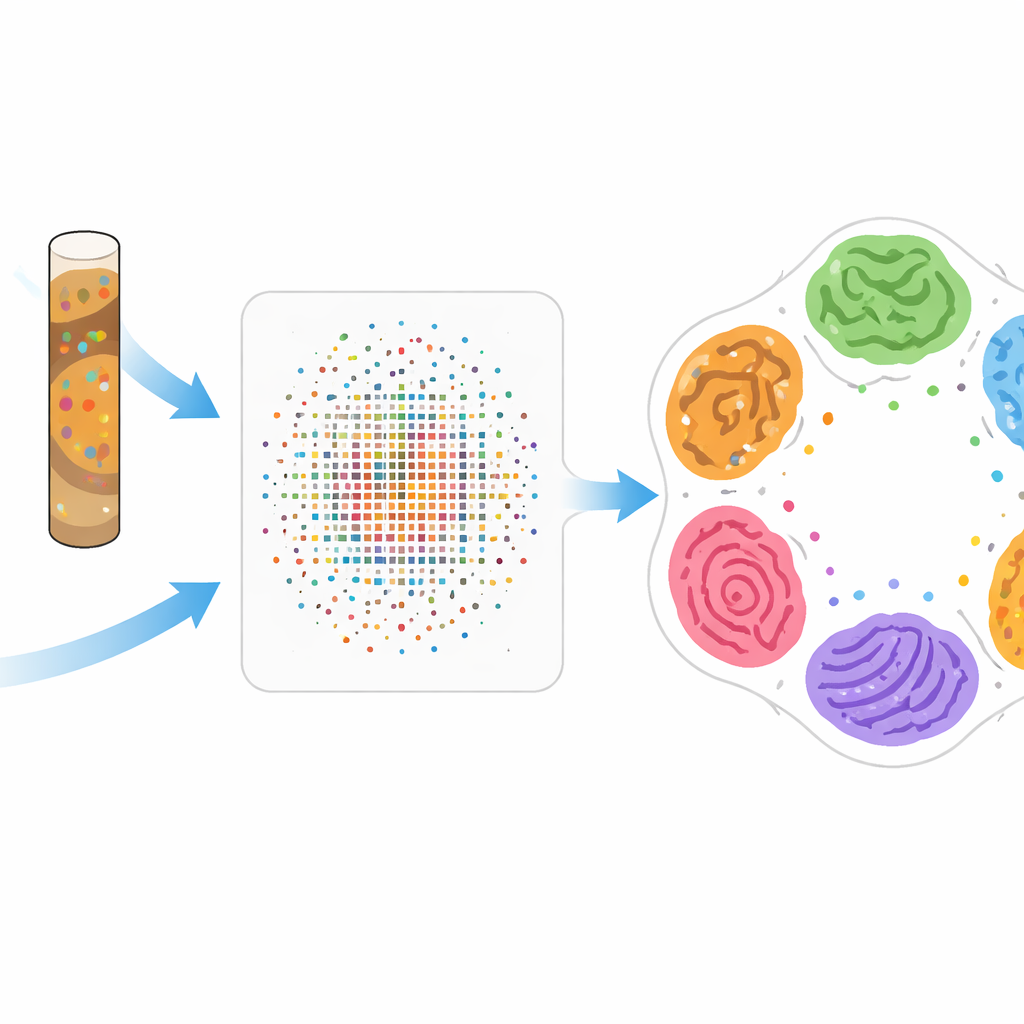
Who Lives There and What They Can Do
By comparing the recovered genes to large reference databases, the authors could assign likely functions to about 63 percent of them. This reveals a wide array of biochemical abilities, including the breakdown of complex organic compounds and other metabolic pathways expected in energy-limited, deep environments. The genomes belong to microbes spanning at least 26 major lineages. Several groups of bacteria, including Alpha- and Gammaproteobacteria, along with Phycisphaerae, Nitrospiria, and Dehalococcoidia, dominate across the samples. Some groups are more common in the shallower abyssal mud, while others are enriched in the deepest hadal layers, hinting that depth and local conditions favor different ways of making a living in the dark.
A Reference Library for the Deep Biosphere
Rather than presenting one specific ecological story, this work offers a foundation: a carefully curated library of DNA sequences and genomes from one of the world’s most remote habitats. All raw sequence data, reconstructed genomes, and supporting information are openly archived so that other researchers can explore questions about how trench microbes differ from those elsewhere, how they participate in carbon cycling, and how life adapts to extreme pressure and isolation. For non-specialists, the key takeaway is that even in the deepest ocean mud, life is abundant, diverse, and biochemically inventive—and we now have a powerful new set of genetic clues to begin deciphering how this hidden ecosystem works.
Citation: Niu, M., Fu, L., Yan, Q. et al. 35 metagenomic datasets from the northern and southern parts of the Yap trench sediments. Sci Data 13, 422 (2026). https://doi.org/10.1038/s41597-026-06812-4
Keywords: deep-sea microbiology, hadal trenches, Yap Trench, metagenomics, sediment microbes