Clear Sky Science · en
Matched whole-genome sequencing of blood (10×) and five single sperm cells (1×) per individual in 53 men
Why This Study Matters for Families
For many couples struggling to conceive, the focus often falls on hormone levels or general health, while the fine details inside sperm cells remain a mystery. This study opens a new window into those details by carefully reading the complete DNA from both blood and individual sperm cells in dozens of men. By pairing this genetic information with precise measurements of sperm movement, the researchers have created a shared resource that could help scientists around the world better understand male infertility and eventually improve diagnosis and treatment.
Looking Closely at Moving and Sluggish Sperm
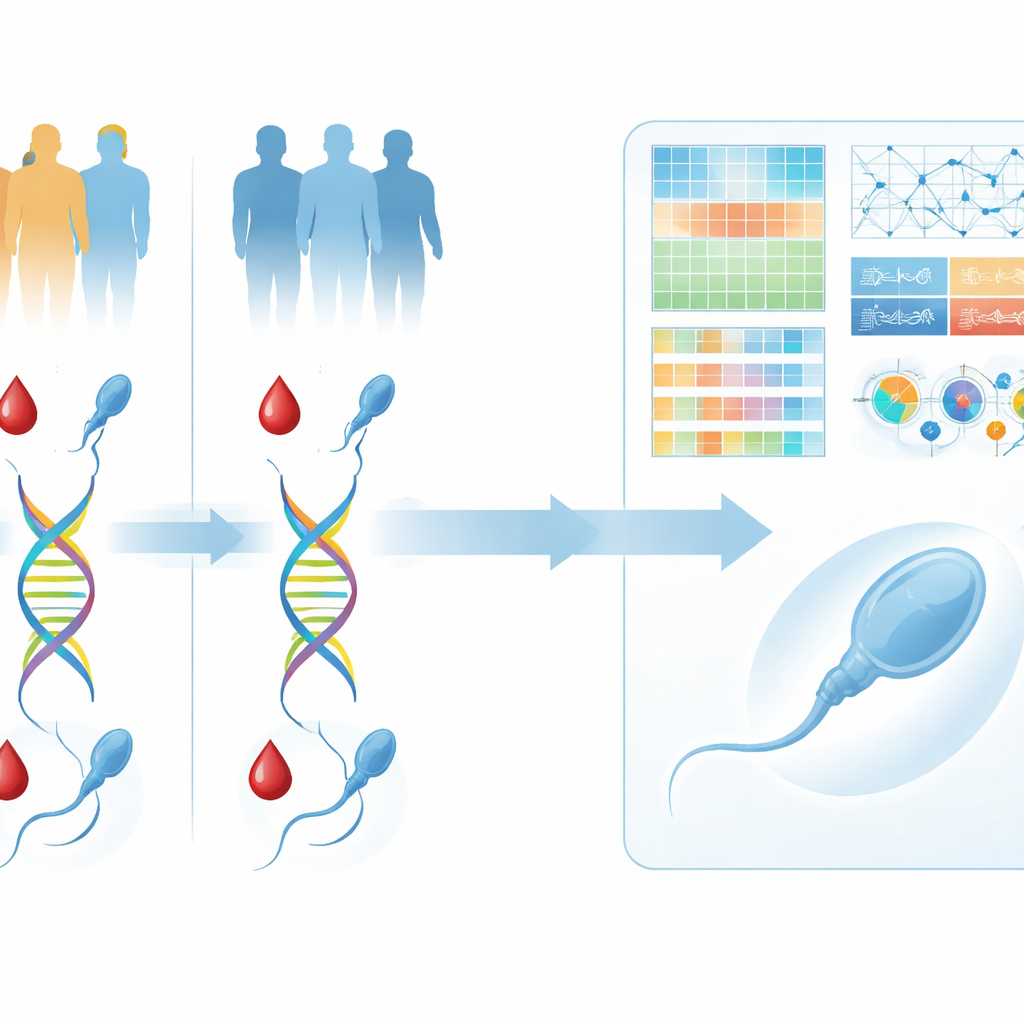
Men can be infertile for many reasons, but one of the most common is asthenozoospermia, a condition in which sperm are alive yet move too slowly or weakly to reach and fertilize an egg. In this project, the team recruited 53 Han Chinese men: 37 with typical semen quality and proven fertility, and 16 whose sperm had poor movement but normal counts. All participants were carefully screened to rule out other medical problems and recent COVID-19 infection, so that differences in sperm movement would be less likely to be confused with unrelated illnesses. For each man, doctors recorded a rich set of health details, including age, body size, smoking and drinking habits, reproductive history, hormone levels, and a wide range of semen measurements such as total motility, swimming speed, and patterns of motion.
Building a DNA Map from Blood and Single Sperm
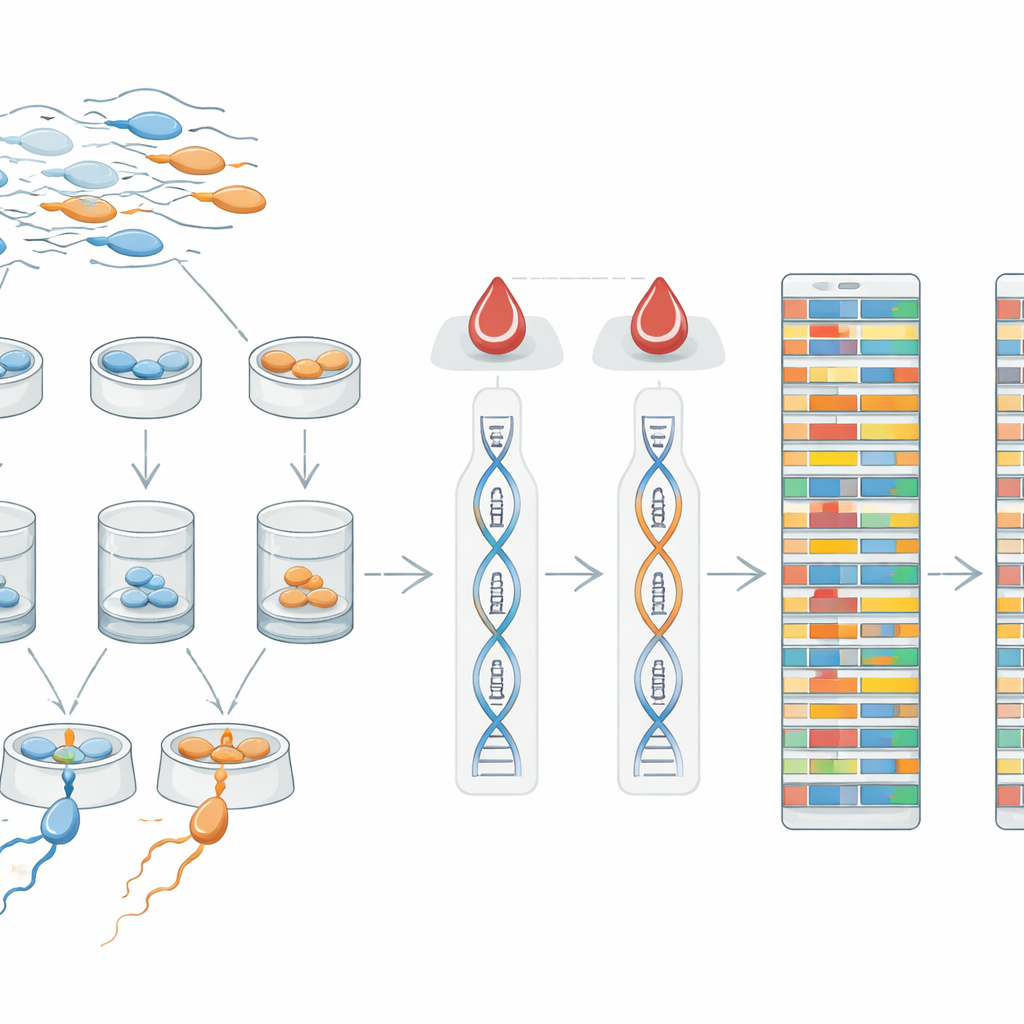
What sets this work apart is its dual focus: the researchers did not just look at semen under a microscope, they also collected complete DNA information from both blood and individual sperm cells. Blood samples provided a view of each man’s general genetic blueprint at about tenfold coverage, meaning most positions in the genome were read multiple times for reliability. From each participant, technicians then painstakingly isolated several single sperm cells one by one under a microscope, avoiding those that looked obviously abnormal. These single cells were processed with a specialized method that can copy and sequence almost all of their DNA, giving a low but usable snapshot of each sperm’s genome.
Turning Raw Reads into a High-Quality Data Resource
Because this is a data-focused study rather than a typical experiment with a specific hypothesis, the key outcome is the quality and structure of the dataset itself. The team checked DNA concentration and integrity, cleaned away technical noise, and verified that both blood and sperm sequences met common standards used in human genetics. On average, blood DNA was read at a depth of just over ten times, while sperm DNA reached about 1.7 times coverage per cell, a level suitable for large-scale pattern detection across many cells. Importantly, they confirmed that hormone levels such as testosterone and estrogen were similar between men with sluggish sperm and those with typical fertility. The real differences lay in how well the sperm moved: men in the fertile group had roughly double the total motility, and higher measures of swimming path and turning behavior, underscoring that the two groups are meaningfully distinct in function even when their hormone profiles look alike.
A New Test Bed for Fertility Algorithms
By making all of these data publicly accessible, the authors aim to accelerate method development in several cutting‑edge areas. Because sperm carry only one copy of each chromosome, their genomes offer a clean way to trace how DNA is shuffled during sperm formation and how specific combinations of genetic variants might relate to sperm performance. The paired blood and sperm sequences also provide a benchmark for testing new computer tools that try to fill in missing information in low‑coverage data, or that reconstruct long stretches of inherited DNA from scattered clues. Researchers can use this dataset to refine methods for spotting rare mutations, tracking crossover events where parental chromosomes exchange segments, and comparing genetic patterns between men with and without movement problems.
What This Means for Future Patients
For patients today, this dataset does not yet translate into a new test in the clinic, and it does not pinpoint a single “infertility gene.” Instead, it offers a carefully curated foundation on which many future studies can build. By combining detailed measures of how sperm behave with matched DNA from both body cells and individual sperm, the resource gives scientists a powerful platform to explore how subtle genetic differences may shape male fertility. Over time, as more groups analyze these data and add their own, this work may help turn vague labels like “unexplained male infertility” into clearer, DNA‑informed diagnoses and ultimately guide more personalized choices in reproductive care.
Citation: Chen, W., Yu, L., Li, R. et al. Matched whole-genome sequencing of blood (10×) and five single sperm cells (1×) per individual in 53 men. Sci Data 13, 405 (2026). https://doi.org/10.1038/s41597-026-06808-0
Keywords: male infertility, sperm motility, whole-genome sequencing, single-cell genomics, reproductive health