Clear Sky Science · en
De novo transcriptome assembly of the silver fir, Abies alba Mill
Why this mountain tree matters
High up in Europe’s mountain ranges, the silver fir is a quiet workhorse of the forest. It stores carbon, shelters wildlife, and supports local economies. Yet as climate change brings more heatwaves and droughts, scientists urgently need to understand how this tree copes with stress at the most fundamental level: which genes turn on and off when conditions change. This study delivers a powerful new “parts list” of gene activity for silver fir, giving researchers a detailed reference that did not previously exist and opening the door to better protection and breeding of resilient forests.
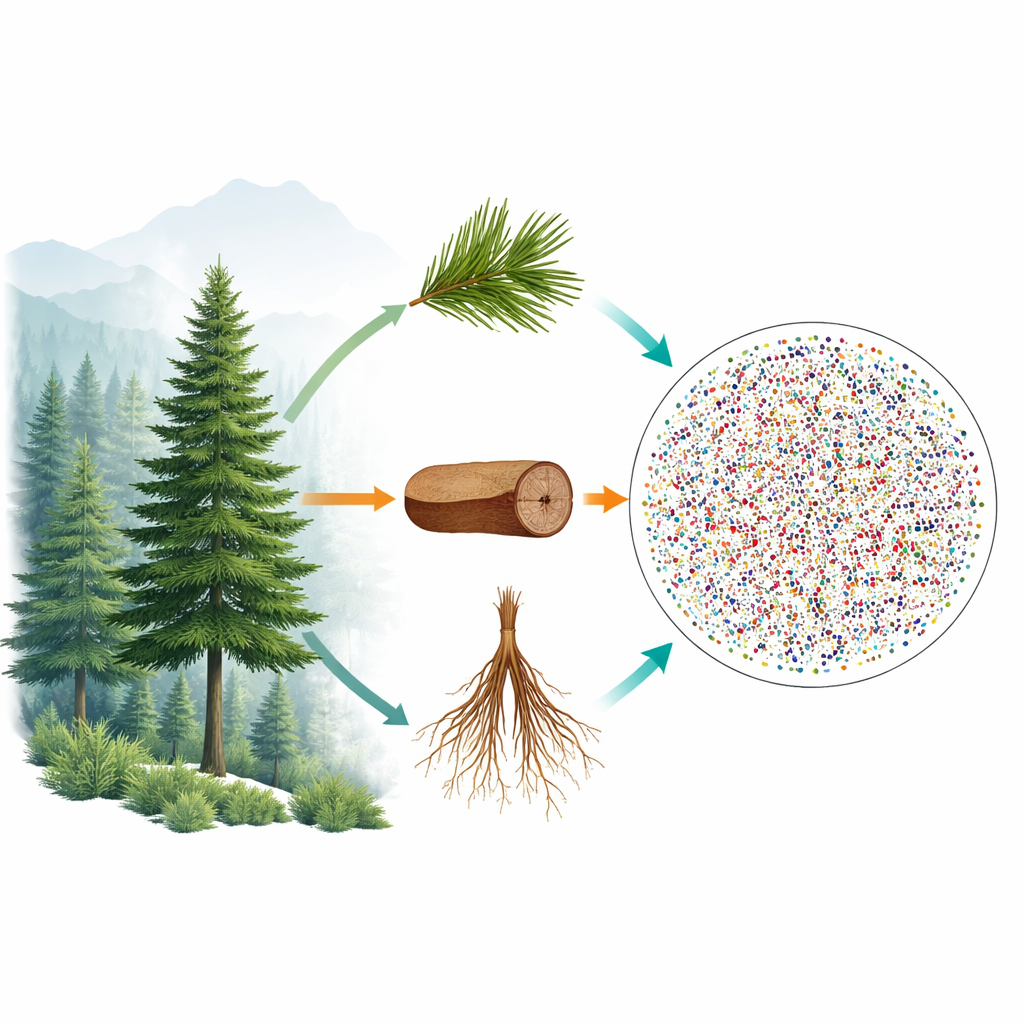
Building a detailed map of tree activity
While a rough version of the silver fir’s DNA blueprint is available, there was no thorough catalogue of its working molecules—the RNA messages that show which genes are active in real trees. Earlier efforts only looked at very young plants or a single tissue, leaving most of the tree’s biology unexplored. The authors set out to create a much richer resource: a complete snapshot of gene activity across major organs of silver fir, captured under a range of everyday and stressful conditions that real forests increasingly face.
Putting young trees under pressure
The team worked with 24 three-year-old saplings grown from mountain nursery stock. In climate-controlled growth chambers, they exposed groups of trees to different treatments designed to mimic natural challenges: gentle cold, sudden deep freeze, intense heat, short-term drought, prolonged darkness, added growth hormone, and physical damage similar to herbivore bites. For each treatment, they collected samples from leaves, stems, and roots. This strategy was not meant to test which treatment changes which gene, but to coax as many genes as possible into action so they would appear in the final catalogue.
Reading and assembling millions of messages
From each sample, the researchers extracted high-quality RNA and sequenced it using two complementary technologies: short, highly accurate reads and long reads that span whole gene messages. They then used established software tools to clean the data, assemble separate collections of gene sequences for leaves, stems, and roots, and remove rarely supported or near-duplicate sequences. By merging these refined sets and clustering very similar sequences, they arrived at a final reference containing more than half a million distinct RNA sequences, each representing a potential gene or gene variant in silver fir.
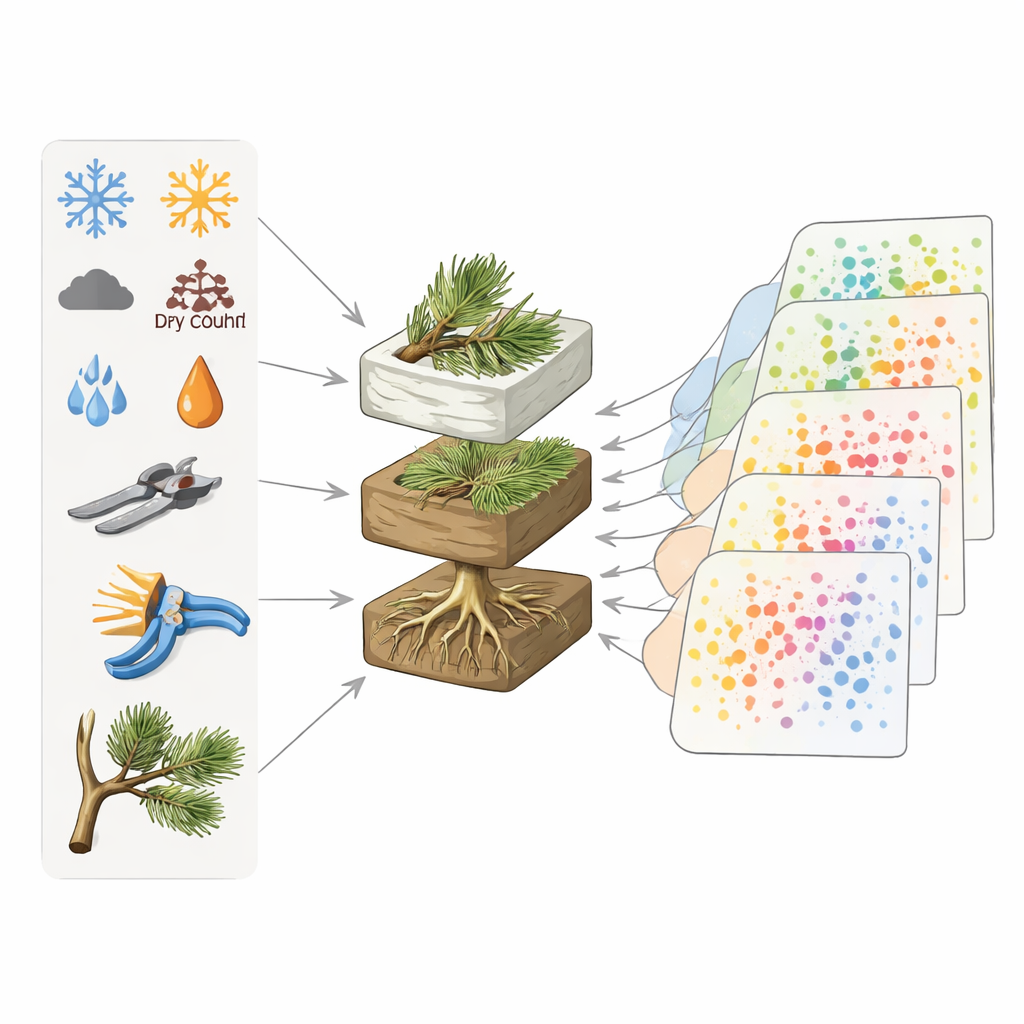
Checking completeness across tree parts and stresses
To test how complete and reliable this new dataset is, the team compared it against sets of genes that are known to be present in most land plants and, more specifically, in conifers. The silver fir transcriptome recovered about 95–96% of these expected genes—among the best results reported for conifer trees and far beyond previous silver fir resources. The scientists also examined how gene activity clustered across organs and treatments. Leaves, stems, and roots each had their own expression patterns, but nearly half of the detected sequences were shared among all three, indicating a strong core of common functions. Similarly, a large fraction of genes appeared across all treatments, with only modest differences in how many were unique to each stress condition.
What this means for forests and future research
The new silver fir transcriptome is not a story about one dramatic discovery, but about building a robust tool. It offers researchers a high-quality, public reference for studying how this important mountain tree grows, copes with drought and temperature extremes, and responds to a changing climate. With this catalogue of gene activity, scientists can now more easily pinpoint stress markers, compare silver fir to other species, and guide efforts to conserve and restore vulnerable forests. In simple terms, the study provides a detailed genetic “dictionary” for silver fir, giving us a much clearer way to read how these trees are reacting as their world warms and dries.
Citation: García-García, I., Méndez-Cea, B., Horreo, J.L. et al. De novo transcriptome assembly of the silver fir, Abies alba Mill. Sci Data 13, 385 (2026). https://doi.org/10.1038/s41597-026-06807-1
Keywords: silver fir, forest resilience, gene expression, climate stress, conifer genomics