Clear Sky Science · en
Comprehensive Human Red Blood Cell Membrane and Cytoplasmic Proteome Analyses
Why the tiny couriers in your blood matter
Every second, millions of red blood cells rush through your veins, ferrying oxygen to every corner of your body. For decades we have known what they look like and what they do, but not in full detail what they are made of. This study set out to create one of the most complete maps so far of the proteins inside and on the surface of human red blood cells. Such a map is like a detailed parts list for these tiny couriers, and it can help explain why blood disorders occur and how changes in red blood cells may signal other diseases, from heart problems to dementia.
Taking a closer look at red blood cells
Red blood cells might seem simple because they lack a nucleus, but they are involved in far more than just carrying oxygen and carbon dioxide. They help transport immune molecules, carry the markers that define blood groups, and interact with the immune system and blood vessels. These roles depend on thousands of different proteins. Earlier studies using protein-measuring technologies could detect only hundreds or a few thousand proteins in red blood cells, leaving many components uncharted. The researchers behind this work aimed to go deeper, combining many blood samples and using advanced methods to reveal as many proteins as possible.
Separating the shell from the inside
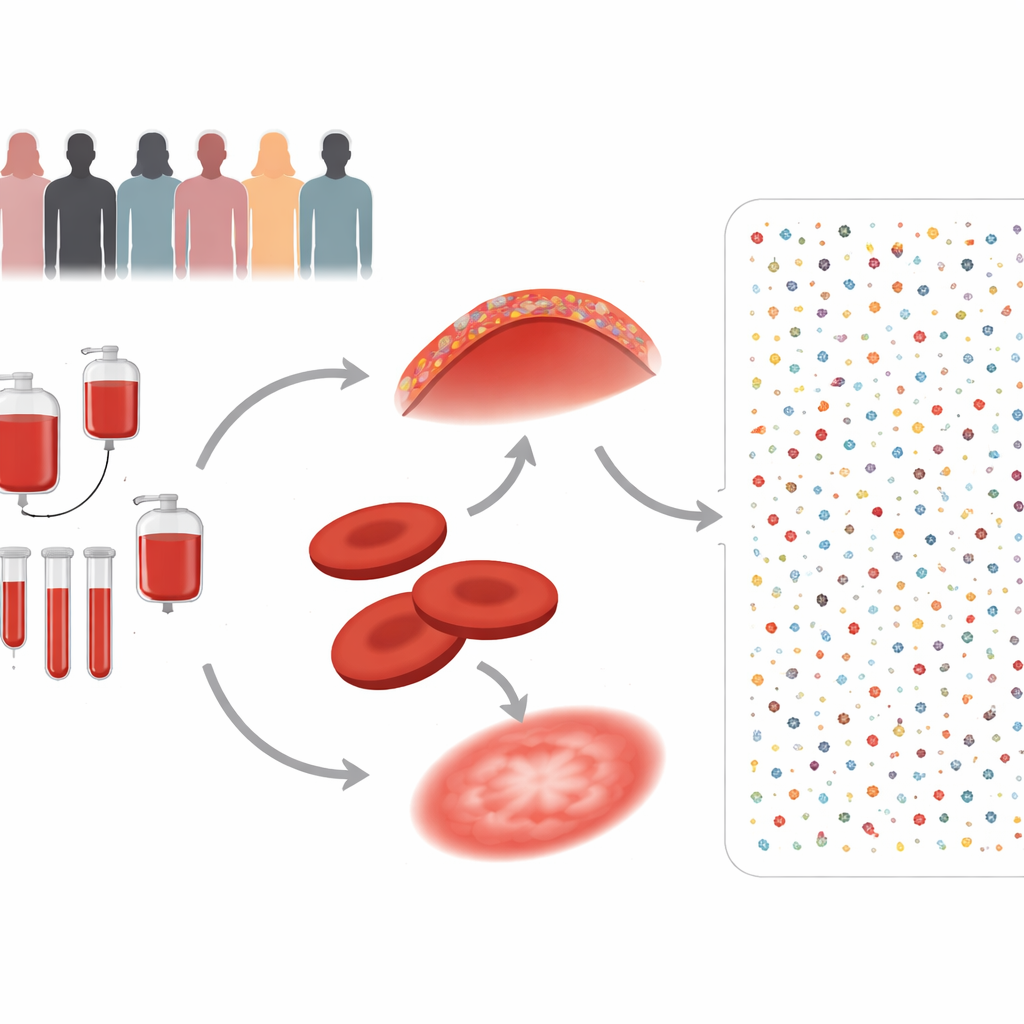
To understand how different parts of a red blood cell contribute to health and disease, the team separated each cell into two main portions: the outer membrane and the inner fluid, called the cytoplasm. They first carefully removed white blood cells and platelets from 100 human blood samples of different ages, sexes, and blood groups. Then they gently broke open the red cells so that the soft inner contents could be spun off, leaving the empty “ghost” membranes behind. Checks under the microscope and with common laboratory tests confirmed that the samples were very pure and that the membrane and inner contents were cleanly separated.
Digging deep with modern protein tools
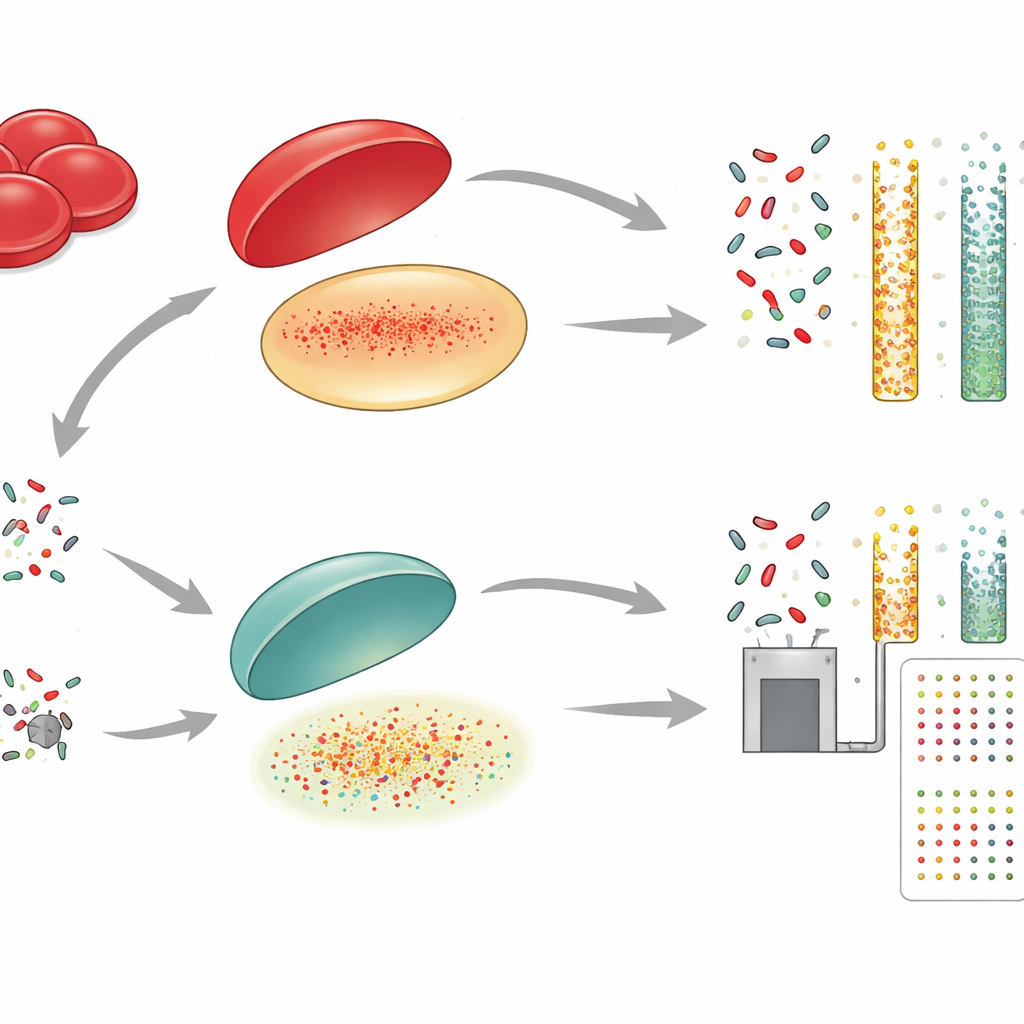
Measuring proteins in such detail is challenging because some, like hemoglobin, are overwhelmingly abundant and can hide rarer proteins. The researchers used a multi-step approach to get around this. They broke the proteins into smaller pieces, then spread these pieces across nearly one hundred separate fractions before feeding each fraction into a high-resolution mass spectrometer, a machine that weighs and identifies molecules. By not pooling these fractions together, they could detect weaker signals that would otherwise be drowned out. This strategy, combined with careful computer analysis, allowed them to identify 4,777 proteins in the membrane fraction and 2,350 in the cytoplasm, for a total of 5,264 distinct proteins—the largest red blood cell protein catalog reported so far.
What the expanded parts list reveals
The new map shows that the outer shell and inner fluid of red blood cells host very different sets of proteins, as expected from their distinct jobs. Proteins in the membrane fraction were enriched in structural scaffolds, channels, and transporters that maintain cell shape and control what enters and leaves the cell. In contrast, cytoplasmic proteins were enriched in complexes that handle energy production and chemical reactions. High “sequence coverage” for many proteins means that the study captured much of their amino acid sequence, including regions where harmful mutations occur. For example, the team covered most of the sequence of G6PD, a protein whose defects are a common cause of enzyme-related anemia worldwide, and they detected the majority of its known variant sites. They also uncovered more than 2,300 proteins not recorded in major red blood cell protein databases or earlier large studies, including some that are relatively abundant but had escaped detection without this deeper approach.
Links to blood and brain diseases
Because red blood cells circulate everywhere, their protein makeup may reflect problems well beyond the blood system itself. The expanded dataset includes proteins tied to inherited red blood cell disorders that affect the membrane, energy metabolism, or the cell’s defense against stress. It also captures proteins related to heart and vessel health, and confirms the presence of certain proteins that have been linked to breast cancer and neurodegenerative diseases such as Alzheimer’s and Parkinson’s. In some cases, proposed disease-related proteins were not seen, but closely related or interacting proteins were detected instead, sharpening the questions scientists will need to answer next.
What this means for future medicine
For a layperson, the key message is that this study provides a very rich, open resource describing what red blood cells are built from, both on the outside and inside. Rather than delivering a new test or treatment today, it offers a foundation that other researchers can mine to better understand blood disorders, to look for early warning signs of conditions like heart disease or dementia, and to refine our picture of how red blood cells participate in health and illness. In short, by painstakingly cataloging thousands of proteins, the authors have turned the humble red blood cell into a powerful window on many aspects of human biology.
Citation: Zhang, X., Liu, H., Zhang, Q. et al. Comprehensive Human Red Blood Cell Membrane and Cytoplasmic Proteome Analyses. Sci Data 13, 383 (2026). https://doi.org/10.1038/s41597-026-06792-5
Keywords: red blood cells, proteomics, blood disorders, biomarkers, mass spectrometry