Clear Sky Science · en
Chromosome-level genome assembly of mud snail Bullacta exarata
A Small Snail With a Big Genetic Story
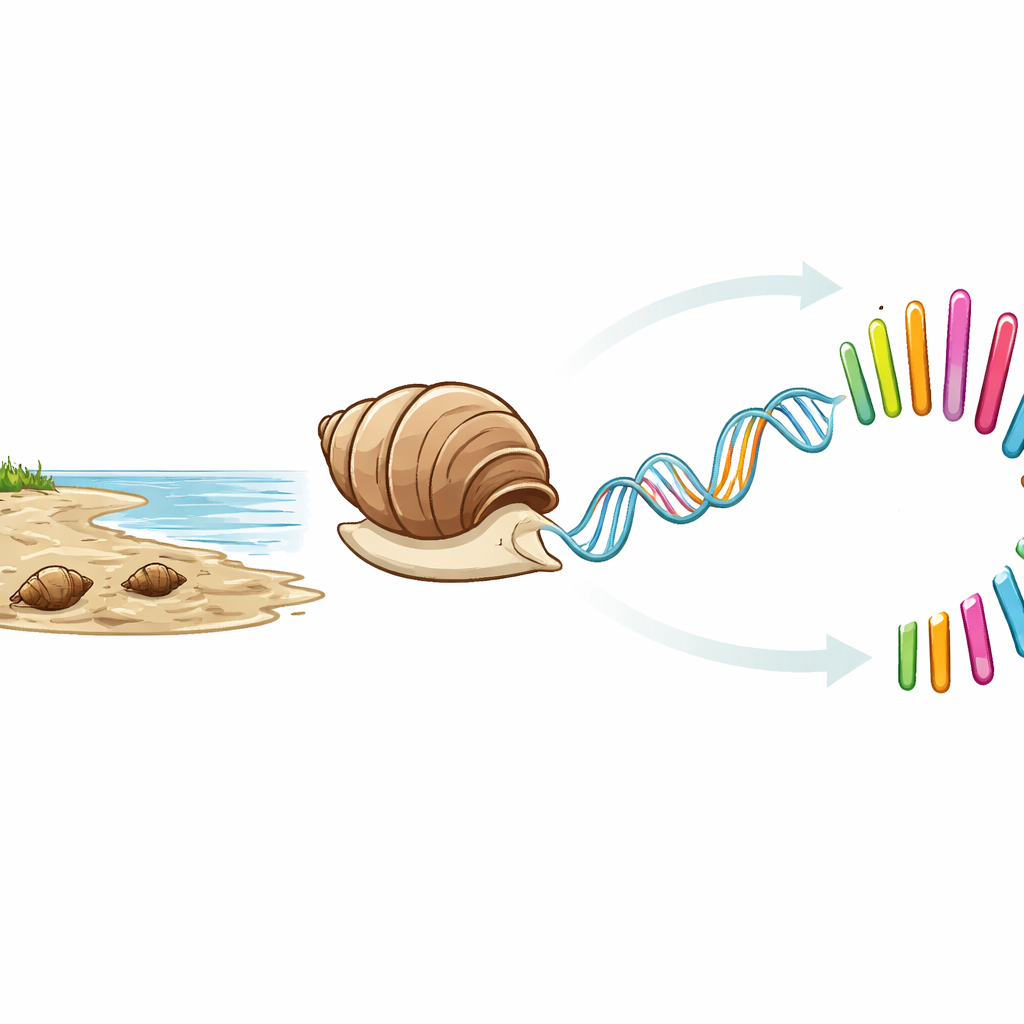
The humble mud snail Bullacta exarata may not look like much as it creeps across coastal mudflats in China, Japan, and Korea, yet it plays a major role in local ecosystems and aquaculture. This hardy, fast‑growing snail helps recycle nutrients in coastal sediments and is farmed as a food source. To understand what makes it so resilient and productive, researchers have now decoded its DNA at the level of entire chromosomes, creating a detailed genetic map that will support future work on breeding, conservation, and environmental adaptation.
Life on the Edge of Sea and Land
Mud snails live in one of nature’s most challenging neighborhoods: the intertidal zone, where organisms are alternately submerged in seawater and exposed to air. Bullacta exarata thrives here. It can tolerate wide swings in salinity and temperature, feeds efficiently on microscopic algae and organic debris, and has become the dominant species in many East Asian mudflats. Its unusual biology adds to the intrigue. Each individual is both male and female at the same time, and adults can reproduce several times a year, producing thousands of eggs per event. Eggs are packed into jellylike spheres that shield developing embryos from predators and harsh conditions, helping the species rapidly rebound and spread.
Building a Genetic Blueprint
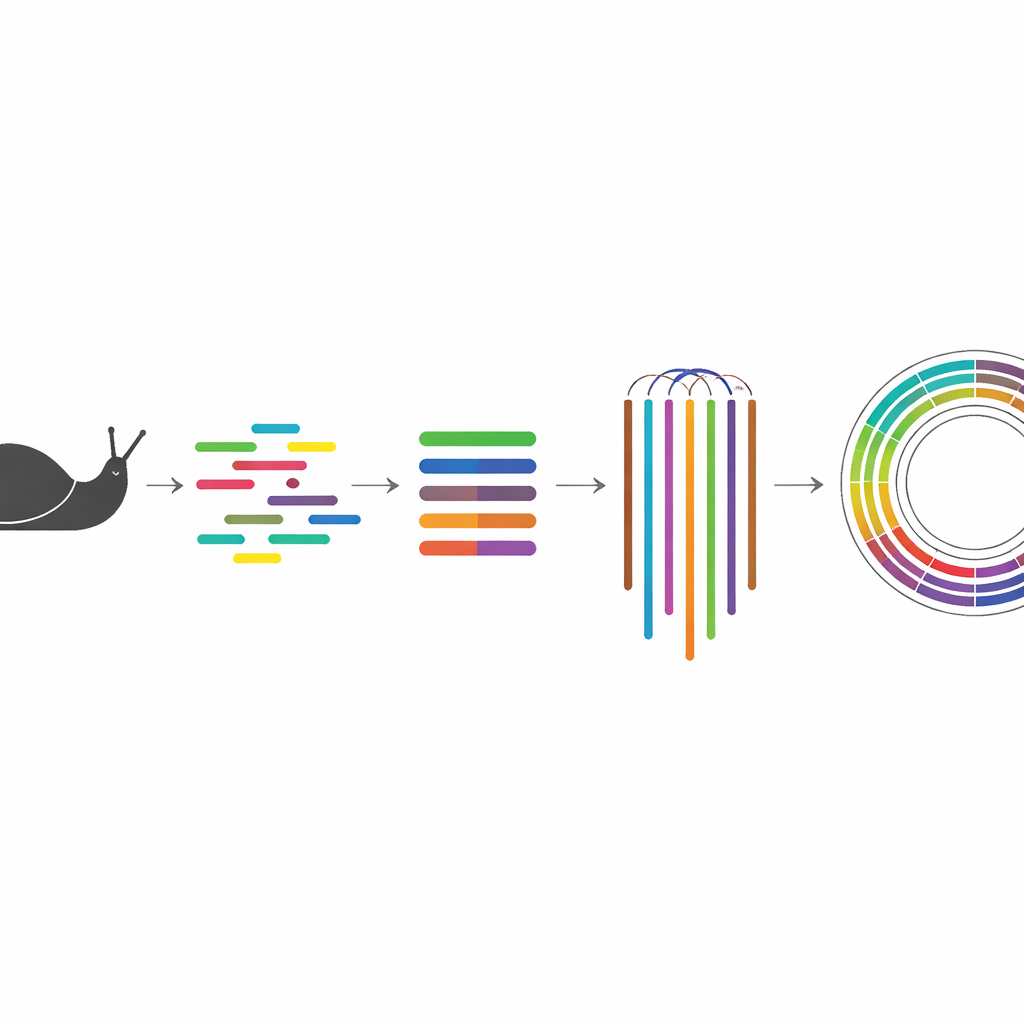
To capture this snail’s genetic blueprint, the team collected individuals from coastal China and extracted DNA and RNA from their tissues. They combined several state‑of‑the‑art sequencing approaches: short, highly accurate DNA fragments from one platform; very long DNA reads from another; and a method called Hi‑C that reveals how pieces of DNA are physically arranged and folded inside the cell. By carefully cleaning the raw data and stitching overlapping fragments together, they reconstructed long stretches of the genome, then used the 3‑D contact information from Hi‑C to arrange these stretches into 18 chromosome‑like units, called pseudochromosomes.
What the Genome Reveals
The finished genome spans about 867 million DNA “letters,” a size similar to many other marine snails. Roughly two‑fifths of this DNA consists of repeated elements, mobile genetic fragments that can copy and paste themselves within the genome. These repeats, which include several major types found in animals, shape how genomes evolve and respond to stress. Within this framework, the researchers predicted 22,494 protein‑coding genes and used multiple international databases to assign likely functions to them. About 95 percent of the genes could be linked to known types of proteins or cellular pathways, suggesting that the gene catalogue is both rich and reliable. The structure of these genes—their lengths, how many segments they contain, and how they compare with genes from related sea slugs—fits well with what is known from other mollusks.
Checking the Quality of the Map
A genome is only useful if it is trustworthy, so the team put their assembly through several strict tests. They mapped the original sequencing reads back onto the assembled genome and found that more than 96 percent aligned correctly, covering over 97 percent of the DNA sequence. They also used a standard set of “benchmark” genes that most animals share to assess completeness. Nearly all of these reference genes were present and intact in the mud snail genome, indicating very few gaps or major errors. Additional checks estimated a high overall base quality, meaning that individual DNA letters are unlikely to be misread.
Why This Genome Matters
This chromosome‑level genome gives scientists a powerful reference for exploring how mud snails cope with life in fluctuating, sometimes polluted coastal habitats and how their unusual reproductive strategies are controlled. Breeders can eventually use these data to select lines with better growth or stress resistance, while ecologists can track how wild populations respond to environmental change at the genetic level. In essence, the study transforms Bullacta exarata from a little‑known mudflat resident into a well‑charted model for understanding adaptation, reproduction, and ecosystem function in coastal seas.
Citation: Xie, X., Wang, S., Sun, Y. et al. Chromosome-level genome assembly of mud snail Bullacta exarata. Sci Data 13, 397 (2026). https://doi.org/10.1038/s41597-026-06791-6
Keywords: mud snail genome, marine mollusk genetics, chromosome assembly, coastal adaptation, aquaculture breeding