Clear Sky Science · en
Chromosome-level genome assembly of the medicinal plant Ophiorrhiza japonica Blume
From Forest Herb to Cancer Medicine
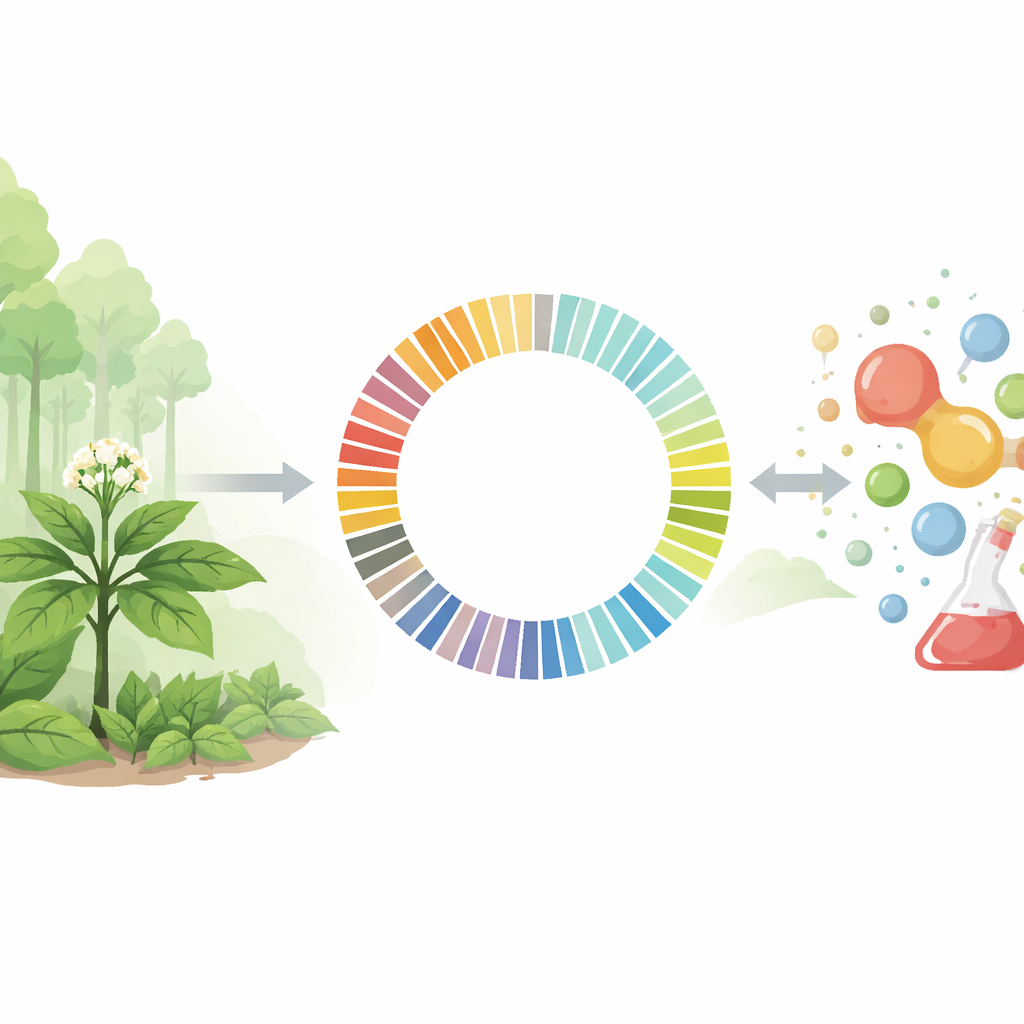
Many of today’s cancer drugs originally came from wild plants, but the species that make them can be rare, slow-growing, or hard to farm. Ophiorrhiza japonica is a modest forest herb that produces camptothecin, a powerful anti-cancer compound used as the basis for several chemotherapy drugs. Until now, scientists lacked a complete genetic blueprint of this plant, limiting efforts to understand how it makes camptothecin and how we might boost or replicate that process. This study delivers the first chromosome-level map of the O. japonica genome, laying the groundwork for more reliable and sustainable cancer drug production.
Why This Small Plant Matters
Camptothecin was first discovered in a tree that is slow to grow and threatened in the wild, raising concerns about long-term supply. O. japonica, by contrast, is a short-lived herb that is easier to cultivate and to manipulate genetically, making it an appealing stand-in for research and potential bioengineering. The plant also belongs to a larger group known for producing a wide range of medically important molecules called monoterpenoid indole alkaloids. To tap into this chemical richness, researchers need to see, in detail, which genes the plant carries and how they are arranged on its chromosomes.
Building a High-Resolution Genetic Map
The team combined several cutting-edge DNA technologies to assemble the O. japonica genome with exceptional accuracy. First, they estimated the total size of the genome from leaf cells using flow cytometry, a technique that measures DNA content in individual nuclei. They then sequenced long stretches of DNA with PacBio HiFi technology, captured full-length RNA molecules with Oxford Nanopore sequencing to reveal which genes are active, and used Hi-C, a method that records physical contacts between distant pieces of DNA, to figure out how those pieces are folded and connected inside chromosomes. The result is a genome of about 550 million DNA letters, with nearly all of it confidently placed onto 11 chromosomes.
What the Genome Reveals Inside
With the full DNA sequence in hand, the researchers catalogued its major features. More than half of the genome consists of repeated elements, many of them long terminal repeats, which are ancient mobile sequences that have shaped the plant’s DNA structure over time. Within this landscape they predicted 28,182 protein-coding genes, most of which are strongly supported by RNA evidence and match known protein families in public databases. They also identified a wide variety of non-coding RNA genes that help manage and fine-tune cellular activity. Comparisons with other camptothecin-producing plants showed that the O. japonica assembly is as complete and clean as the best plant genomes currently available.
Clues to the Origin of a Cancer Drug
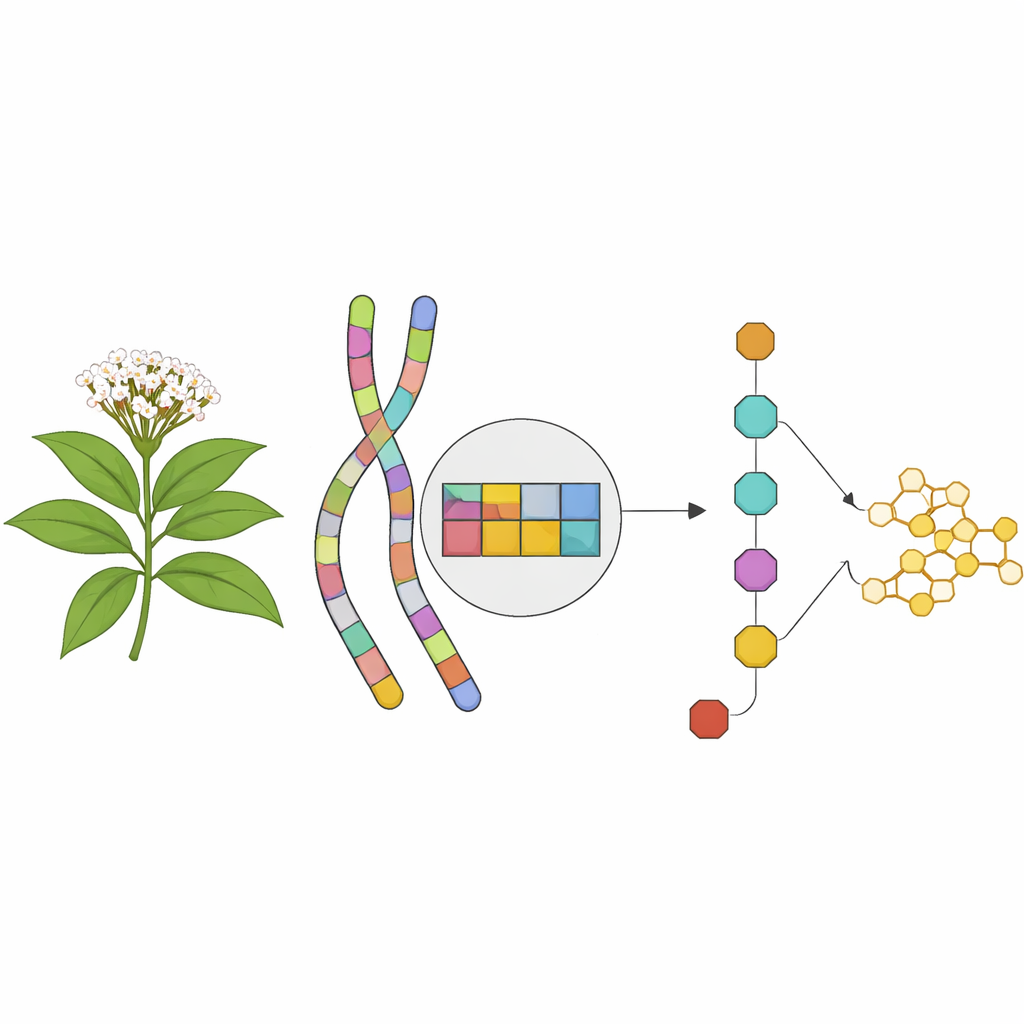
Beyond simply listing genes, the authors compared the O. japonica genome with the genomes of two other camptothecin-producing species. They traced shared blocks of genes along chromosomes and linked these patterns to ancient genome-duplication events, where entire sets of chromosomes were copied. Their analysis suggests that a key early step in alkaloid production—the pathway to a central molecule called strictosidine—arose after an old threefold genome multiplication shared with a relative, O. pumila, but before a later duplication in the camptothecin tree Camptotheca acuminata. They also pinpointed candidate clusters of genes that likely work together to build camptothecin itself, integrating DNA, RNA, and chemical data to outline how these pathways may have diversified within the Ophiorrhiza lineage.
New Tools for Future Cancer Therapies
By delivering a complete, well-annotated genome, this work turns O. japonica into a powerful model for studying how plants evolve complex medicinal chemicals. For non-specialists, the take-home message is straightforward: scientists now have a detailed instruction manual for a plant that naturally manufactures an important anti-cancer compound. With this blueprint, future research can focus on uncovering every step of camptothecin production, improving plant breeding, and possibly transferring key pathways into other organisms such as microbes or crop plants. In the long run, this genome may help secure more sustainable, affordable supplies of camptothecin-based medicines and inspire new plant-derived drugs.
Citation: Tang, X., Liu, Y., Liao, Y. et al. Chromosome-level genome assembly of the medicinal plant Ophiorrhiza japonica Blume. Sci Data 13, 393 (2026). https://doi.org/10.1038/s41597-026-06784-5
Keywords: camptothecin, medicinal plants, genome assembly, Ophiorrhiza japonica, plant natural products