Clear Sky Science · en
Chromosome-level genome assembly and annotation of the critically endangered Siberian crane (Leucogeranus leucogeranus)
A Rare Bird and Its Hidden Blueprint
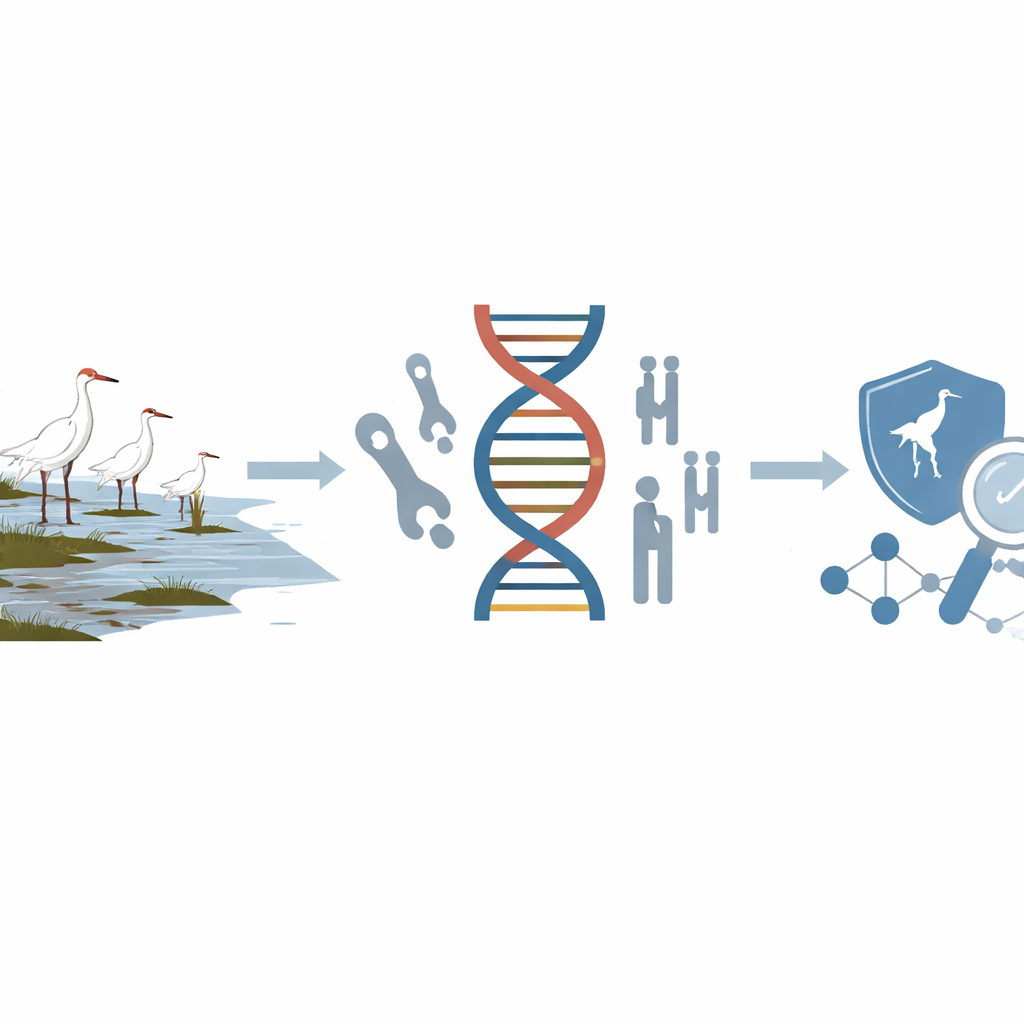
The Siberian crane is one of the world’s most threatened waterbirds, migrating across continents yet perilously close to disappearing. To protect such a species, conservationists now look not only at wetlands and migration routes, but also at DNA—the complete instruction book inside every cell. This study delivers the most detailed version yet of that instruction book for the Siberian crane, organizing its genetic material all the way down to individual chromosomes and opening new paths for understanding how these birds live, adapt, and might be saved.
Why the Genome of a Crane Matters
Crane species around the globe are under pressure from habitat loss, disturbance, and hunting, and the Siberian crane is among the hardest hit. Its Western and Central Asian population is now considered virtually gone from the wild, while the East Asian group has only slowly recovered to a few thousand birds thanks to decades of conservation work. Scientists increasingly rely on full genomes—complete DNA maps—to uncover the roots of unique traits, such as striking plumage and specialized body shapes, and to spot early signs of genetic decline. For the Siberian crane and its relatives, such knowledge can guide smarter breeding programs, identify important populations, and reveal how different species in the crane family evolved.
Building a Complete DNA Map
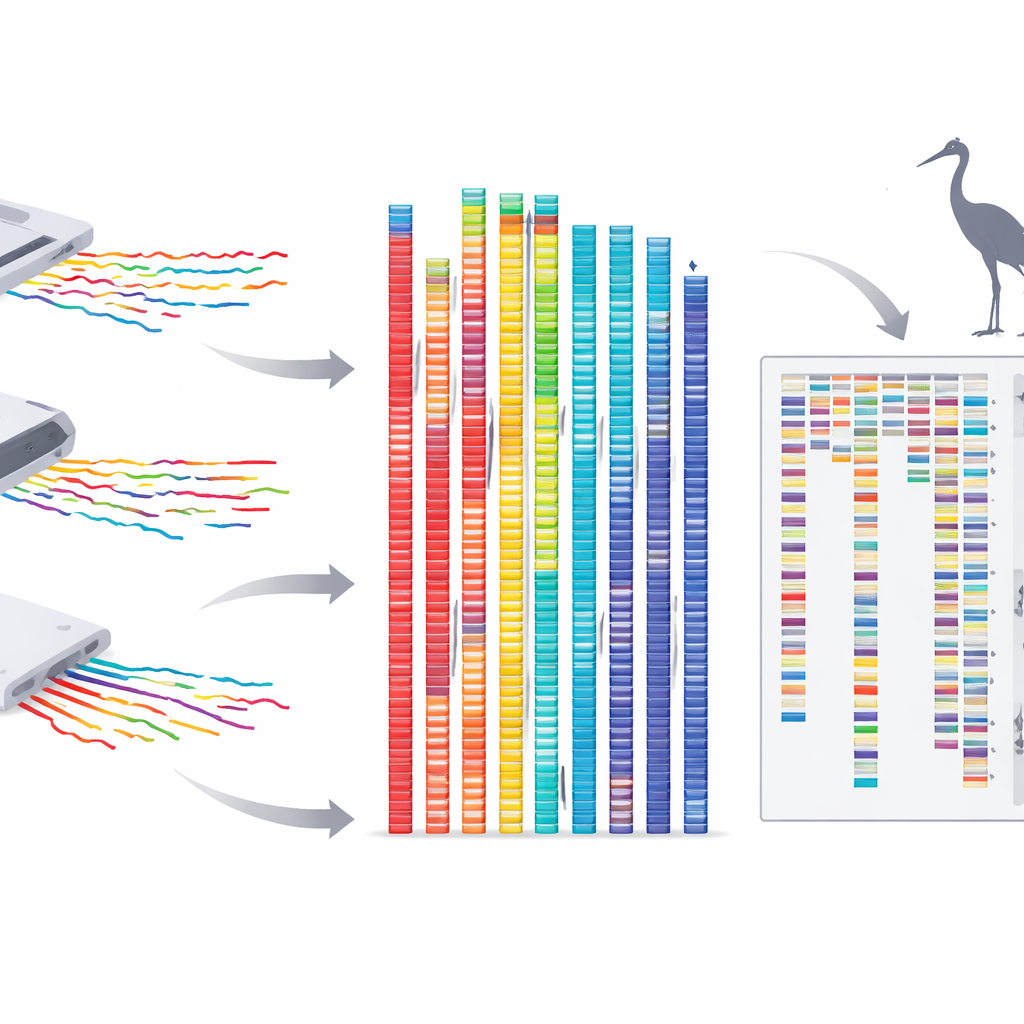
To construct this genetic atlas, the researchers collected blood from a rescued male crane and muscle tissue from a deceased bird at China’s Poyang Lake, a key wintering ground. They then combined three powerful sequencing approaches. Long DNA strands were read using Nanopore technology, short but highly accurate snippets came from an MGISEQ-2000 platform, and a technique called Hi‑C captured how pieces of DNA are physically arranged and interact inside the cell’s nucleus. Together, these data provide both the fine print and the large-scale layout needed to reassemble the bird’s chromosomes from millions of fragments.
From Fragments to Chromosomes
Starting with the long-read data, the team stitched DNA pieces into larger segments and repeatedly refined them using the short, more accurate reads. Next, they applied the Hi‑C information, which acts like a three-dimensional contact map, to determine which segments sit next to each other along actual chromosomes. This step let them group and order the fragments into 33 chromosomes—32 regular pairs plus one sex chromosome—along with a small number of remaining pieces that could not be confidently placed. The final genome spans about 1.31 billion DNA letters, with most of that sequence neatly assigned to full-length chromosomes and quality checks indicating that nearly all expected genes are present and correctly assembled.
What the Genome Reveals Inside
With the basic structure in hand, the researchers cataloged what lies within. They found that roughly one-tenth of the genome consists of repeating elements, such as mobile DNA segments that can shape genome evolution. More importantly, they identified 21,678 protein-coding genes—stretches of DNA that hold recipes for building the crane’s proteins—and successfully linked the vast majority of these genes to known functions using international databases. They also mapped thousands of small RNA molecules that help control how genes are turned on and off. When the Siberian crane genome was compared with those of other cranes, its overall layout closely matched, confirming a shared chromosomal framework across the group and clarifying which chromosome is the crane’s Z (sex) chromosome.
New Tools for Saving Cranes
For non-specialists, the key message is that we now have a nearly complete, chromosome-by-chromosome view of the Siberian crane’s genetic blueprint. This resource gives conservation biologists and evolutionary scientists the tools to probe how this species adapted to harsh northern breeding grounds and long migrations, to monitor harmful inbreeding, and to compare its genome with those of other threatened cranes. In practical terms, such detailed genetic knowledge can inform breeding and management plans, helping ensure that this striking white bird remains more than just a memory in field guides and history books.
Citation: Chen, Q., Zheng, C., Huang, P. et al. Chromosome-level genome assembly and annotation of the critically endangered Siberian crane (Leucogeranus leucogeranus). Sci Data 13, 388 (2026). https://doi.org/10.1038/s41597-026-06773-8
Keywords: Siberian crane, genome assembly, endangered species, conservation genetics, bird evolution