Clear Sky Science · en
Multiclass Dataset for Intelligent Detection of Wind Turbine Blade Defects Using Drone Imagery
Watching Over Giant Wind Machines
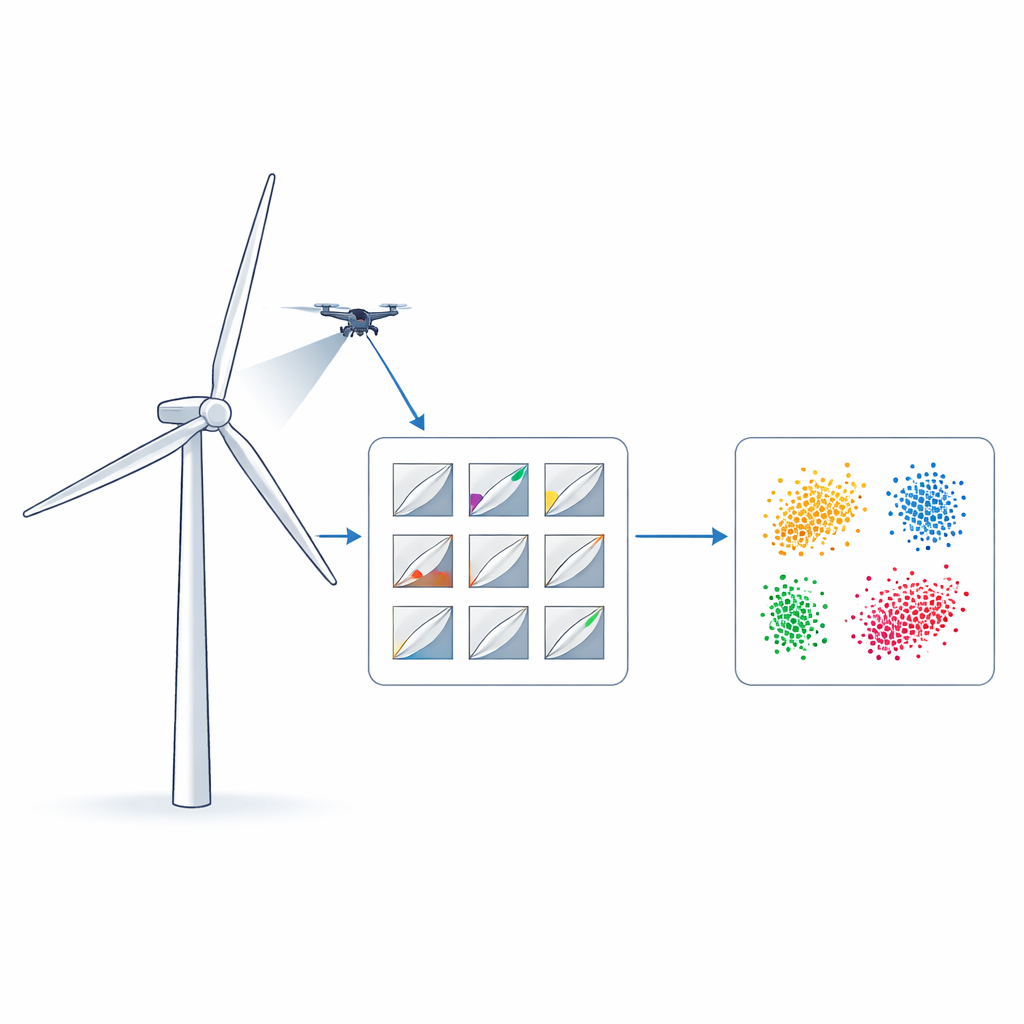
Wind turbines quietly turn in fields and offshore waters, helping to power our homes with clean energy. But their long blades are exposed to sun, rain, salt, sand, and even lightning, and small flaws can grow into serious damage. Climbing these huge structures to look for problems is slow and risky. This study introduces a new way to help computers spot blade trouble early, using a carefully built collection of drone photos that capture real defects in fine detail.
Why Blade Defects Matter
Modern wind farms depend on thousands of spinning blades working safely around the clock. Any crack, worn patch, or hidden scratch can reduce efficiency or, in the worst case, lead to dangerous failures and costly shutdowns. Inspectors have begun using drones to photograph blades from a distance, but teaching computers to recognize many different kinds of flaws in these images requires large, well labeled collections of examples. Existing image sets were either too small or focused on only one or two types of damage, limiting how smart and reliable inspection software could become.
Building a Rich Picture Library from the Air
The authors created the Wind Turbine Blade Defect (WTBD) dataset to fill this gap. Using a camera-equipped drone at a coastal wind farm near Shanghai, they flew close to operating turbines and captured about 2,500 high-resolution photos under different weather and lighting conditions. After discarding blurry images and those without visible damage, they kept 1,065 clear pictures and standardized them to a square format suitable for computer analysis. Each image shows real blades with natural backgrounds such as sky and clouds, preserving the messy conditions inspection systems must face in the field.
Six Ways a Blade Can Be Hurt
Instead of relying only on where damage appeared, the team grouped defects by how they actually look. Using engineering experience and what can be seen from the air, they defined six common categories: fine surface cracking, deeper breaks, corrosion from sand and salt, coating scrapes and peeling, subtle hairline flaws, and distinct burn-like marks from lightning strikes. Human experts then used a specialized drawing tool to outline every damaged region with a box and assign it to one of these six groups. Two independent annotators went through the images, and disagreements were settled in discussion, resulting in 1,568 precisely marked defect areas. A statistical check showed their agreement was very high, giving confidence that the labels are trustworthy.
Testing How Challenging the Images Are
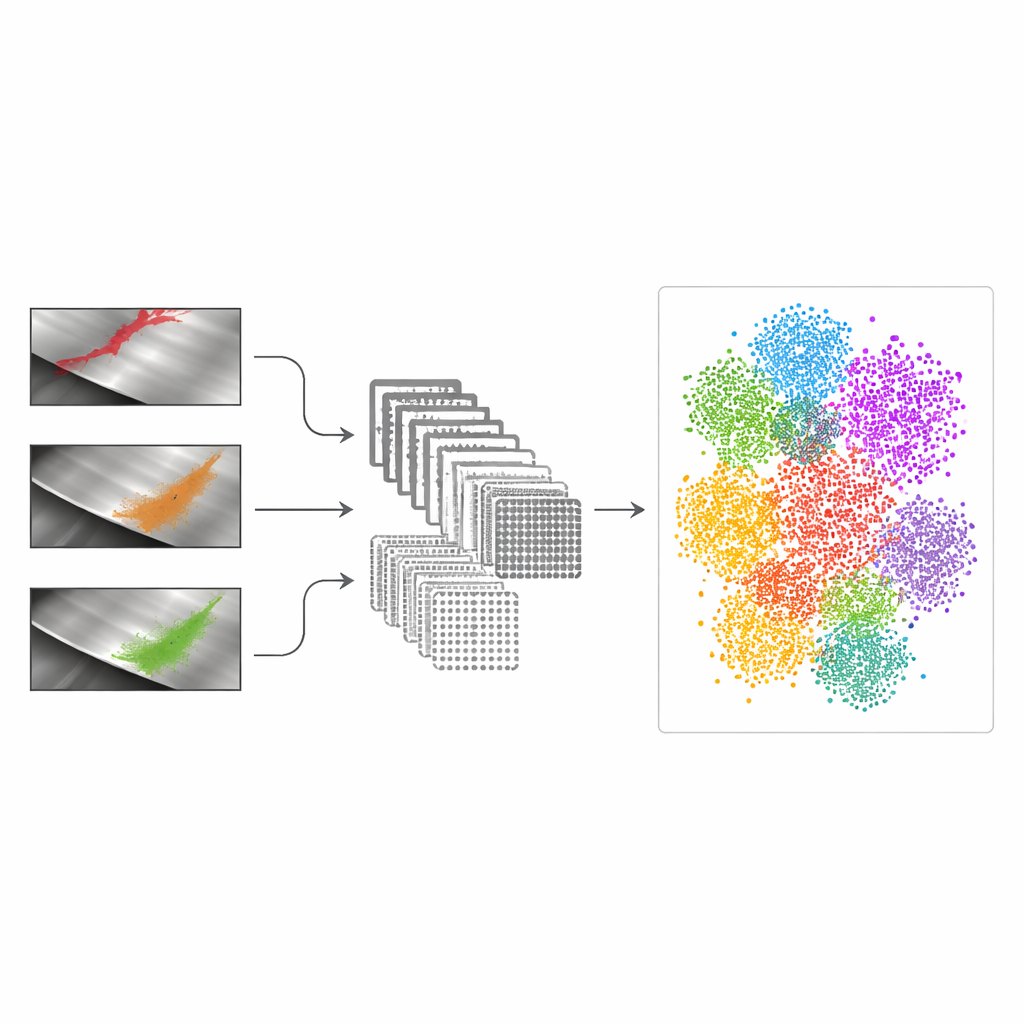
To see how demanding this dataset is for computer vision systems, the researchers examined the patterns within each marked region using established image descriptors that capture texture and edge information. They then projected these measurements into a two-dimensional map that shows how similar different defects appear to a computer. The results revealed that examples from the same category can look surprisingly different depending on viewing angle, distance, and lighting, while different categories can end up crowded together in the same part of this map. This means simple visual clues are often not enough to tell one type of damage from another. The images also contain many small targets and multiple defects in a single shot, closely mirroring what happens in real wind farm inspections.
A New Testbed for Smarter Inspections
By releasing the WTBD collection as open data, along with code and recommended ways to split the images into training and testing sets, the authors provide a rigorous playground for developers of advanced detection algorithms. For non-specialists, the key takeaway is that this dataset captures real, varied, and sometimes confusing blade damage in a way that computers can learn from. It should help accelerate the creation of AI tools that scan drone footage, flag risky defects early, and ultimately keep wind turbines spinning safely and efficiently for longer.
Citation: Ji, L., Cheng, J. & Wu, S. Multiclass Dataset for Intelligent Detection of Wind Turbine Blade Defects Using Drone Imagery. Sci Data 13, 396 (2026). https://doi.org/10.1038/s41597-026-06762-x
Keywords: wind turbine blades, drone inspection, surface defects, computer vision, renewable energy maintenance