Clear Sky Science · en
A global image-based data repository of killer whale interactions with elasmobranchs
Why Shark‑Hunting Whales Matter to Us
Killer whales are famous ocean hunters, but much of what they do beneath the waves happens out of sight. This study brings some of that hidden world into view by gathering photos and videos of encounters between killer whales and their lesser‑known rivals and prey: sharks, skates, and rays. By turning scattered snapshots from tourists, guides, and scientists into a shared global resource, the work helps researchers piece together who eats whom, where, and how in the open ocean—insights that ultimately shape how we understand and protect marine ecosystems.
Bringing Hidden Encounters Into Focus
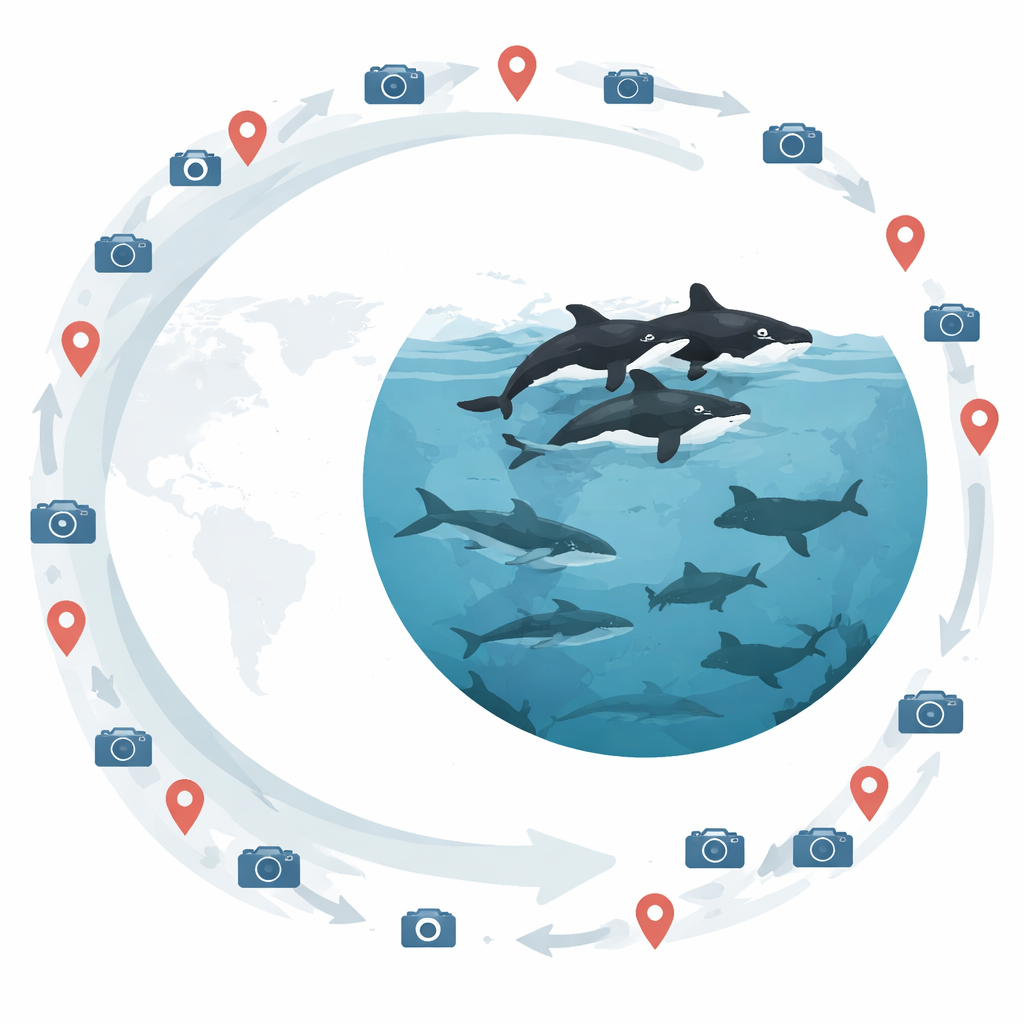
Sharks and rays are often cast as the top predators of the sea, yet killer whales can and do target them. Until now, records of these moments were mostly chance sightings and scattered anecdotes. The authors set out to change that by building the first global, image‑based catalog of interactions between killer whales and elasmobranchs (the group that includes sharks, skates, and rays). They assembled 320 photos and videos capturing 82 separate encounters from 12 countries, ranging from South Africa to Japan and the United States. This new collection turns rare and fleeting observations into documented events that can be revisited and analyzed.
How Images Became Scientific Clues
To build the dataset, the team did not rely only on traditional research cruises. Instead, they tapped into a wide community that already spends time at sea. They circulated calls for contributions on a global marine‑mammal email list, on social media platforms such as Instagram and Facebook, and directly to 74 whale‑watch and marine tourism companies operating in key coastal regions. Anyone with suitable photos or videos could contribute, from professional scientists to tour‑boat crews and citizen observers. For each submission, contributors were asked for basic details: when and where the interaction happened and, if known, which individual killer whales were involved.
Sorting Sharks, Rays, and Behaviors
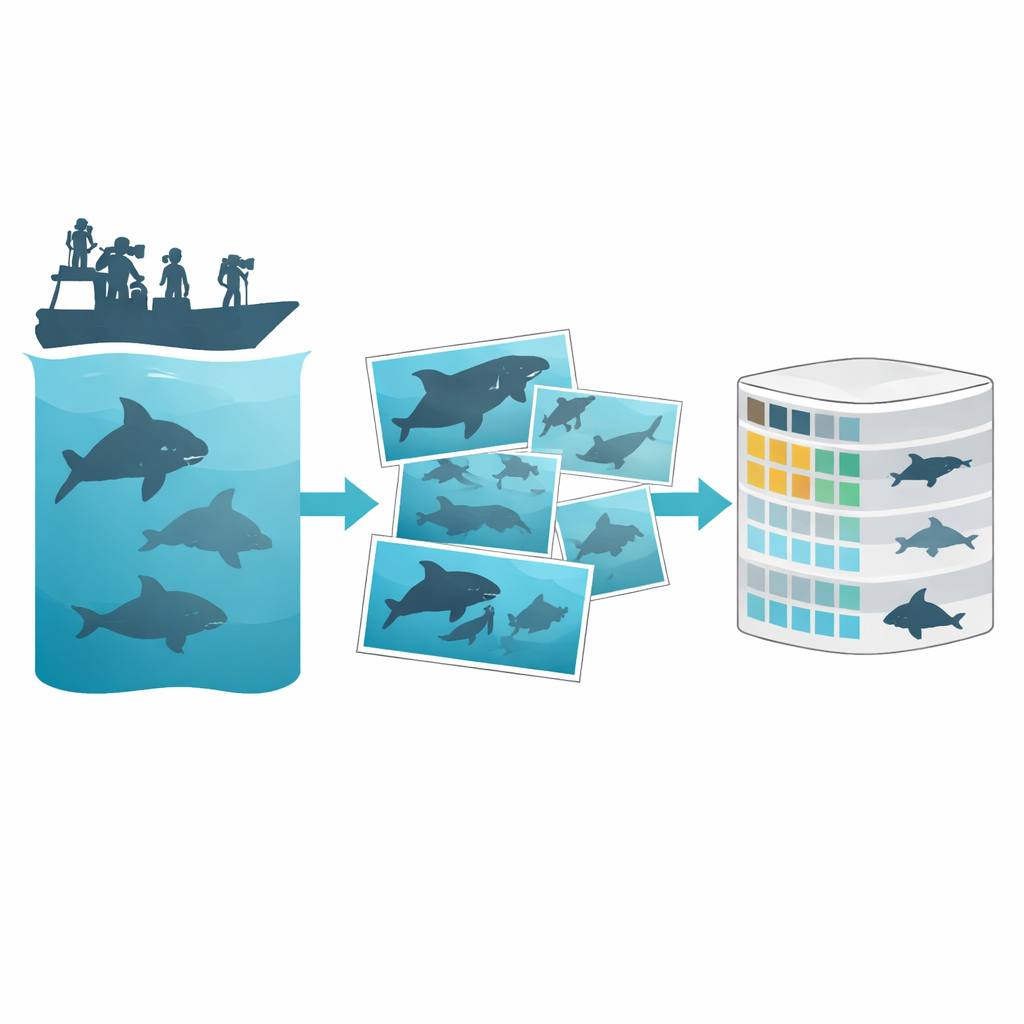
Once the images arrived, the researchers examined them carefully to identify which shark or ray species were present and what was happening in each scene. They labeled each elasmobranch to the most precise level possible and rated their confidence in the identification, depending on how clearly the animal’s features were visible. The collection ultimately included at least 18 species across 16 genera. Cookiecutter sharks appeared most often among shark encounters, while mobula rays dominated among rays. The team also developed 10 simple interaction categories—such as killing, killing with consumption, attack without a confirmed kill, avoidance, and harassment—to describe whether the whales were hunting, feeding, stealing food, merely following, or changing course to avoid contact.
From Ocean Moments to Mapped Records
Beyond the animals themselves, the dataset tracks the where and when of each event. Whenever possible, the researchers recorded exact geographic coordinates; when that was not available, they estimated locations with the help of contributors and information embedded in the image files. Each record notes whether its position is exact or approximate. All encounter details—dates, locations, interaction types, media formats, species identifications, and the names of contributors—are stored in a single spreadsheet file. A separate, openly accessible archive hosts the watermarked photos and videos. The team cross‑checked every entry against original notes and consulted contributors to resolve any discrepancies, ensuring that the final resource closely reflects what observers saw at sea.
Why This Shared Record Is a Big Step
By itself, this project does not answer every question about how killer whales and sharks or rays affect one another, but it lays vital groundwork. With a standardized, global set of images and metadata, scientists can now study patterns in where these encounters occur, how often they involve outright predation versus non‑lethal behavior, and whether certain killer whales seem to specialize in hunting particular species. That knowledge feeds into a broader picture of how large predators shape ocean food webs and how those relationships may shift as human activity and climate change alter marine habitats. For anyone curious about life beneath the surface, this open‑access dataset turns the brief click of a camera shutter into lasting evidence that can help unravel the hidden drama between two of the ocean’s most iconic hunters.
Citation: Luck, E., Reeves, I.M., Terrapon, M. et al. A global image-based data repository of killer whale interactions with elasmobranchs. Sci Data 13, 353 (2026). https://doi.org/10.1038/s41597-026-06740-3
Keywords: killer whales, sharks and rays, predator prey interactions, marine ecology data, citizen science imagery