Clear Sky Science · en
Behavioral dataset for Long-Evans and its schizophrenia-like substrain through several generations
Why Rat Behavior Can Help Us Understand Mental Illness
Schizophrenia is a serious mental disorder, yet directly studying it in people is slow, difficult, and ethically limited. Researchers often turn to animals to explore how genes, life experiences, and brain chemistry interact over time. This article describes a rich open dataset collected over seven years from more than a thousand rats, including a specially bred line that shows schizophrenia-like traits. By making these measurements freely available, the authors offer a powerful new resource for anyone interested in how behavior, learning, and heredity intertwine.
A Long Look at Two Lines of Rats
The study follows 1,342 rats from a standard laboratory strain, Long-Evans, and a sister line called Lisket that was designed to model some features of schizophrenia. Lisket rats were exposed early in life to three challenges: a period of social isolation, repeated doses of a drug that alters brain signaling, and selective breeding based on behavior. Across 16 generations, males and females from both lines were raised under carefully controlled conditions and then tested at ten weeks of age. This long-running design lets scientists examine not only differences between the two strains, but also how behavior remains stable or drifts as the animals are bred over the years.
A Rat Racetrack That Measures Curiosity and Learning
To capture behavior efficiently, the team used a custom-built setup called Ambitus: a clear-walled rectangular track lined with small side boxes that can deliver tiny food rewards. 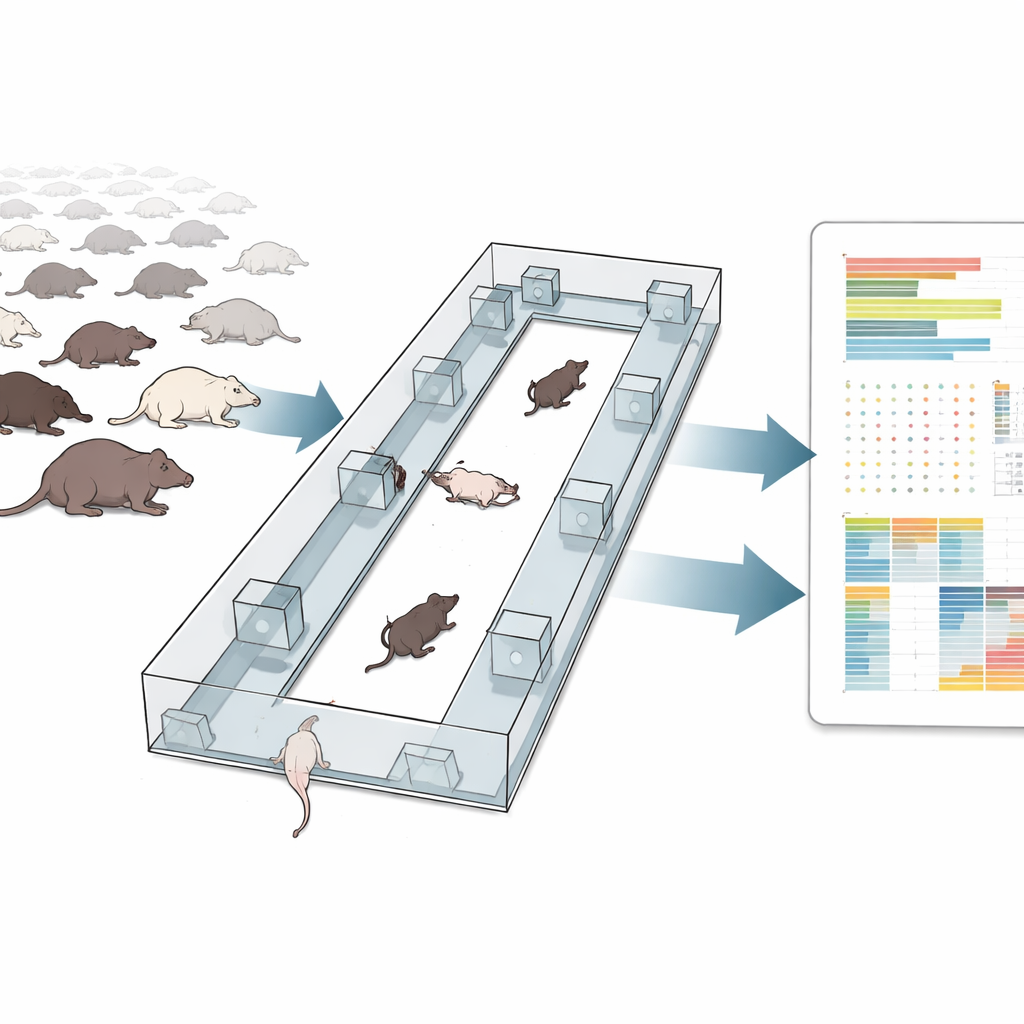
From Raw Paths to Meaningful Scores
The authors turned these movements into 91 different measures that together describe locomotion, exploration, reward collection, and learning efficiency. For the breeding program, key measures were grouped into simple scores that classified each animal as low-, medium-, or high-risk for a schizophrenia-like profile. The full dataset, however, goes far beyond these categories. It includes a “raw” table, where each trial for each rat is listed separately, and a “processed” table, where behavior across the four trials is neatly summarized for each animal along with its strain, sex, generation, and test date. This structure allows users to zoom in on moment-by-moment behavior or zoom out to compare patterns across large groups.
Checking the Quality of the Data
Large datasets are only useful if they are reliable, so the authors perform several checks. They map how often values are missing and show that most measures are more than 99% complete. The main gaps arise when a rat simply does not visit any side box in a given phase, which itself is an informative sign of low activity rather than a technical error. 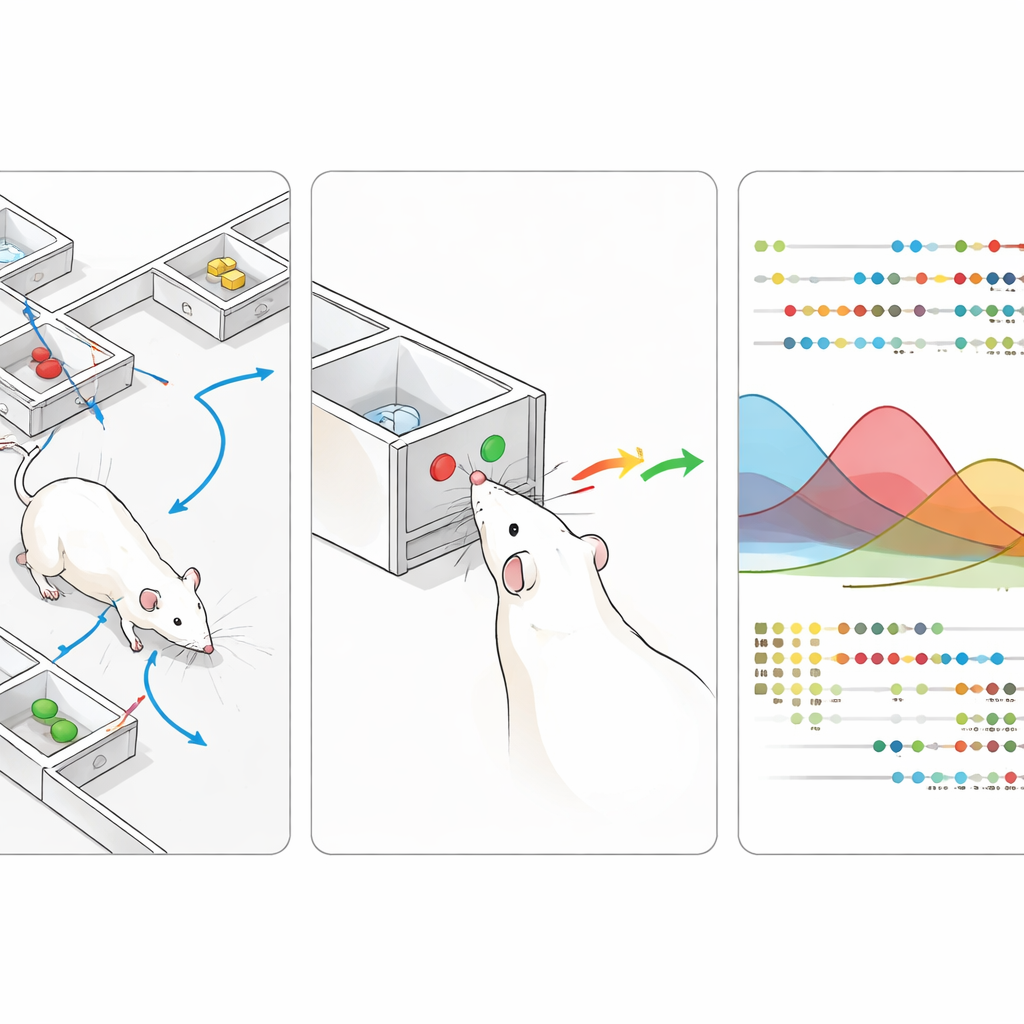
What This Means for Future Research
By itself, this work does not claim to solve schizophrenia or pinpoint a single “disease behavior” in rats. Instead, it offers a carefully documented, openly available foundation on which many different studies can build. Neuroscientists can use it to search for robust behavioral markers, data scientists can test new machine-learning tools, and pharmacologists can compare how potential treatments might shift patterns of activity and learning. For a lay reader, the key message is that the raw building blocks of discovery—clean, long-term measurements of behavior under controlled conditions—are now shared in a way that invites collaboration. This makes it more likely that subtle links between genes, experience, and mental health will eventually come into clearer focus.
Citation: Kőrösi, G., Czimbalmos, O., Kekesi, G. et al. Behavioral dataset for Long-Evans and its schizophrenia-like substrain through several generations. Sci Data 13, 398 (2026). https://doi.org/10.1038/s41597-026-06735-0
Keywords: rat behavior, schizophrenia model, longitudinal dataset, cognitive testing, machine learning in neuroscience