Clear Sky Science · en
A high-quality chromosome level genome assembly of the South African indigenous Nguni goat (Capra hircus)
Why a New Goat Genome Matters
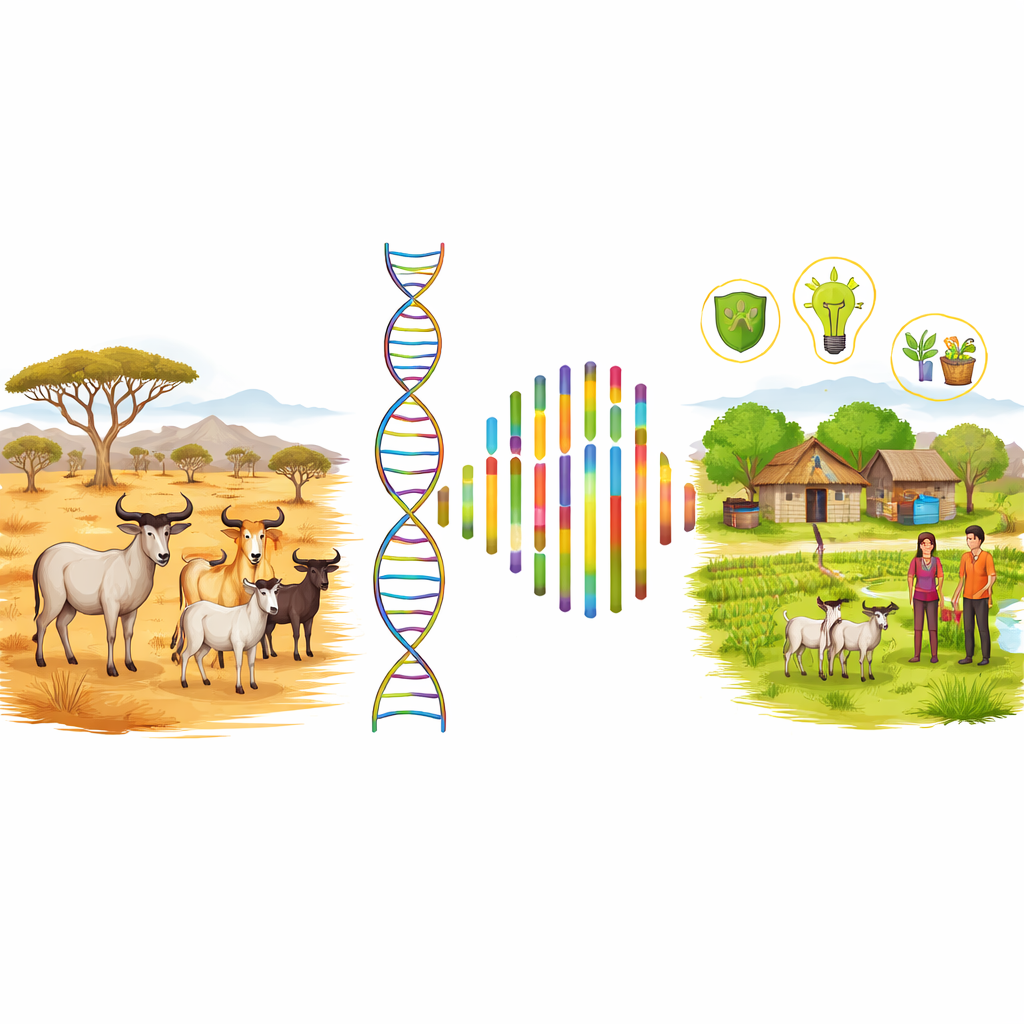
For many South African families, Nguni goats are more than animals—they are savings accounts, sources of meat and milk, and part of cultural life. Yet, until now, scientists did not have a detailed “instruction manual” for this hardy local breed. This study reports the first high-quality, chromosome-level map of the Nguni goat’s DNA, opening the door to smarter breeding, better conservation, and more resilient small-scale farming.
A Tough Goat in a Tough Landscape
Nguni goats thrive where other animals struggle. They are small, easy to manage, and can handle heat, parasites, and poor grazing better than many imported breeds. These traits make them ideal for low-input, rural farming systems. However, their smaller carcass size is often seen as a drawback in commercial markets, encouraging farmers to cross them with larger exotic breeds. While crossbreeding can produce bigger animals, it risks diluting the very genes that make Nguni goats so hardy and well adapted to local conditions.
Why Reading the Genetic Blueprint Is Important
Until recently, most work on Nguni goats focused on visible traits such as body size, growth, or behavior. A few studies used modern DNA tools to explore how they adapt to harsh environments, hinting at genes linked to efficient digestion and survival under tough conditions. But without a complete reference genome specific to this breed, it was difficult to pinpoint important genes or compare Nguni goats accurately to other goats. At the same time, global projects have produced high-quality genomes for many livestock species, mostly for commercial or non-African breeds. Indigenous African goats, including Nguni, have remained underrepresented, despite their value for food security and sustainable agriculture.
How Scientists Built the Genome Map
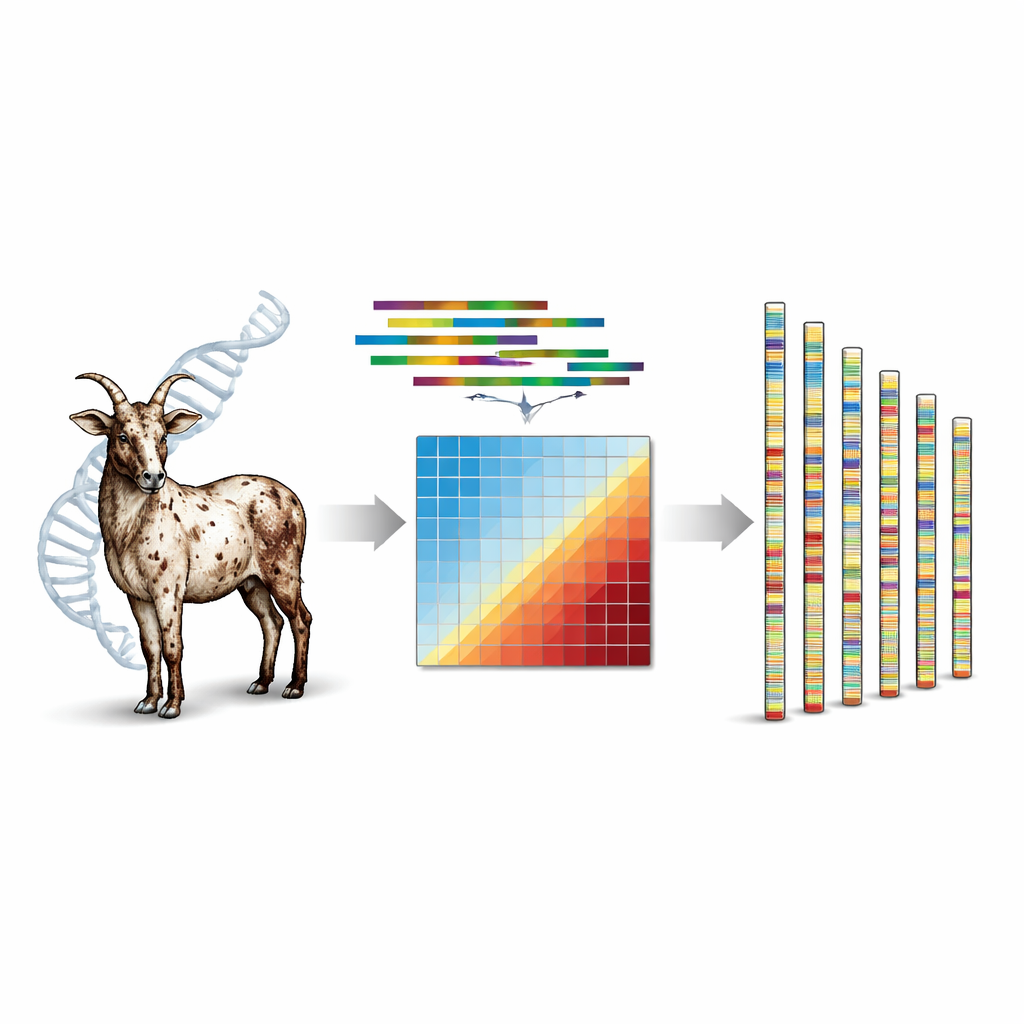
To fill this gap, the researchers collected a blood sample from a healthy adult Nguni goat at a conservation-focused research station in Limpopo Province, South Africa. They used two cutting-edge DNA sequencing approaches. One, based on long DNA fragments, reads large stretches of genetic code in single passes. The other, known as chromosome-contact mapping, captures how pieces of DNA are physically arranged and folded inside the cell. By combining these methods and running them through a carefully tested assembly pipeline, the team stitched together the goat’s entire genome, placing nearly all of it into long, chromosome-scale pieces.
What the Genome Reveals
The finished Nguni goat genome is about 2.85 billion DNA letters long and is organized into just over a hundred large scaffolds that closely match the chromosomes of a well-studied cashmere goat. Quality checks showed that the assembly is extremely complete and accurate, capturing the vast majority of expected genes. The team also examined the “structural scenery” of the genome—its repeated sequences, gene-rich regions, and chromosome ends. Roughly two-fifths of the genome is made up of repeating elements, a proportion similar to other goats, and more than twenty-two thousand protein-coding genes were predicted. The scientists mapped where repeats and genes lie along the chromosomes and identified several telomere regions, which cap chromosome ends and help maintain stability.
From DNA Map to Better Goats and Better Livelihoods
This new genome is more than a technical achievement; it is a tool for people. With a precise Nguni reference, breeders and researchers can now look for DNA markers tied to valuable traits such as disease resistance, heat tolerance, and efficient use of poor-quality feed. This can guide breeding programs that improve meat and milk production without sacrificing the breed’s natural resilience. It also helps protect the unique genetic identity of Nguni goats, supporting conservation and contributing to broader goals of food security, decent rural livelihoods, and sustainable use of land. In short, this chromosome-level genome turns the Nguni goat’s hidden strengths into information that can be used to benefit both animals and the communities that depend on them.
Citation: Mdyogolo, S., Nesengani, L.T., Tshilate, T. et al. A high-quality chromosome level genome assembly of the South African indigenous Nguni goat (Capra hircus). Sci Data 13, 326 (2026). https://doi.org/10.1038/s41597-026-06725-2
Keywords: Nguni goat, genome assembly, indigenous livestock, animal breeding, South Africa