Clear Sky Science · en
Chromosome-level genome assembly of the casuarina moth, Lymantria xylina Swinhoe (1903)
A Hidden Threat in the Trees
The casuarina moth may look like just another small forest insect, but its caterpillars can strip entire trees bare, threatening fruit orchards and coastal forests across subtropical regions. Until now, scientists lacked a complete genetic blueprint for this pest, limiting efforts to understand why it is so adaptable and invasive. This study delivers the first near-complete, chromosome-level map of the casuarina moth’s DNA, opening the door to smarter, more targeted ways to protect trees without relying solely on broad-spectrum pesticides.

Why This Moth Matters
The casuarina moth is native to parts of Asia, including Japan, India, and coastal regions of China. Its larvae are not picky eaters: they feed on many kinds of trees, including valuable fruit crops such as lychee, longan, and mango, as well as hardwoods used in forestry. Outbreaks can lead to severe defoliation, weakening trees and making them more vulnerable to disease and drought. The moth’s eggs can hitchhike on shipping containers, and its young caterpillars drift on silk threads, allowing the species to spread quickly to new areas. Despite this real-world impact on forests and agriculture, most past research has focused on how to count, track, and chemically control the insect, rather than on the genetic underpinnings of its success.
Building a Complete DNA Map
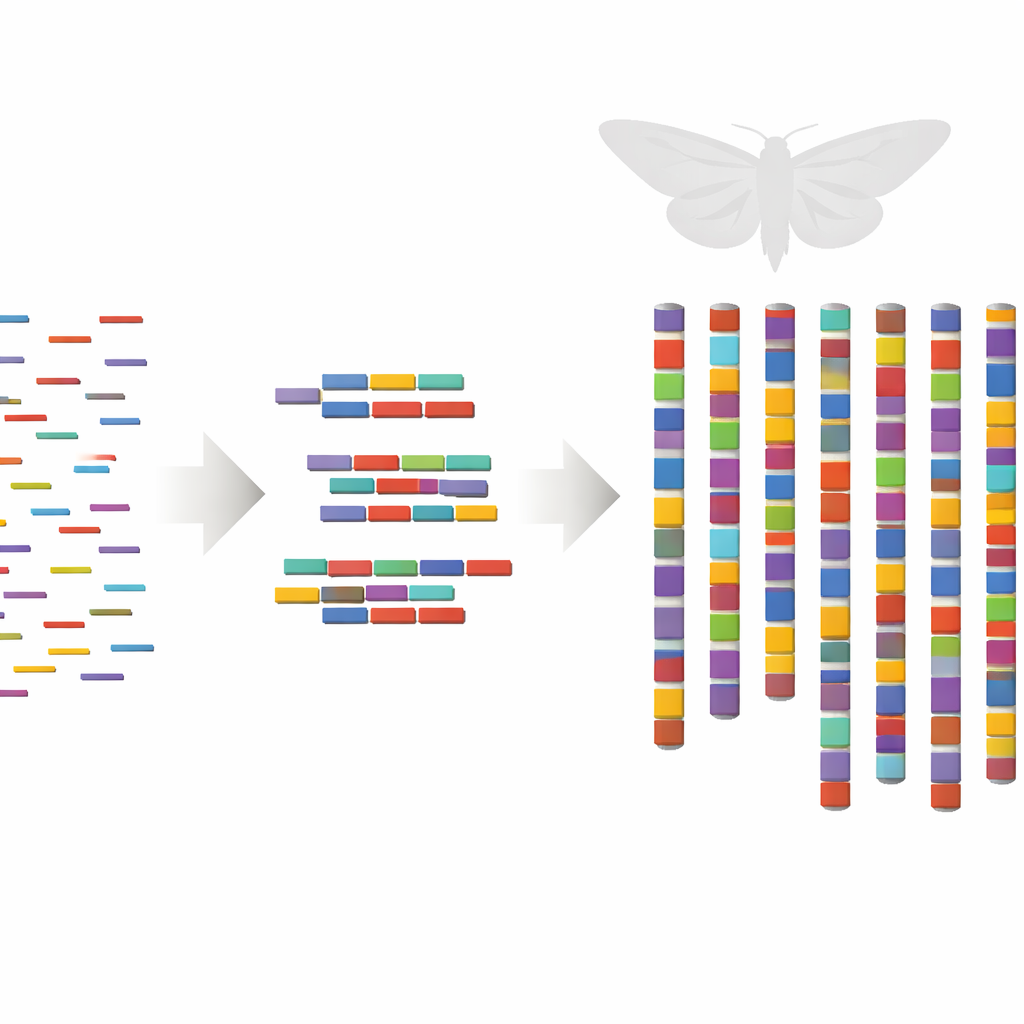
To change that, the researchers set out to build a high-quality reference genome—the definitive DNA map for the casuarina moth. They collected eggs and reared the insects in controlled conditions, then combined several cutting-edge sequencing approaches. Short, highly accurate DNA reads were paired with very long reads that span large stretches of the genome, and a special technique that captures how pieces of DNA interact inside the cell nucleus helped assemble the fragments into full chromosomes. The final result is a genome of about 978 million DNA “letters,” with 95% of this sequence neatly arranged into 31 pseudo-chromosomes. Quality checks show that the assembly is both highly complete and highly accurate, with telomeres—the natural ends of chromosomes—identified at both tips of all 31, indicating that the chromosomes are essentially assembled end-to-end.
What the Genome Reveals
Looking inside this genome, the team found that more than three-quarters of it is made up of repetitive DNA, much of it in the form of mobile genetic elements that can copy and move around. Within this landscape, they predicted 18,484 protein-coding genes, and were able to assign likely functions to over 95% of them by comparing them with known genes from other insects. They also cataloged hundreds of non-coding RNA genes that help control how information in DNA is read and used. Using this resource, scientists can now systematically search for genes linked to key traits in the moth’s life history, such as its ability to feed on many different plants, survive long egg dormancy, and spread efficiently.
Connecting Genes to Life Cycle and Behavior
Beyond just listing genes, the study connects the genome to the moth’s complex life cycle. The authors generated RNA data—snapshots of which genes are switched on—from eggs at different stages of dormancy and hatching. They also measured small molecules involved in metabolism. Comparing these stages revealed thousands of genes and hundreds of metabolites that change as eggs enter, maintain, and exit dormancy. These differences point to biological pathways that help the insect pause development for many months and then restart at just the right time in spring, a strategy that improves survival and synchronizes caterpillar feeding with fresh leaves on host trees.
From DNA Map to Smarter Pest Control
For non-specialists, the main takeaway is that we now have a detailed genetic playbook for one of the subtropics’ most troublesome forest moths. With this chromosome-level genome in hand, researchers can better understand how the casuarina moth detoxifies plant defenses and insecticides, how it times its life cycle, and how it interacts with natural enemies such as viruses and beneficial fungi. In the long run, this knowledge can guide the design of more precise, environmentally friendly control tools—such as highly specific biological agents or strategies that disrupt key life stages—helping to protect forests and orchards while reducing dependence on broad chemical treatments.
Citation: Liu, S., Jiang, H., Ni, T. et al. Chromosome-level genome assembly of the casuarina moth, Lymantria xylina Swinhoe (1903). Sci Data 13, 352 (2026). https://doi.org/10.1038/s41597-026-06724-3
Keywords: casuarina moth, genome assembly, forest pest, invasive insects, pest management