Clear Sky Science · en
KoTaP: A Panel Dataset for Corporate Tax Avoidance, Performance, and Governance in Korea
Why company taxes matter to all of us
When big companies pay less tax than expected, it can change how much money governments collect, how businesses grow, and what risks investors face. Yet it has been surprisingly hard to study how firms actually manage their taxes over long periods and how this ties into their profits and stability. This article introduces a new open dataset for Korean companies that lets researchers, policymakers, and even curious citizens look under the hood of corporate tax behavior and see how it connects to performance and corporate control in a systematic way.
A new long‑view of Korean companies
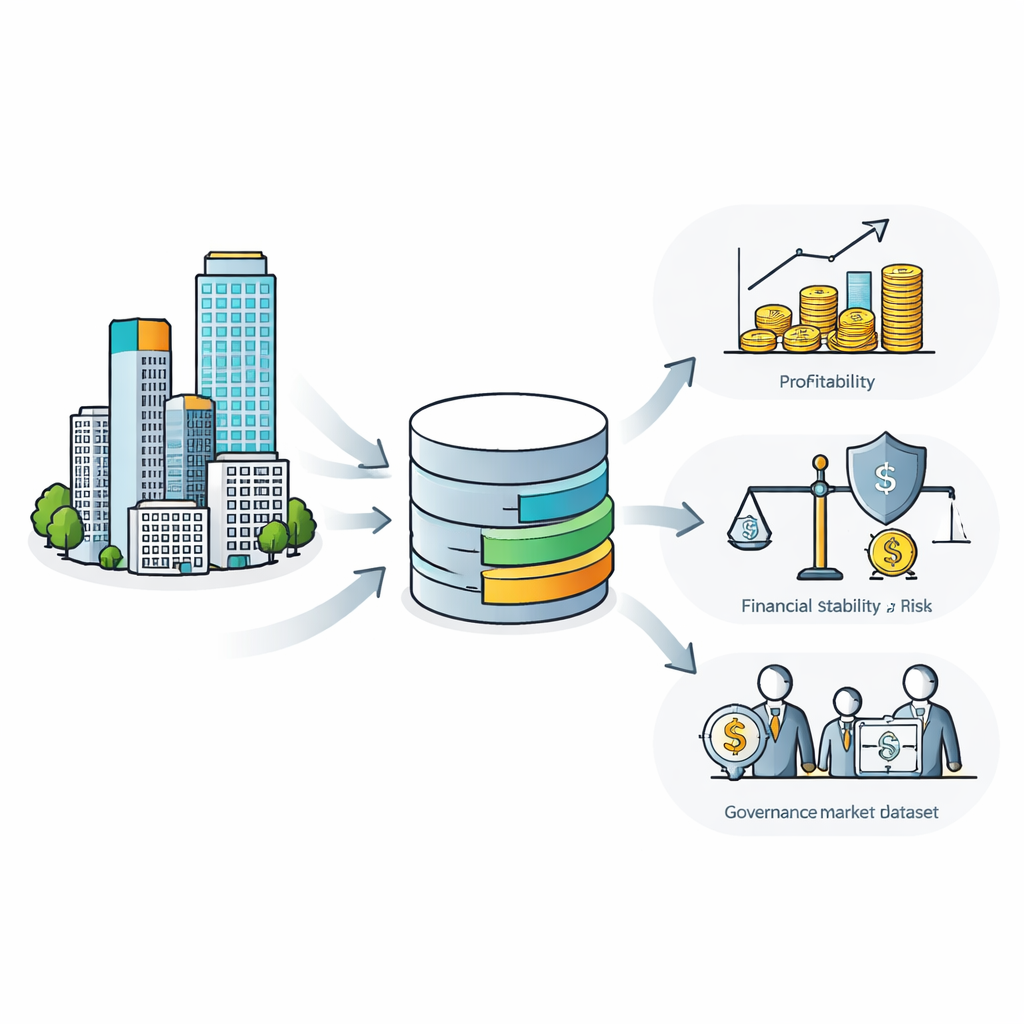
The authors present the Korean Tax Avoidance Panel (KoTaP), a long-term dataset covering non‑financial companies listed on Korea’s main stock markets, KOSPI and KOSDAQ, from 2011 to 2024. After carefully filtering out financial firms, companies with unusual reporting periods, and cases where tax ratios would be misleading, the final dataset contains 12,653 company‑year records from 1,754 distinct firms. Each record brings together tax, accounting, stock market, and ownership information in a standardized format. This makes KoTaP the first publicly available panel that allows broad, year‑by‑year tracking of how listed Korean firms handle their taxes and how that relates to their financial health and governance.
Seeing tax behavior from several angles
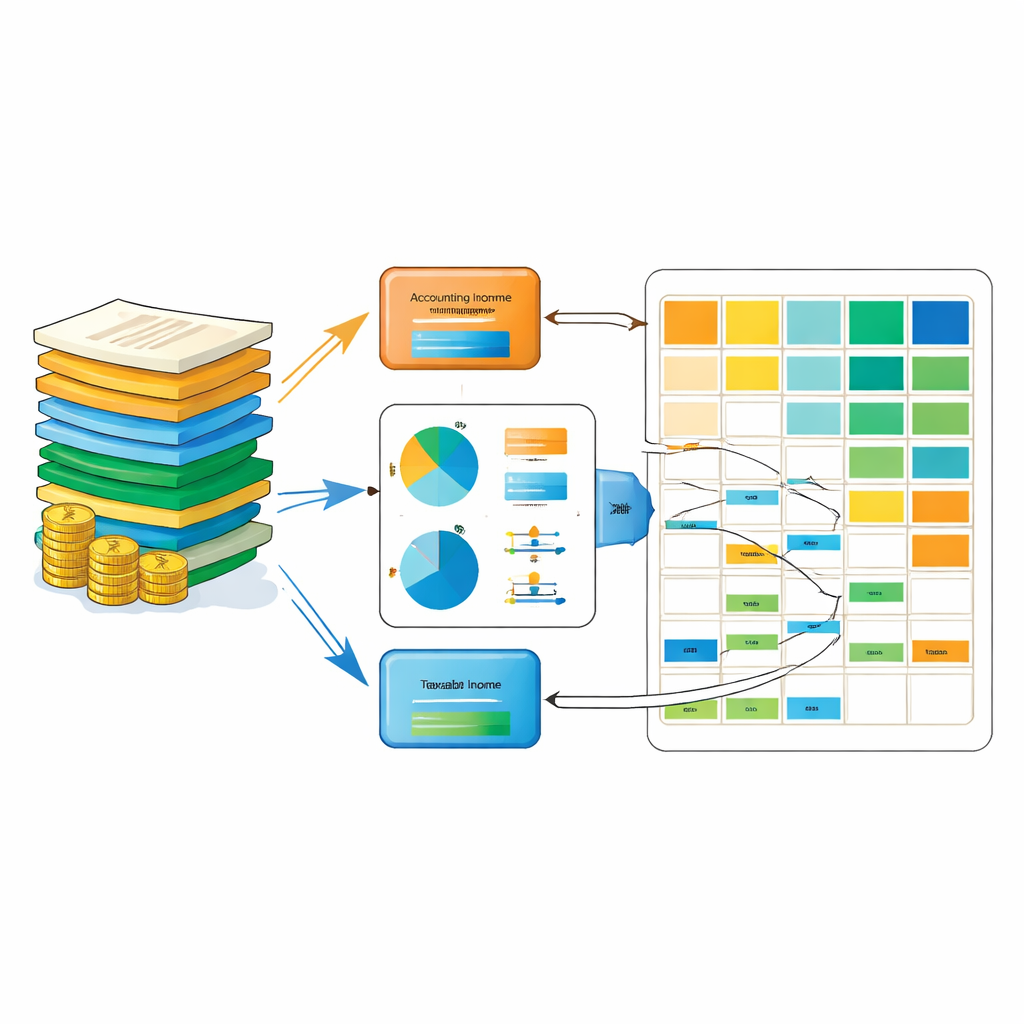
Corporate tax avoidance is tricky to measure because no single number captures the full picture. KoTaP tackles this by combining several complementary indicators. It includes cash-based and accounting-based effective tax rates, which show the share of income that actually goes out as tax or is booked as tax expense. It also tracks gaps between what firms report as profit in their accounts and what is inferred as taxable income, using both total differences and those more closely tied to managerial discretion. These tax measures are calculated not only year by year but also over three‑ and five‑year windows, and are adjusted for industry and firm size so that researchers can compare companies operating in different sectors and at different scales.
Connecting taxes to profits, risk, and control
KoTaP does not stop at taxes. It adds a rich set of variables describing how well firms perform, how risky their finances are, how fast they grow, and how they are governed. Profit-related indicators describe returns on assets and equity and the strength of cash flows from day‑to‑day operations. Stability measures capture leverage, liquidity, size, the weight of physical assets, and firm age. Growth and market expectations are summarized with sales growth, market‑to‑book ratios, and a valuation measure related to the firm’s replacement cost. Governance is reflected in whether a top‑tier audit firm is used, which market the firm is listed on, how much stock is held by foreign investors, and how concentrated ownership is in the hands of the largest shareholder. This design lets researchers ask, for example, whether firms that pay relatively less tax enjoy higher stock market valuations or face greater financial risk.
Building trust in the numbers
Because the value of a dataset depends on its reliability, the authors devote substantial effort to data collection and validation. All numeric information is programmatically retrieved from Korea’s financial reporting and public data systems, then passed through a documented processing pipeline. The team applies clear rules to remove impossible or misleading tax ratios, deals systematically with missing entries, and publishes a version of the data with no gaps across the 65 variables. They check whether the distributions of key measures—like typical tax rates, profitability, and leverage—line up with ranges reported in prior international work, and confirm that relationships among variables behave as theory would suggest. For instance, cash and accounting tax rates move together, profitability measures are tightly linked, and highly indebted firms tend to be less profitable.
What this resource means for the real world
In plain terms, KoTaP is a structured, open ledger of how Korean listed firms pay taxes and how that behavior intertwines with their strength, risk, and ownership over more than a decade. By mirroring the metrics widely used in U.S. and European research, while also capturing distinctive Korean features like powerful business groups and notable foreign shareholding, the dataset makes it easier to compare countries without losing local nuance. Policymakers can use it to gauge whether tax reforms change company behavior, auditors can flag unusual patterns for closer review, and data scientists can train transparent machine‑learning models to uncover hidden thresholds in tax strategies. For non‑experts, the key takeaway is that we now have a clearer, publicly accessible window into how corporate tax choices in Korea relate to company performance and oversight—information that ultimately matters for jobs, public finances, and economic fairness.
Citation: Na, H., Song, W., Han, S. et al. KoTaP: A Panel Dataset for Corporate Tax Avoidance, Performance, and Governance in Korea. Sci Data 13, 372 (2026). https://doi.org/10.1038/s41597-026-06722-5
Keywords: corporate tax avoidance, Korea listed firms, financial performance, corporate governance, open financial datasets