Clear Sky Science · en
Chromosome level genome and full length transcriptome of long whiskers catfish, Mystus gulio (Hamilton, 1822)
A Hidden Fish With Big Importance
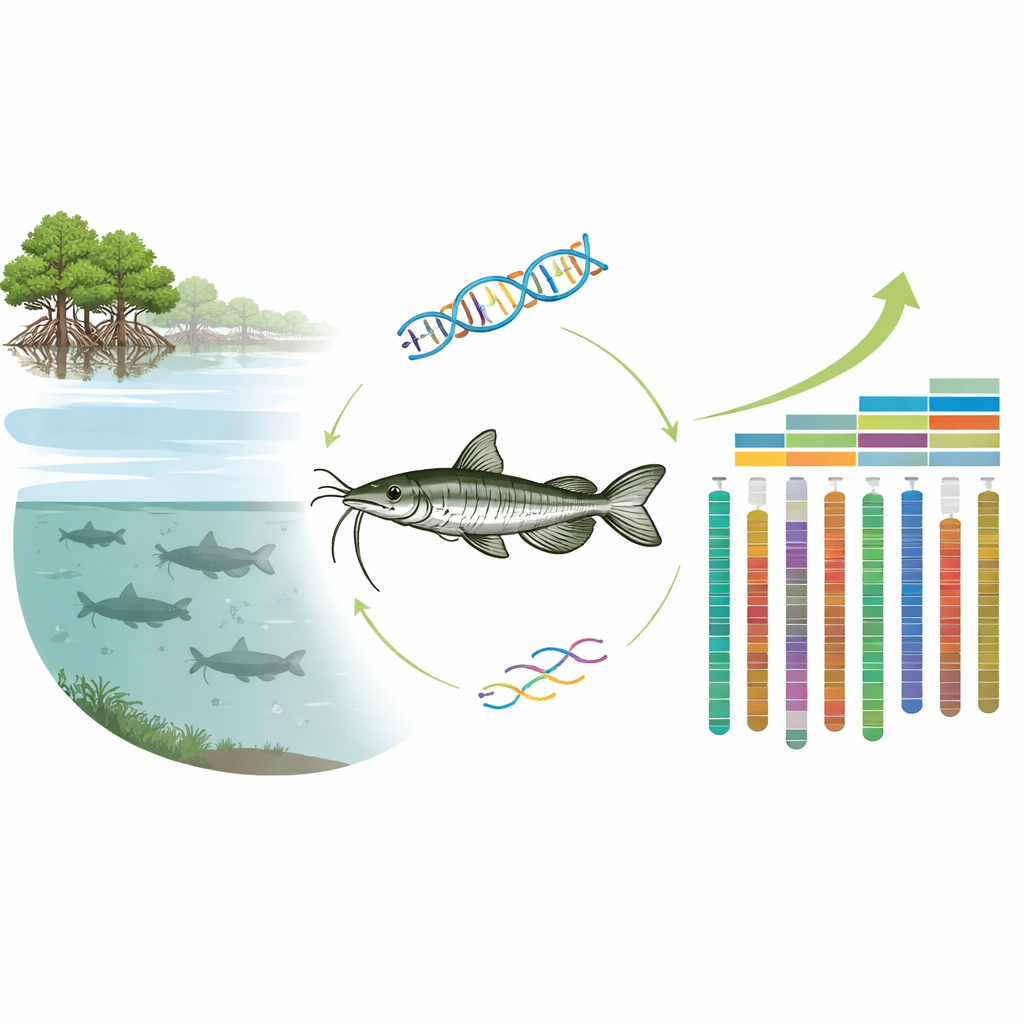
The long whiskers catfish, Mystus gulio, is a modest-looking fish that quietly supports food and nutrition security for many coastal communities in South and Southeast Asia. It lives in brackish waters where rivers meet the sea and is rich in vitamins and micronutrients that are vital for human health. Yet its wild populations have been declining, and farmers struggle to obtain enough young fish to grow in ponds. This study delivers a powerful new tool for changing that situation: a complete, chromosome-scale map of the catfish’s genetic blueprint and the full set of its active genes across multiple body tissues.
Why This Small Catfish Matters
Mystus gulio is classified as a small indigenous fish species—a group that can make a big difference in diets where people may lack key nutrients. In regions such as the Sundarbans mangrove system, catches of this catfish have dropped sharply over the last half century. Although scientists have learned how to breed the fish in captivity, large-scale aquaculture is still limited because reliable supplies of young fish are not yet available. A high-quality genome and transcriptome (the catalog of all active genes) can reveal the biological switches that control growth, survival in salty water, disease resistance and efficient use of feed. These insights are the foundation for selective breeding, better farm management and informed conservation of remaining wild stocks.
Building a Complete Genetic Map
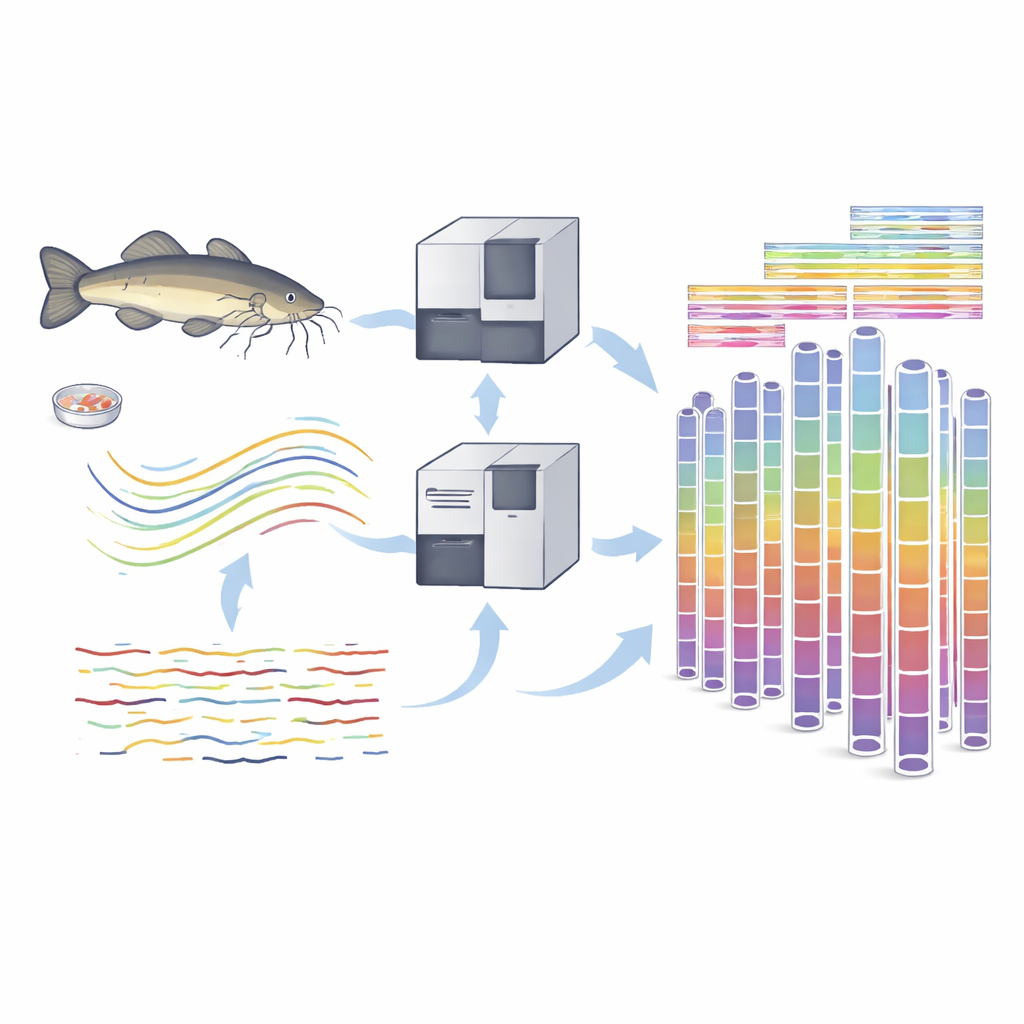
To chart the catfish’s DNA, the researchers combined several cutting-edge sequencing technologies. They used long, highly accurate reads from PacBio HiFi sequencing to assemble the genome into large, continuous stretches. Then they applied Hi-C technology, which captures how pieces of DNA fold and contact each other within the cell, to arrange these stretches into full chromosomes. The finished genome is about 706 million DNA letters long and organized into 29 chromosome-scale segments, matching known chromosome counts for this species and its close relatives. Quality checks showed that the assembly is extremely complete and accurate: more than 96% of the DNA is captured in those 29 chromosomes, and nearly all expected fish genes are present.
Finding Genes and Repeated Patterns
Once the genome was assembled, the team looked for its building blocks. They found that roughly one third of the DNA consists of repeated sequences—short motifs, mobile genetic elements and other repetitive patterns that can influence how genes behave. Using a combination of computer prediction, short-read RNA sequencing and long-read full-length transcripts, they identified 23,339 protein-coding genes. Most of these genes could be matched to known fish genes and linked to biological pathways, including those involved in metabolism, immunity and stress responses. This rich annotation turns the raw DNA sequence into a functional map that shows not just where genes sit, but also how they may work in the animal’s body.
Listening to Tissues Talk
To understand how genes are used in real life, the researchers sequenced full-length RNA molecules from ten different tissues, including gills, liver, muscle, ovary, skin, and specialized organs such as the dorsal barbel and arborescent organ. This allowed them to capture complete gene messages from end to end, rather than just fragments. They then classified thousands of distinct gene versions, or isoforms, many of which arise when cells splice gene messages in different ways. By analyzing patterns of alternative splicing across tissues, the study shows that each organ uses its own blend of gene variants, fine-tuning functions like breathing in low-oxygen water, processing food, fighting infections or producing eggs.
From DNA Maps to Better Fish and Healthier People
For non-specialists, the key outcome is that Mystus gulio now has a reference-quality genetic atlas comparable to that of major farmed animals. Breeders can use this resource to locate DNA markers linked to faster growth, hardiness in brackish conditions or resistance to disease, and then select broodstock carrying the most favorable versions. Nutrition researchers can explore genes that shape the fish’s content of essential vitamins and minerals. Conservation scientists can compare genomes from different wild populations to track diversity and adaptation. In short, this study lays the groundwork for improving a small but nutritionally powerful fish, supporting both sustainable aquaculture and the diets of people who depend on it.
Citation: Prabhudas, S.K., Katneni, V.K., Jangam, A.K. et al. Chromosome level genome and full length transcriptome of long whiskers catfish, Mystus gulio (Hamilton, 1822). Sci Data 13, 350 (2026). https://doi.org/10.1038/s41597-026-06717-2
Keywords: catfish genome, brackishwater aquaculture, fish nutrition, genetic breeding, transcriptome