Clear Sky Science · en
Temporal transcriptomic and proteomic characterization of adipose tissue from cold-exposed mice
Why Cold Can Be Good for Our Fat
Most of us think of body fat as something we want less of, but fat is actually a busy organ that helps control how we burn and store energy. Scientists have discovered that being in the cold can switch certain fat cells from storage mode into heat‑making mode, which may help fight obesity and diabetes. This study takes a detailed look inside mouse fat tissue during cold exposure, tracking how thousands of genes and proteins change over time, and creates a public resource that other researchers can mine for new treatment ideas.
Different Kinds of Body Fat
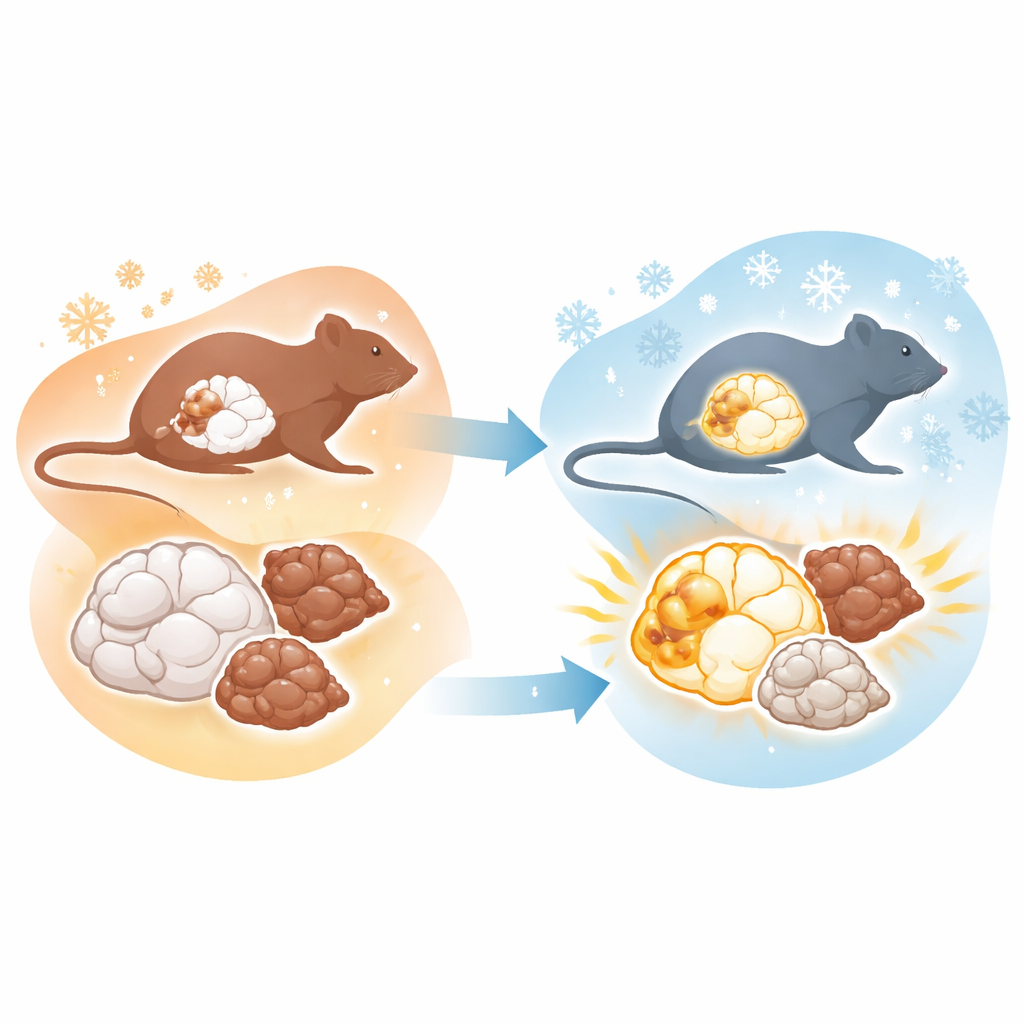
Not all fat is the same. White fat mainly stores extra calories, while brown fat is more like a built‑in heater, burning fuel to keep body temperature steady. A third type, called beige fat, starts out looking like white fat but can take on brown‑like, heat‑producing features in response to signals such as exercise, fasting, or cold. Turning white fat “beige” and boosting brown fat activity have become exciting strategies for increasing energy use and improving blood sugar control. To understand how this transformation happens, we need to know which genes are switched on or off and which proteins rise or fall inside these tissues when the body faces the stress of cold.
How the Experiment Was Done
In this work, researchers used healthy male mice and exposed them either to normal room temperature or to a chilly 6 °C for 6 or 24 hours. They then collected two major fat depots: the classic heat‑making brown fat located between the shoulder blades, and a white fat pad near the groin that is known to develop beige cells during cold exposure. From each tissue sample, they extracted RNA, which reflects which genes are active, and proteins, which carry out most cellular functions. Using high‑throughput RNA sequencing and advanced mass spectrometry, they measured the activity of thousands of genes and the abundance of thousands of proteins in parallel, creating a detailed snapshot of how fat tissue responds over time to the cold challenge.
Checking Data Quality and Reliability
Because such large data sets are only useful if they are trustworthy, the team performed a series of technical checks. For the gene‑activity data, they confirmed that the sequencing reads were high quality, with almost no uncertain bases and very high accuracy scores. Statistical analyses showed that samples from mice treated in the same way clustered together and that white and brown fat clearly separated from each other, as expected. A similar pattern appeared in the protein data: the lengths of detected protein fragments and the portions of proteins covered matched technical standards, and repeated samples from the same group closely agreed with one another. These checks give confidence that the patterns seen reflect real biology rather than random noise.
Linking Gene Activity to Protein Changes
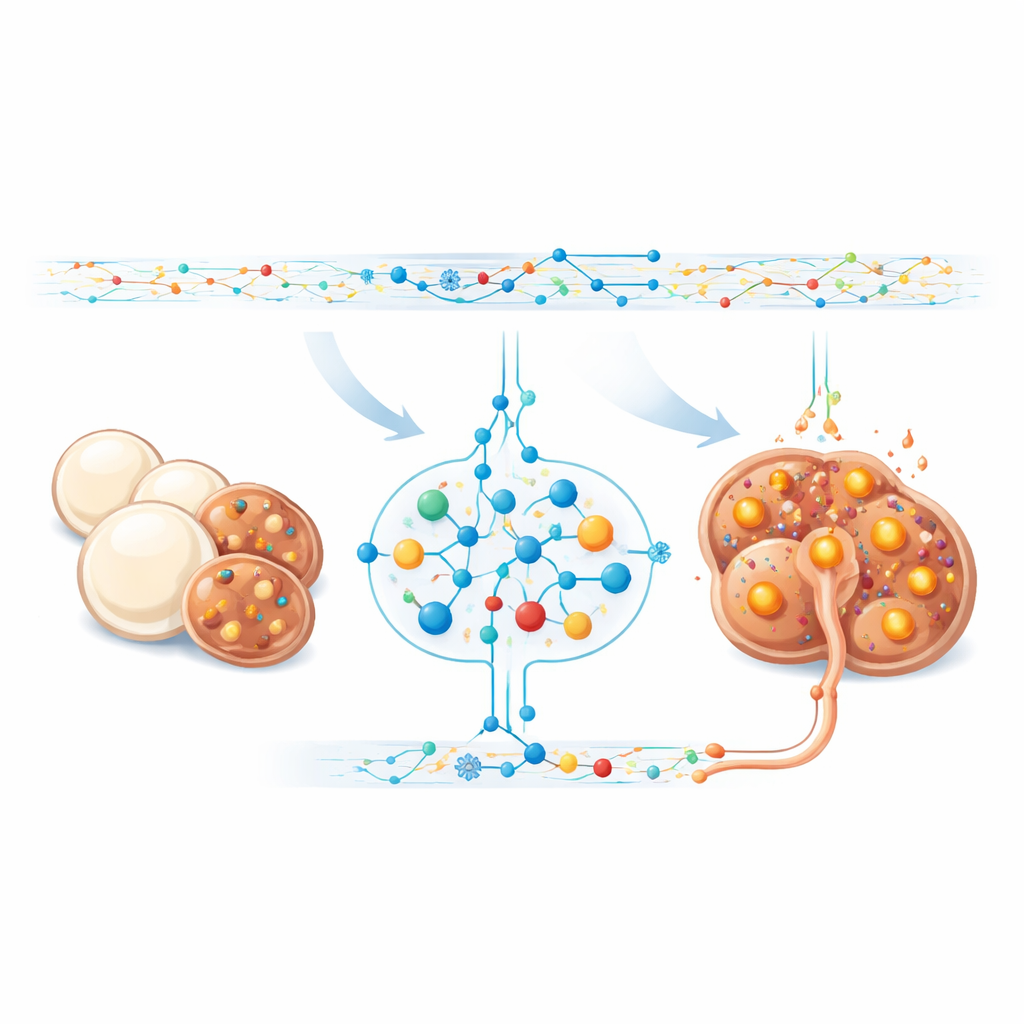
The most powerful part of the study comes from combining the gene and protein measurements. When the researchers overlaid the two layers of information, they found 4,480 genes whose activity changed at both the RNA and protein levels after cold exposure. This overlap accounted for more than four‑fifths of all genes that changed and more than one‑third of all proteins that shifted, highlighting a strong, coordinated response. Among these was a well‑known “heat gene” that drives fuel burning in brown and beige fat, which rose in both white‑derived and brown fat depots, matching earlier biological expectations. At the same time, many proteins changed without matching shifts in their RNA, hinting at additional control steps that fine‑tune the cold response beyond simple gene switching.
A Shared Resource for Future Therapies
Instead of focusing on one or two favorite genes, this study delivers a broad, time‑resolved map of how mouse fat rewires itself in the cold, from early gene activation to later protein adjustments. All of the raw and processed data are freely available in public databases, so other scientists can explore them to uncover new pathways, test ideas about how fat browning is controlled, or look for drug targets that mimic the benefits of cold exposure without the discomfort. In everyday terms, the work helps explain how simply feeling chilly can push our fat toward burning rather than storing calories, and it hands the research community a rich toolbox for designing future treatments for obesity and metabolic disease.
Citation: Zhu, Q., Wang, S., Zhou, H. et al. Temporal transcriptomic and proteomic characterization of adipose tissue from cold-exposed mice. Sci Data 13, 329 (2026). https://doi.org/10.1038/s41597-026-06709-2
Keywords: brown fat, cold exposure, thermogenesis, obesity, multi-omics