Clear Sky Science · en
Depth Resolved Metagenomic Dataset from Surface and Deep Chlorophyll Maximum Layers in the Western Pacific Ocean
Why Tiny Ocean Life Matters
The clear blue waters of the open Pacific may look empty, but they are packed with microscopic life that quietly runs much of our planet’s chemistry. These drifting microbes help move carbon, nitrogen, and other elements through the ocean, affecting everything from fisheries to climate. This study doesn’t just describe a few new species—it delivers a large, open dataset that captures who these microbes are and what they can do at different depths in a remote part of the Western Pacific Ocean. That information becomes a shared resource for scientists trying to understand and predict how the ocean will respond to a changing climate.
Peering into a Hidden Green Layer
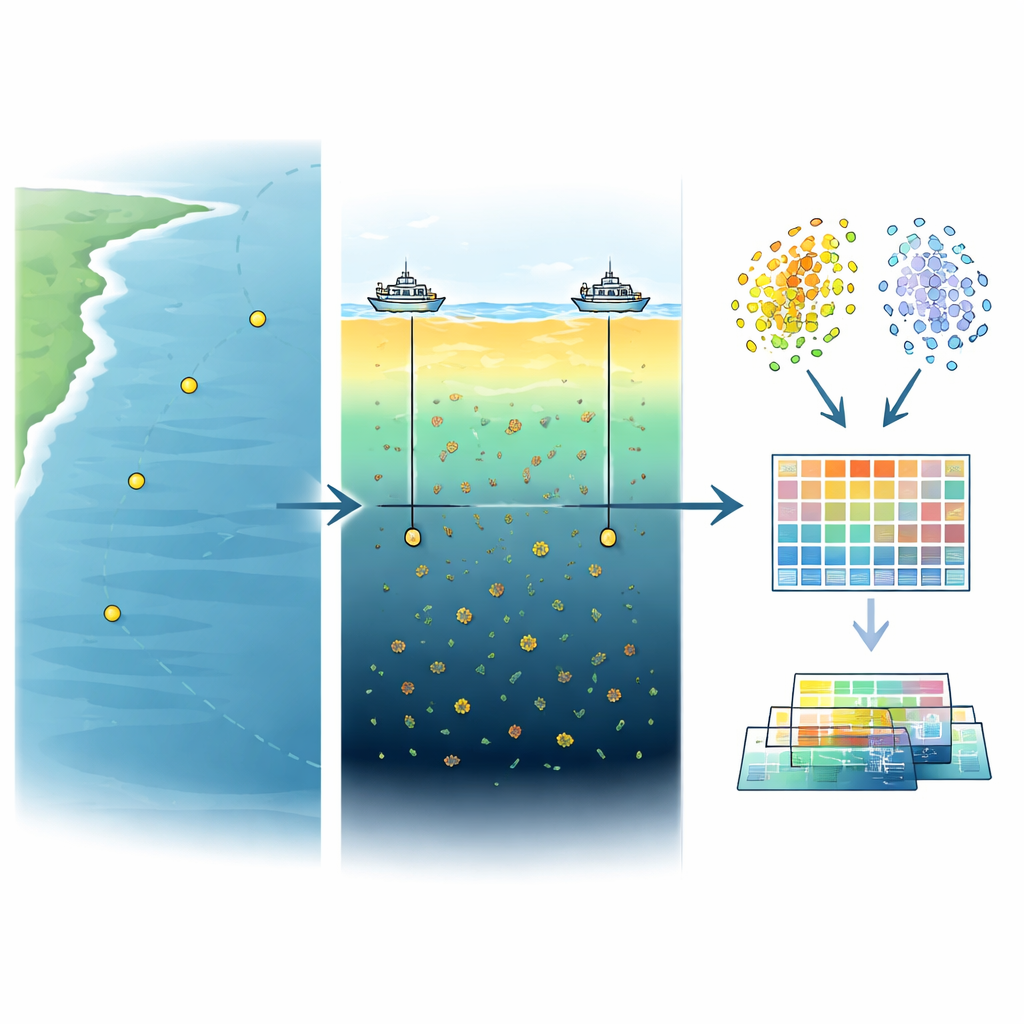
The researchers focused on two stacked layers of the sea: the sunlit surface, where light is strongest, and a slightly deeper band called the deep chlorophyll maximum. In this hidden green layer, usually 75 to 100 meters down, microscopic plants and other tiny organisms often reach peak abundance even though sunlight is dimmer. By sampling both layers at four stations spread over roughly 800 kilometers of the Western Pacific, the team could compare how communities of microbes change with depth and distance. This region is especially important because it is sensitive to shifts in temperature and nutrients driven by climate and ocean circulation.
Turning Seawater into Digital DNA
To capture these communities, the team filtered about 75 liters of seawater per sample to collect the microbes, froze the filters, and later extracted their DNA in carefully controlled lab conditions to avoid contamination. They then used high-throughput DNA sequencing to read billions of tiny fragments of genetic material from eight samples (four surface, four deep). After cleaning and checking the quality of the data, they digitally stitched the fragments into longer stretches of DNA and searched them for genes. The end result was a vast collection of roughly 5.26 million non-redundant genes—an enormous catalog showing the potential abilities of these ocean microbes.
Who Lives Where in the Water Column
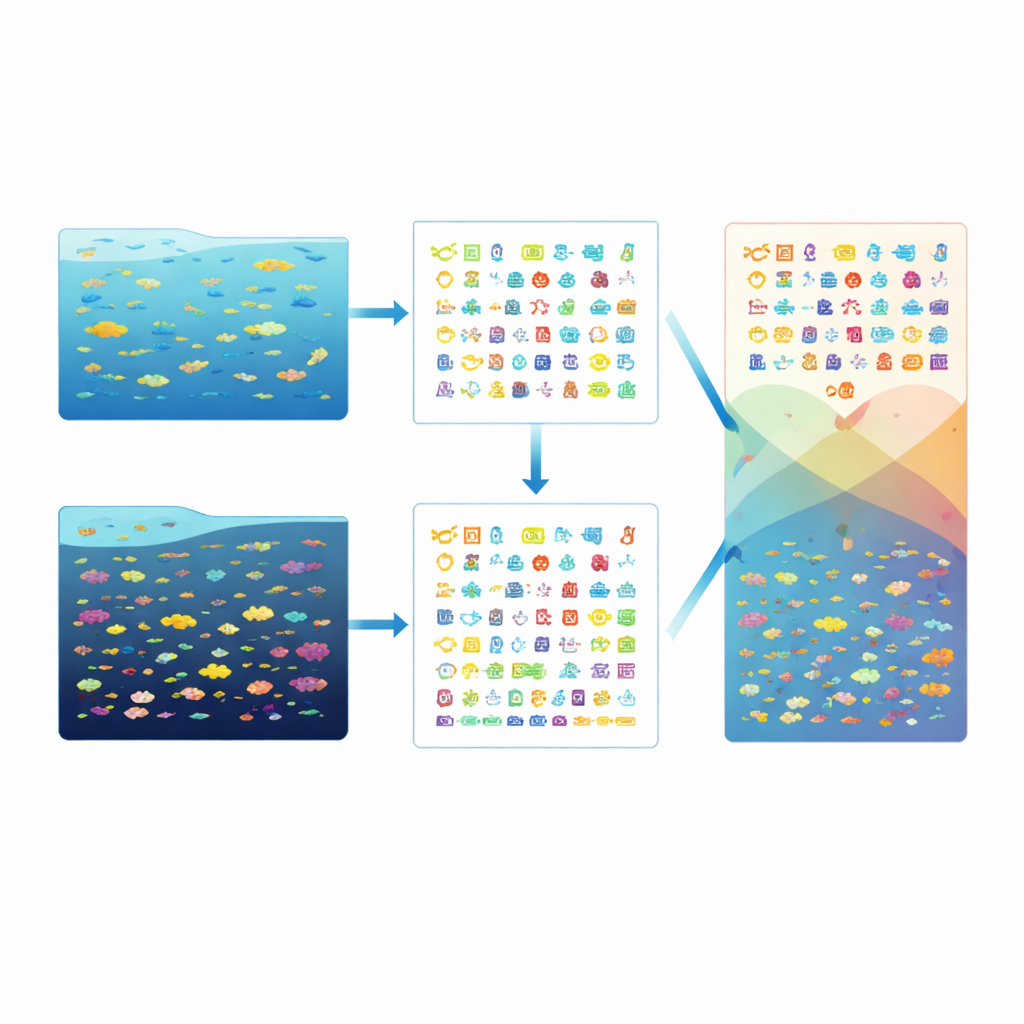
When the team sorted the DNA to see which kinds of organisms were present, they found that each sample contained a remarkably rich mix of life: between 58 and 67 major lineages (phyla), over 100 classes, and more than 6,000 species per station. Yet the balance shifted with depth. Eukaryotes—organisms with more complex cells, including many types of microscopic algae—were more common in the deeper chlorophyll-rich layer, while certain bacteria that thrive in bright, nutrient-poor surface waters became less abundant with depth. Other bacterial groups were enriched in the deep layer, revealing a clear vertical pattern in who dominates each zone of the water column.
What Microbial Genes Reveal About Ocean Work
Beyond simply counting species, the researchers examined what the genes themselves suggest about how these communities function. By comparing their gene catalog to multiple reference databases, they could assign likely roles to many genes, including those involved in using different forms of carbon, nitrogen, and sulfur. Statistical analyses looked for genes that were more common at one depth or station than another, highlighting how temperature, oxygen, and nutrient levels may shape the “toolkits” these microbes carry. The quality checks on sequencing, assembly, and annotation showed that the dataset is complete and reliable enough for others to use as a benchmark.
A Shared Resource for Future Ocean Questions
Rather than drawing a single narrow conclusion, this work delivers a well-documented, publicly available DNA and gene catalog that others can mine to answer many questions. It offers a detailed snapshot of how microscopic life is arranged from the surface to the deep chlorophyll maximum in a key region of the Western Pacific, along with the genetic blueprints that enable these organisms to drive vital chemical cycles. For non-specialists, the takeaway is simple: the seemingly empty blue ocean hides layered, dynamic communities of microbes, and this open dataset gives scientists a powerful new lens for watching how those living layers may change as the planet warms.
Citation: Thangaraj, S., Sun, J. Depth Resolved Metagenomic Dataset from Surface and Deep Chlorophyll Maximum Layers in the Western Pacific Ocean. Sci Data 13, 324 (2026). https://doi.org/10.1038/s41597-026-06706-5
Keywords: marine microbiome, metagenomics, Western Pacific Ocean, deep chlorophyll maximum, ocean biogeochemistry