Clear Sky Science · en
A chromosome-level genome assembly for the mulberry thrips Pseudodendrothrips mori (Thysanoptera: Thripidae)
Tiny pests with a big impact
Mulberry thrips are barely longer than a grain of sand, yet they can leave whole orchards looking silvered and sickly as they pierce leaves and suck out plant juices. Farmers struggle to control these insects because they reproduce quickly, hide well, and often evolve resistance to pesticides. This study delivers the first detailed genetic blueprint of the mulberry thrips, offering a powerful new tool for understanding how this tiny pest thrives—and how it might be managed more sustainably.
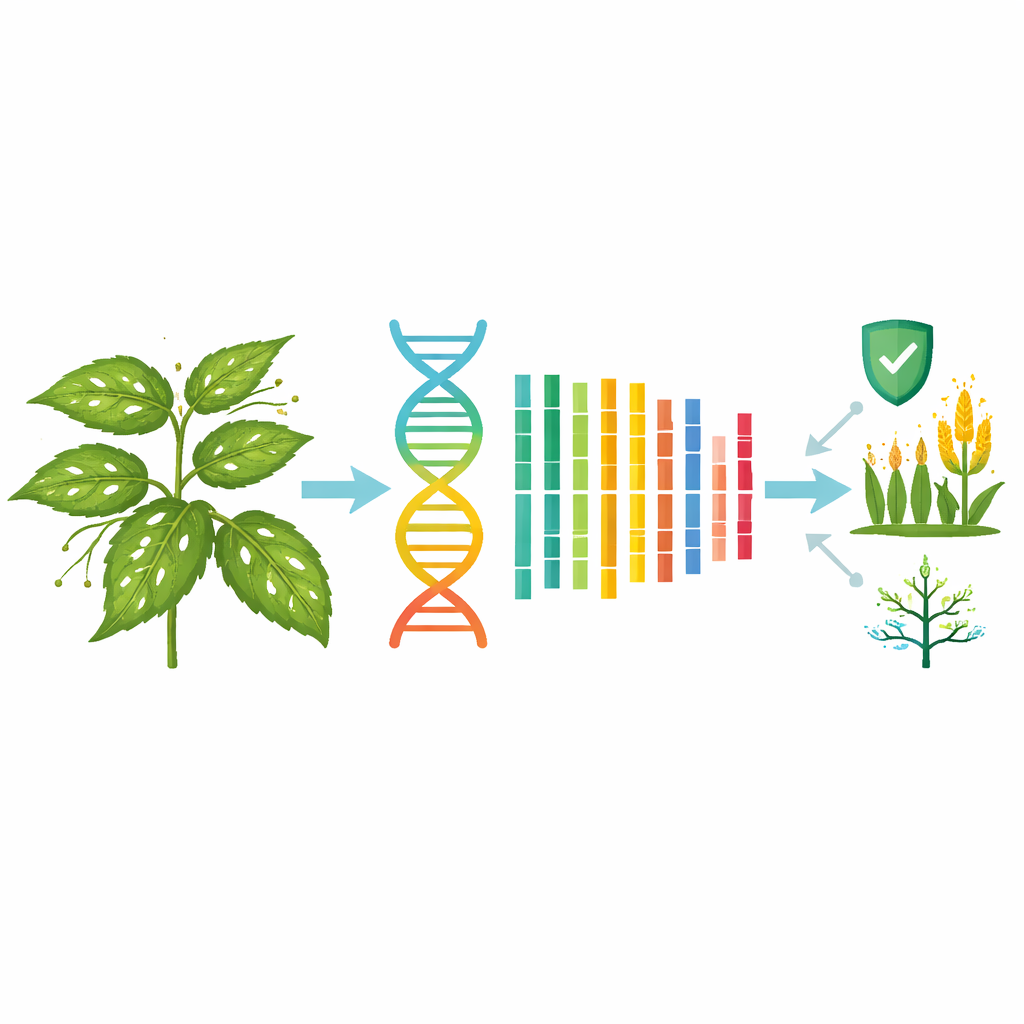
Why map the DNA of a leaf‑scarring insect?
Mulberry thrips feed on mulberry and other plants, causing distorted leaves and reduced yields. Their small size makes them hard to study: a single insect does not provide enough DNA or RNA for most modern sequencing methods, so researchers must work with carefully pooled samples. Until now, the lack of a complete reference genome has blocked deeper questions, such as how these insects specialize on certain plants, how they so quickly become resistant to chemical treatments, and how their unusual reproductive systems evolve. A chromosome-level genome offers a foundation to explore all of these issues, from basic biology to practical pest control.
Building a high‑quality genome from many tiny bodies
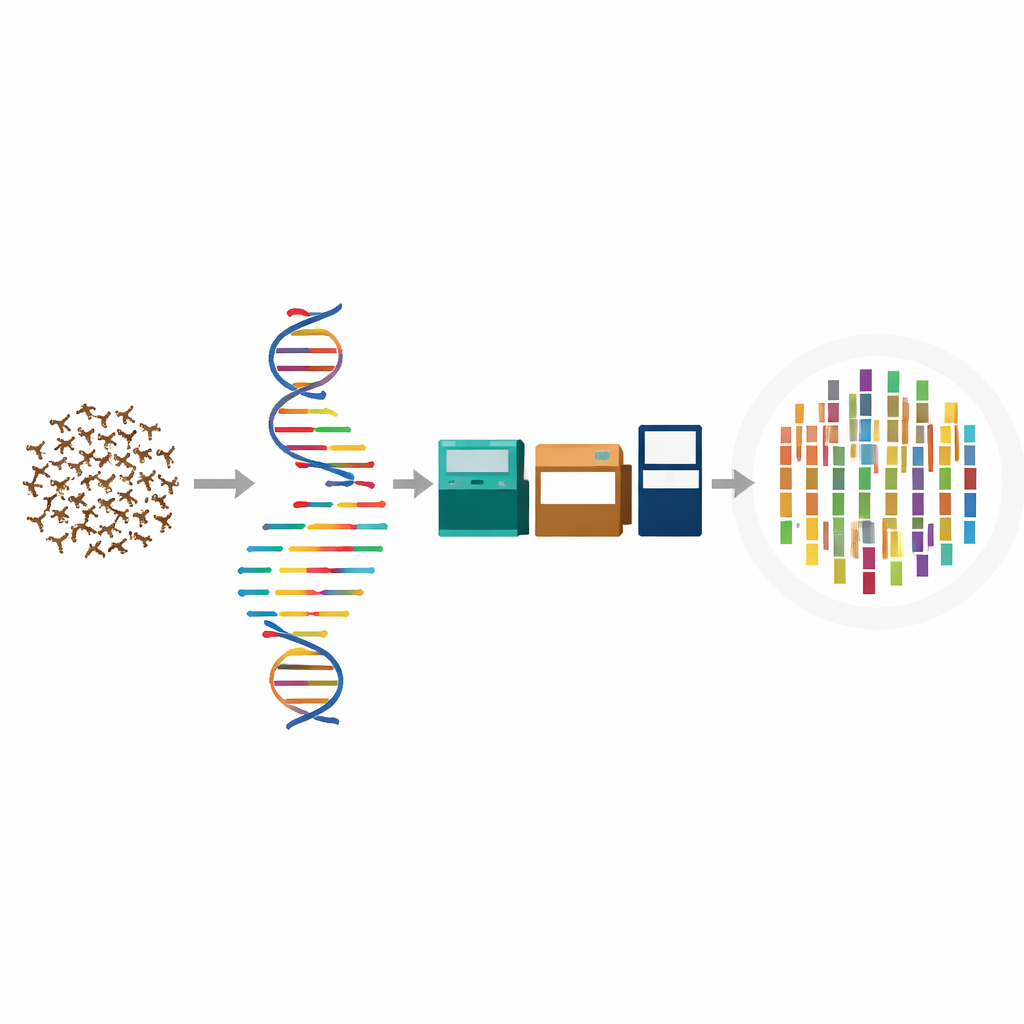
To overcome the challenge of scale, the team collected hundreds of adult thrips from a mulberry garden in southern China and pooled them for different types of sequencing. Long stretches of DNA were read using PacBio HiFi technology, which excels at spanning difficult regions of the genome. Short, highly accurate DNA fragments from an Illumina platform were then used to polish away small errors. A third data type, called Hi‑C, captured how pieces of DNA are folded and connected inside the cell nucleus, allowing the researchers to arrange the fragments into full-length chromosomes. RNA from additional pooled thrips helped pinpoint where genes begin and end, so the assembled sequence could be turned into a functional genetic map.
From scattered pieces to full chromosomes
Using these complementary data streams, the researchers stitched together a genome of about 281 million DNA letters. Almost all of this sequence—more than 98%—was organized into 19 long structures that correspond to the insect’s chromosomes. Measures of assembly quality show that these stretches are unusually continuous and accurate for a small insect genome. When the team searched for thousands of standard insect genes that are expected to appear once in almost every species, they found about 98% of them in full, a strong sign that very little important information is missing. Compared with other thrips whose genomes have been sequenced, the mulberry thrips genome is similar in size but stands out for its completeness and the care taken to validate it.
Hidden repeats and a rich catalog of genes
The team then turned from raw sequence to biological meaning. They scanned the genome for repetitive stretches of DNA, which can influence how genes evolve and how genomes rearrange over time. About one fifth of the mulberry thrips genome consists of such repeats, many of which could not be matched to known families, hinting at lineages that are specific to this group of insects. After masking these regions, the researchers combined evidence from known proteins, RNA data, and computer predictions to identify over 13,000 protein-coding genes. Nearly all of these genes could be assigned a likely function by comparison with existing databases, creating a broad catalog of the molecular tools this pest uses to feed, detoxify plant chemicals, respond to pesticides, and develop.
A new toolkit for smarter pest management
By turning a hard-to-study insect into one of the best-characterized thrips genomes to date, this work lays the groundwork for future breakthroughs. With a reliable reference genome in hand, scientists can now track how mulberry thrips populations spread, discover genetic signatures of pesticide resistance, and search for weak points in key biological pathways. Over time, such knowledge may support more targeted, environmentally friendly control methods—ranging from improved monitoring tools to biological control strategies—reducing crop losses while relying less on broad-spectrum chemicals.
Citation: Guan, DL., Li, YM., Zhang, SH. et al. A chromosome-level genome assembly for the mulberry thrips Pseudodendrothrips mori (Thysanoptera: Thripidae). Sci Data 13, 330 (2026). https://doi.org/10.1038/s41597-026-06697-3
Keywords: mulberry thrips, genome assembly, agricultural pests, insect genomics, pesticide resistance