Clear Sky Science · en
A chromosome-level genome assembly of Coryphaenoides armatus
Life in the Dark Depths
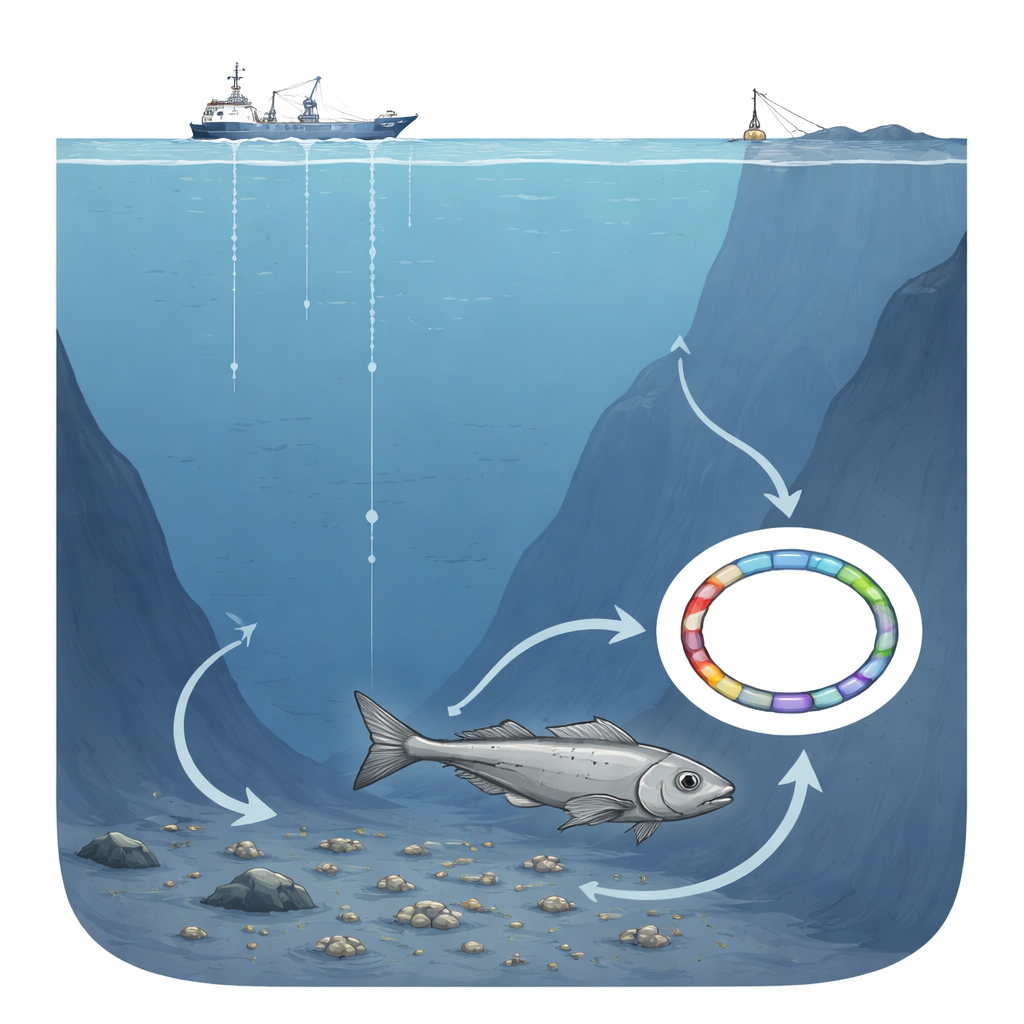
Far below the reach of sunlight, in icy water pressed by tons of weight from above, lives a fish called Coryphaenoides armatus. This deep‑sea resident is not only a survivor in one of Earth’s most extreme habitats; it may also help scientists understand how life copes with darkness, high pressure, and looming human activities such as deep‑sea mining. In this study, researchers stitched together the full genetic blueprint of C. armatus at the level of individual chromosomes, creating a reference map that will guide future work on deep‑sea adaptation and conservation.
A Deep‑Sea Sentinel
Coryphaenoides armatus, sometimes called a grenadier, ranges across vast stretches of the deep ocean and can live more than five kilometers below the surface. As it grows, it shifts from relying mainly on sight to depending heavily on smell, a useful change in a world without light. Because it is widespread and sensitive to chemical cues, this fish is a promising “indicator” species: changes in its health or behavior could reveal the impact of industrial activities, especially the mining of metal‑rich nodules on the seafloor. Yet until now, scientists lacked a detailed view of its DNA, limiting their ability to probe how it has adapted to such harsh conditions.
Building a Genetic Blueprint
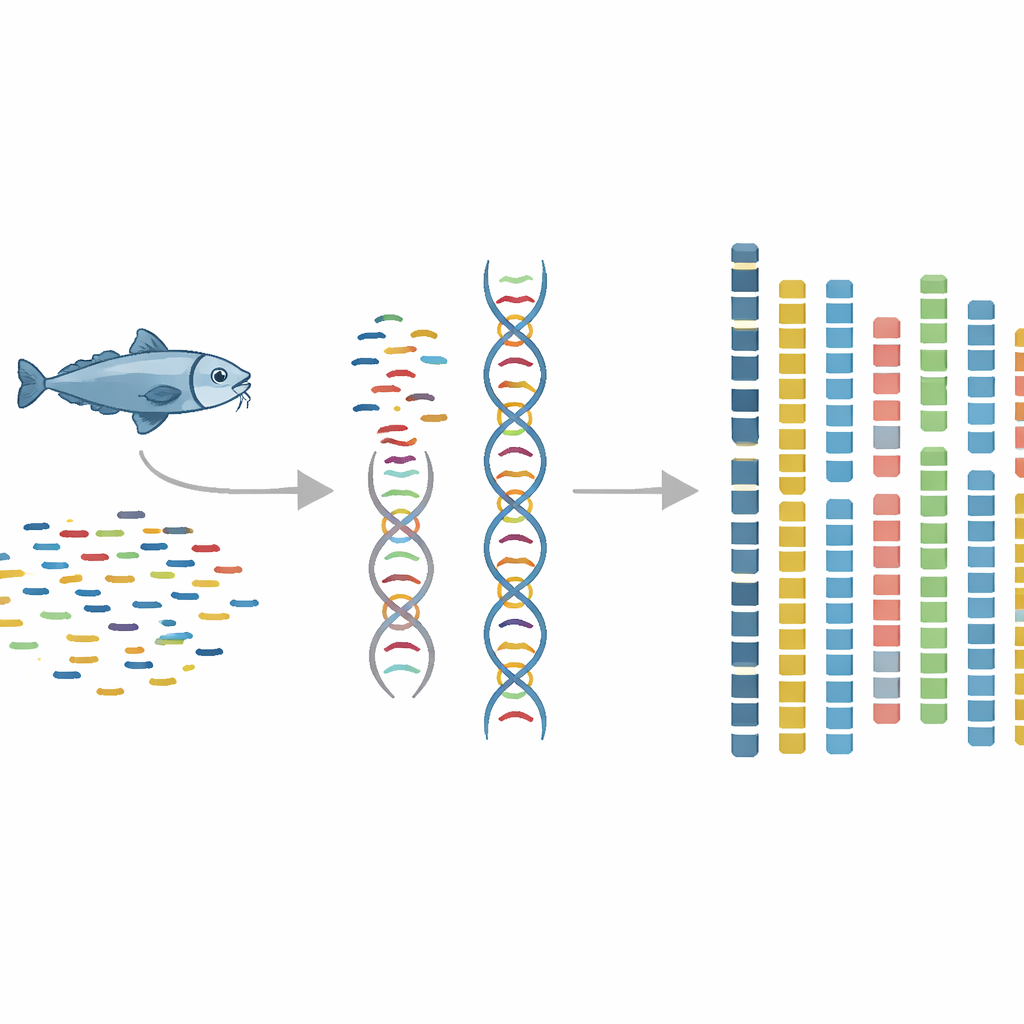
To create this blueprint, the team collected a single C. armatus from deep water near Kosrae Island in the western Pacific, at a depth of 5,828 meters. They carefully extracted high‑quality DNA from the fish’s muscle, then read this DNA using several modern sequencing technologies. Long, highly accurate reads captured large stretches of the genome, while shorter reads were used to polish errors and check for contamination. A third method captured how pieces of DNA are physically linked inside the cell, allowing the researchers to arrange fragments into full chromosomes, much like solving a three‑dimensional jigsaw puzzle.
From Fragments to Chromosomes
Combining these data, the scientists assembled a genome of about 811 million DNA “letters,” organized into 24 chromosomes. Measures of assembly quality showed that long stretches of the genome were pieced together with few breaks, and a widely used test based on essential genes indicated that more than 90% of expected content was present. The team also identified nearly 25,000 genes that code for proteins and over 22,000 genes that produce various regulatory RNAs. They found that more than half of the genome is made of repeated sequences, especially mobile DNA elements that can copy and insert themselves in new locations—features that may influence how the genome evolves under deep‑sea pressures.
Clues to Evolution in the Abyss
To see how C. armatus compares with its relatives, the researchers lined up its chromosomes against those of a closely related deep‑sea fish, Coryphaenoides yaquinae. The two species share many matching regions, but they also differ in chromosome number and show signs of large‑scale reshuffling events such as fusions and breaks. These changes are the kind of genomic shifts that can help species diverge and adapt to new niches. In C. armatus, such rearrangements, together with its rich cargo of repeated DNA, may be tied to traits that support life in cold, dark, high‑pressure environments and in areas influenced by heavy‑metal deposits.
A New Map for Ocean Protection
This chromosome‑level genome is essentially a detailed instruction manual for a key inhabitant of the deep ocean floor. For non‑specialists, its importance lies in what it enables: scientists can now hunt for gene networks that support pressure‑resistant muscles, keen sense of smell, or tolerance to pollutants, and track how these traits vary across regions targeted for resource extraction. As plans for deep‑sea mining advance, the genome of Coryphaenoides armatus offers a powerful tool to monitor ecosystem health and to guide policies that balance resource use with the protection of one of Earth’s last great wildernesses.
Citation: Wu, B., Yu, H., Luo, T. et al. A chromosome-level genome assembly of Coryphaenoides armatus. Sci Data 13, 347 (2026). https://doi.org/10.1038/s41597-026-06696-4
Keywords: deep-sea fish, genome assembly, chromosomes, environmental adaptation, deep-sea mining