Clear Sky Science · en
Revealing urban residents’ ecosystem service preferences in China: Evidence from a nationwide survey
Why city park benefits matter to everyday life
When people think about city parks, they may picture trees, ponds, or jogging paths—but not always the many ways these green spaces quietly support daily life. Parks help clean the air, cool overheated streets, soak up stormwater, and provide places to relax or play. This study asks a simple but powerful question across urban China: which of these benefits do city residents actually care about most? By listening to more than twenty thousand people from 344 cities, the researchers created a rare, detailed picture of how different communities value nature in their neighborhoods and how that knowledge can guide better city planning.
Listening to city dwellers across a vast country
To capture these views, the team ran an online survey from mid-2022 to early 2024, reaching 20,075 self-identified urban residents in 31 provinces and regions across China. Participants answered questions about who they are—such as age, income, and education—as well as how often they visit parks, how large those parks usually are, and how satisfied they feel with the natural environment there. This information helps others later explore how personal background and park use might shape what people want from urban nature.
Asking people to divide a fixed pie of importance
Instead of simply asking whether each park benefit is important, the researchers used a more demanding exercise. Each person received 100 points to “spend” across nine types of benefits from urban parks: cleaner air, cooler local climate, less noise, reduced flooding, recreation, learning opportunities, food and water supply, wildlife habitat, and an open “other” category. Giving more points to one benefit meant fewer points for the rest, forcing people to make trade-offs much like real-world decisions. The survey system checked that totals stayed at 100, and the team removed answers that were rushed, extremely slow, or clearly inconsistent, leaving a carefully cleaned dataset for analysis. 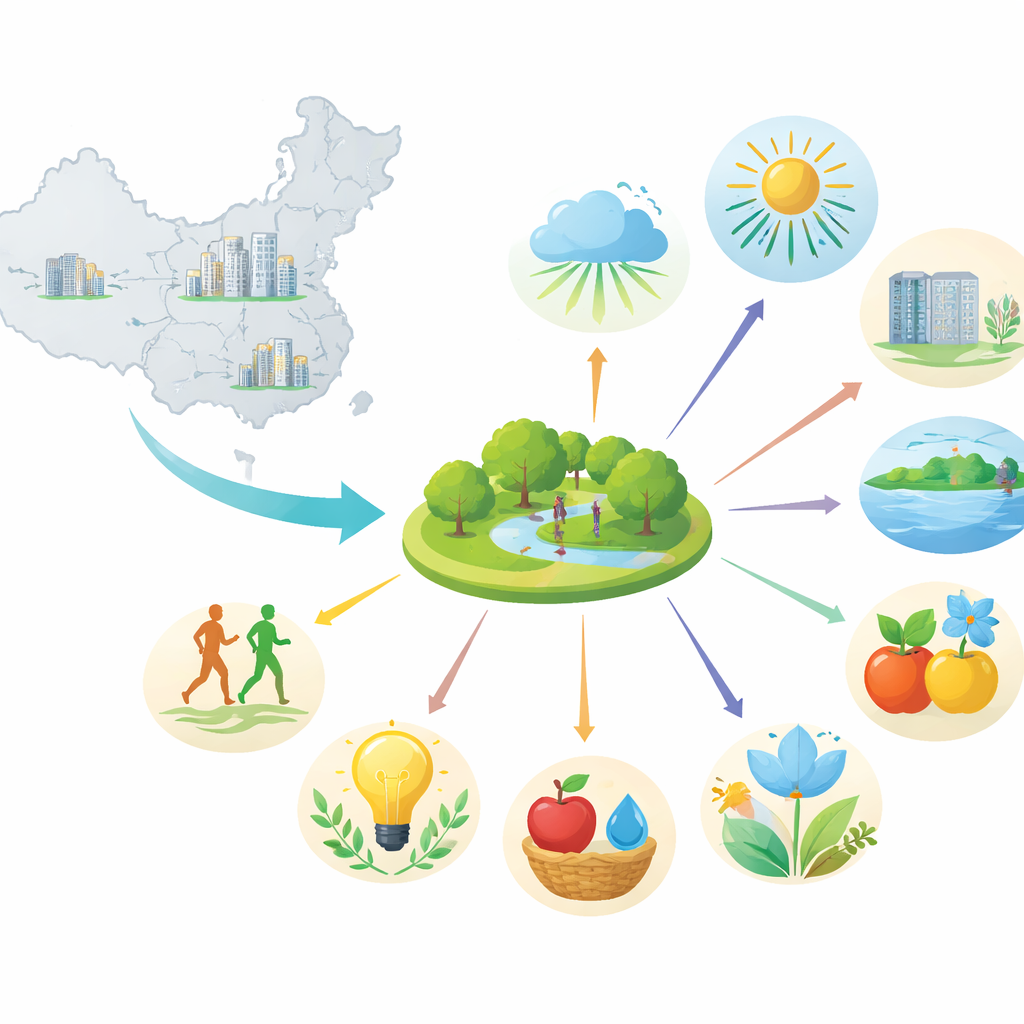
What people value most from parks
When the answers were averaged across provinces, clean air emerged as the clear winner. On average, people gave air purification more than one fifth of their total points—roughly double what it would receive if all services were valued equally. Recreation came next, followed by keeping local temperatures comfortable, then reducing noise. Wildlife habitat, learning, and flood control fell in the middle. Food and water from parks were usually ranked lowest, suggesting that most city residents do not rely directly on parks for these needs. An important exception was Tibet, where food and water services ranked much higher, likely reflecting the everyday importance of wild plants and fungi there. Overall, the results show that city residents’ priorities are far from uniform and can vary strongly by region.
Building a reusable data resource
Beyond the headline findings, the main product of this work is a rich, open dataset. It includes each respondent’s background, park-visiting habits, and detailed point allocations, as well as summary tables for every province and city. The authors also tested how sensitive their results were to including or excluding people who answered unusually fast or slow. Using two statistical tests, they found that for most services, the overall patterns hardly changed, which builds confidence in the robustness of the data. At the same time, the authors are transparent about limits: their sample leans toward young, college-educated, middle-income, and more developed regions, and cannot perfectly represent all urban residents across China. 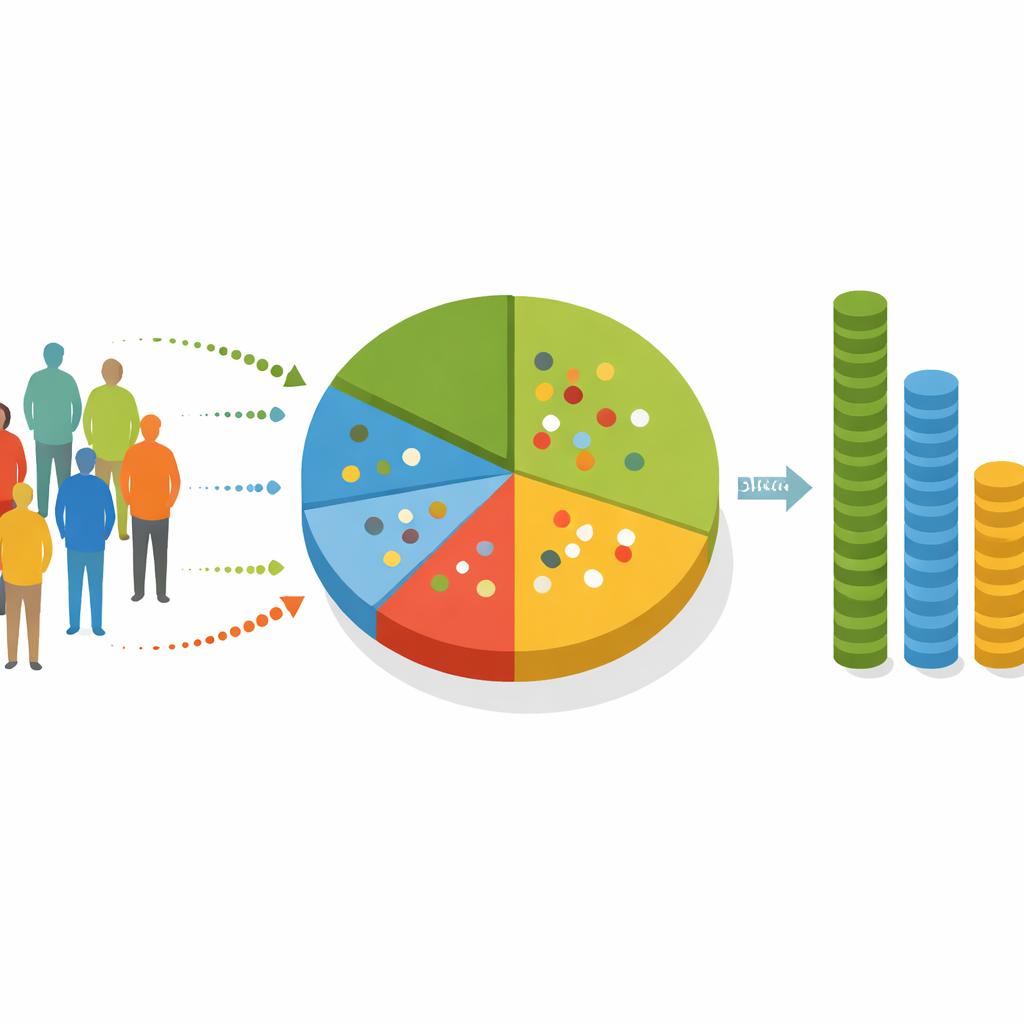
How this helps design better cities
For non-specialists, the key takeaway is that city residents do not all want the same thing from parks—and that these differences can now be measured and mapped. Planners often treat all ecosystem benefits as equally important when designing green space or evaluating land-use plans. This study offers a grounded alternative: weights based on how people actually rank different benefits. By using the dataset, city officials and researchers can explore how preferences shift between cities, link them with environmental conditions, and test policies that better match local needs. In plain terms, the work gives decision-makers a way to put residents’ voices into numbers, helping future parks clean the air, cool streets, protect nature, and support everyday life in ways that people truly value.
Citation: Wu, S., Li, D., Liu, L. et al. Revealing urban residents’ ecosystem service preferences in China: Evidence from a nationwide survey. Sci Data 13, 394 (2026). https://doi.org/10.1038/s41597-026-06689-3
Keywords: urban ecosystem services, city parks, public preferences, China urban survey, green space planning