Clear Sky Science · en
Chromosome-level genome assembly of wild perennial soybean Glycine canescens
Why a wild cousin of soybeans matters
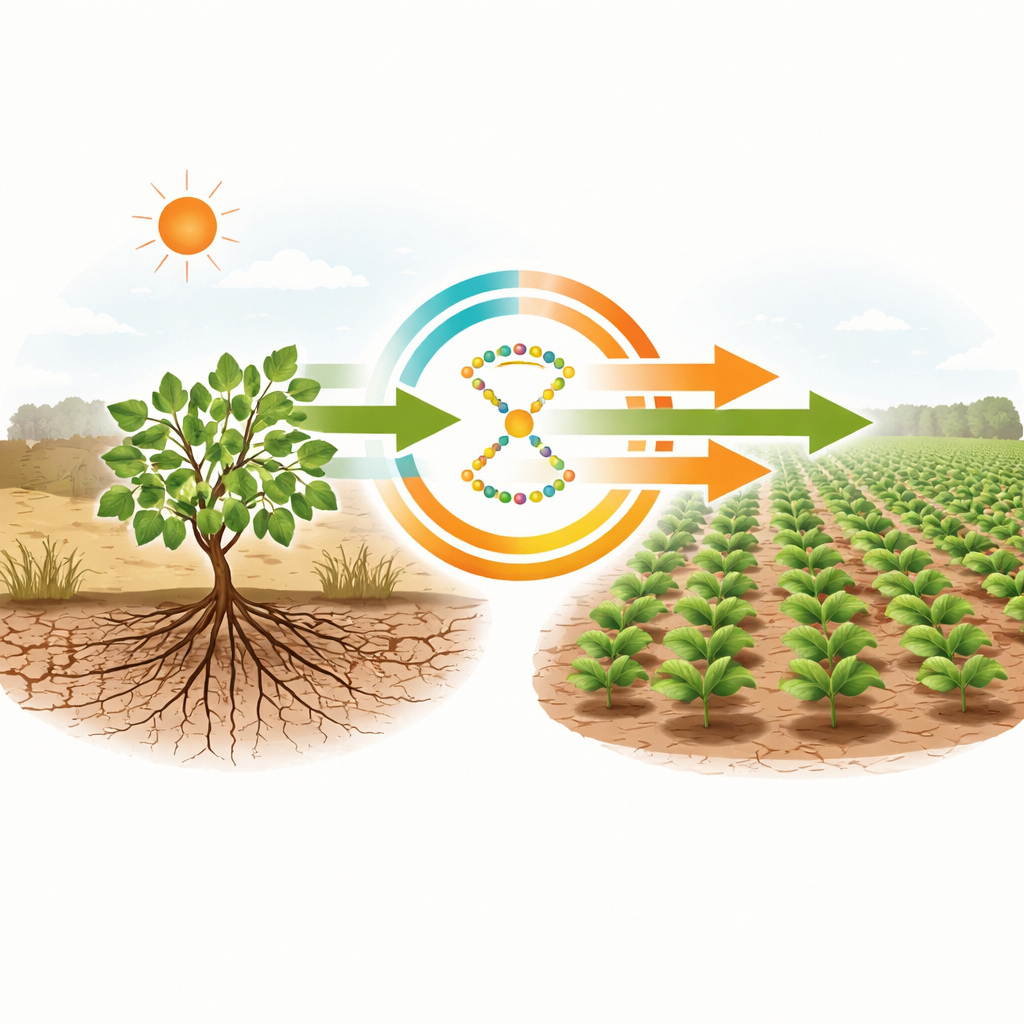
Soybeans help feed both people and livestock around the world, but the varieties we grow today have lost much of the natural variety found in their wild relatives. That loss makes it harder to breed crops that can withstand drought, disease, and a changing climate. This study focuses on a hardy wild Australian cousin of soybean, Glycine canescens, and builds a detailed map of its DNA. That map opens the door for plant breeders and researchers to borrow useful traits from this tough survivor and move them into everyday farm soybeans.
A tough plant from a harsh land
Glycine canescens is a perennial wild soybean that thrives in dry inland regions of Australia, where heat, low rainfall, and plant diseases are constant challenges. Unlike modern soybean varieties, which went through repeated rounds of human selection, this wild species still carries rich genetic variety. It naturally resists drought and a major leaf disease caused by the fungus-like pathogen Phakopsora pachyrhizi. Because G. canescens can be crossed with cultivated soybean, it is an especially valuable bridge between wild resilience and farm-ready crops.
Turning raw DNA into a clean genetic map
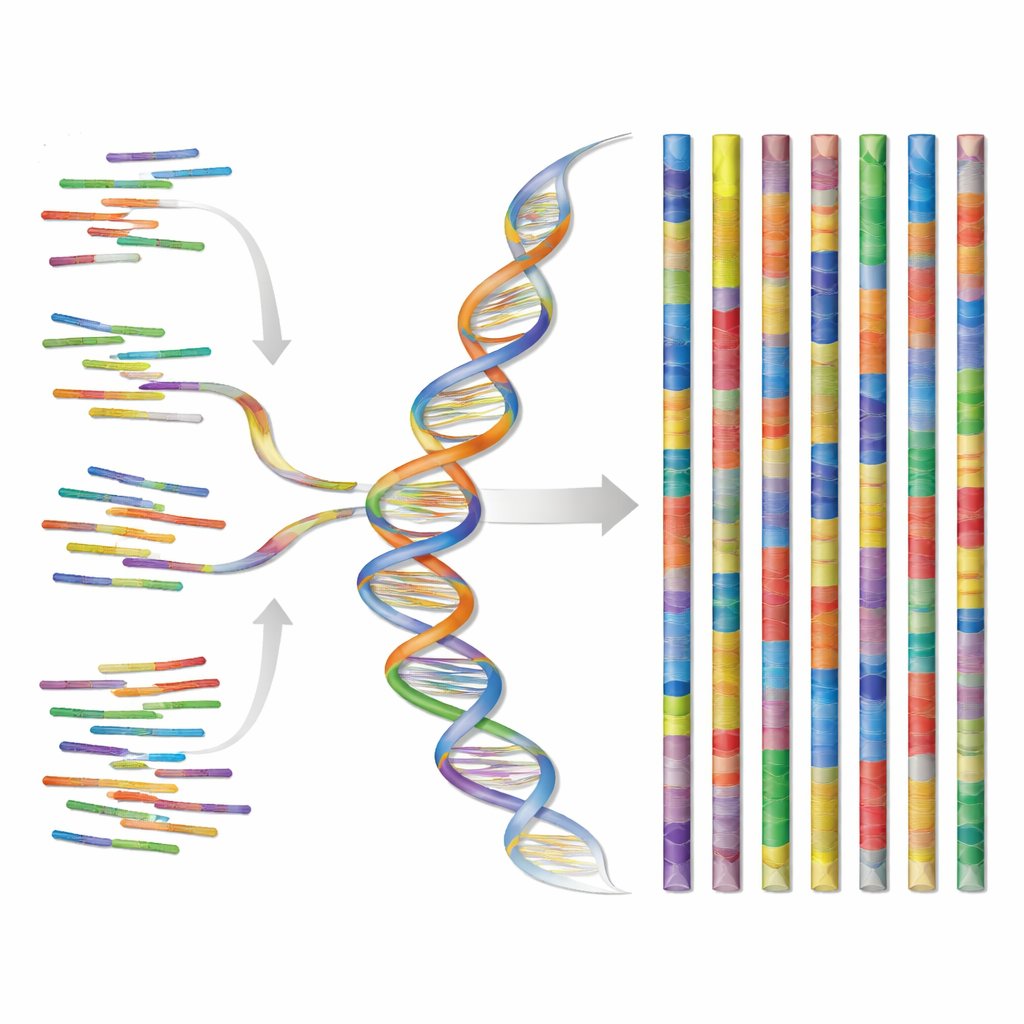
To unlock the secrets of this wild plant, the researchers combined several advanced DNA reading technologies. Short, precise DNA snippets from Illumina machines, long continuous stretches from PacBio sequencing, and three-dimensional chromosome contacts from Hi-C experiments were all gathered from young leaf tissue. Powerful computer programs stitched these overlapping pieces together, repeatedly polished errors, and then used the Hi-C information to arrange the resulting fragments into full-length chromosomes. The finished genome spans about 933 million DNA letters, organized into 20 chromosomes, with almost all of the sequence firmly placed and checked for accuracy.
What the genome reveals about this wild soybean
With the chromosome map in hand, the team searched for genes and repeated patterns along the DNA. They identified nearly 55,000 protein-coding genes, of which about 24,000 form a core set shared with other perennial wild soybeans. Much of the genome consists of repeated elements, including large stretches of mobile DNA that have copied and moved over time. By comparing G. canescens with other perennial species and with cultivated soybean, the researchers observed long regions where genes line up in the same order, as well as rearranged sections where chromosomes have been broken and rejoined in different ways. These patterns help clarify how wild and cultivated soybeans diverged through evolution and domestication.
Placing the wild cousin on the soybean family tree
The scientists also examined hundreds of genes that are present in single copies across multiple soybean species and a related bean plant. Using these shared genes, they reconstructed a family tree that shows how perennial and annual soybeans are related. Glycine canescens sits within a group of perennial species that share a similar genome structure, while the familiar farm soybean, Glycine max, branches off separately. This evolutionary context helps researchers understand which genes and chromosome regions are unique to hardy wild species and which are shared across the broader soybean clan.
How this work could help future soybeans
For non-specialists, the key message is that this study delivers a high-quality, chromosome-level DNA reference for one of the toughest wild soybean relatives known. That map is like a detailed parts catalog, showing where important genes and regions lie and how they compare to those in farm soybeans. Breeders and geneticists can now more easily track and transfer useful traits, such as drought or disease resistance, from G. canescens into cultivated varieties. In a world facing rising food demand and climate stress, this new genomic resource is a practical step toward developing soybean crops that are more resilient, productive, and sustainable.
Citation: Zhuang, Y., Li, X., Liu, L. et al. Chromosome-level genome assembly of wild perennial soybean Glycine canescens. Sci Data 13, 316 (2026). https://doi.org/10.1038/s41597-026-06673-x
Keywords: soybean genomics, wild relatives, crop breeding, drought tolerance, genetic diversity