Clear Sky Science · en
Highly contiguous chromosome-level assembly of the rock goby (Gobius paganellus) genome
A Tough Little Fish with a Big Genetic Story
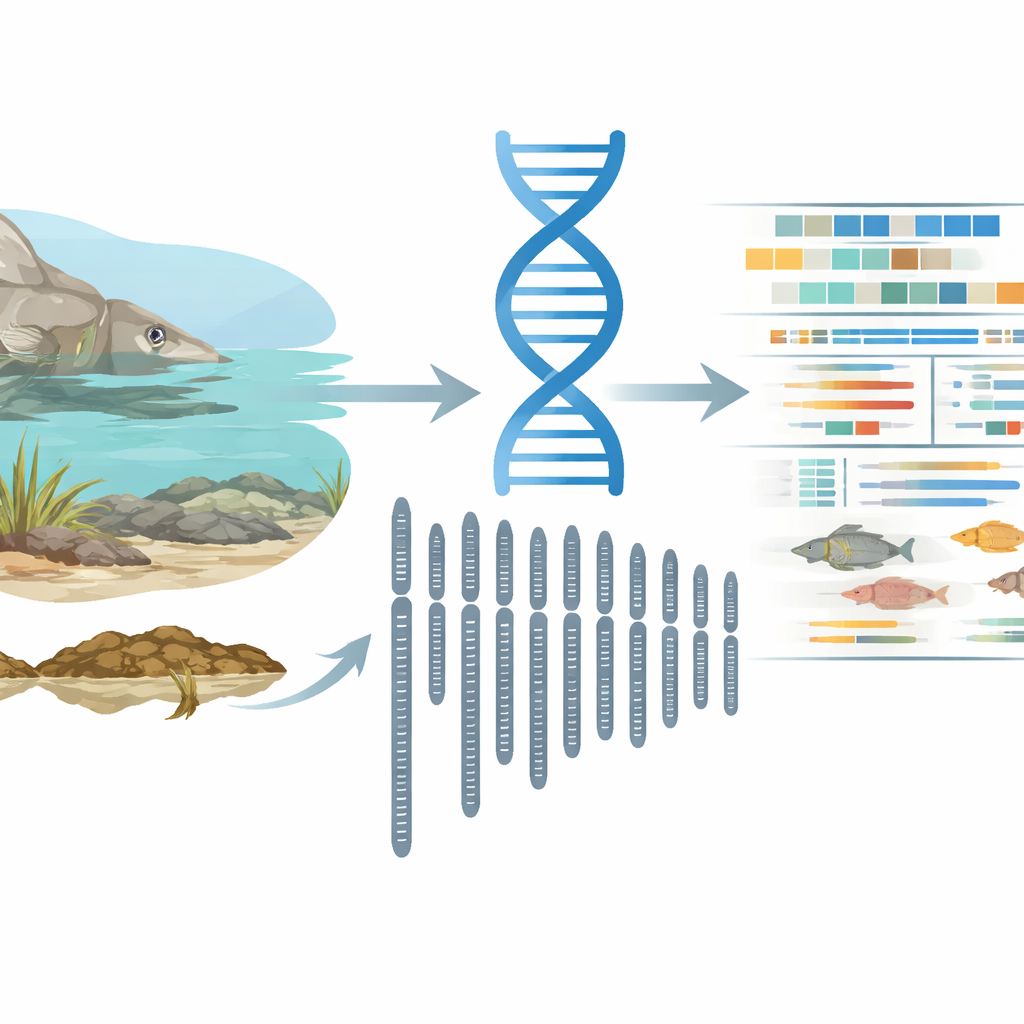
The rock goby is a small, bottom-dwelling fish you might easily overlook while walking along a rocky shore, yet it thrives in some of the most changeable coastal environments on Earth. This study decodes the rock goby’s DNA at chromosome-level detail, giving scientists a powerful new map to explore how this hardy fish copes with tides, temperature swings, and pollution. That map will help researchers understand how marine life adapts to rapid environmental change, including climate warming, and may reveal clues relevant to many other fish species that share our coasts and dinner plates.
Why This Coastal Fish Matters
Gobies are among the most diverse and abundant families of marine fishes, with more than 2,000 species spread from coral reefs to estuaries and even semi-terrestrial burrows. The rock goby, Gobius paganellus, is a classic resident of rocky intertidal zones across the Northeast Atlantic and Mediterranean Sea. It endures regular exposure to air during low tides, sharp temperature shifts, and low-oxygen episodes. Because it is so widespread and resilient, the rock goby is an ideal natural test case for how animals adjust to stressful and rapidly changing conditions. Yet, until now, Mediterranean populations of this species lacked a modern, high-quality reference genome, limiting detailed genetic studies.
Building a Complete DNA Map
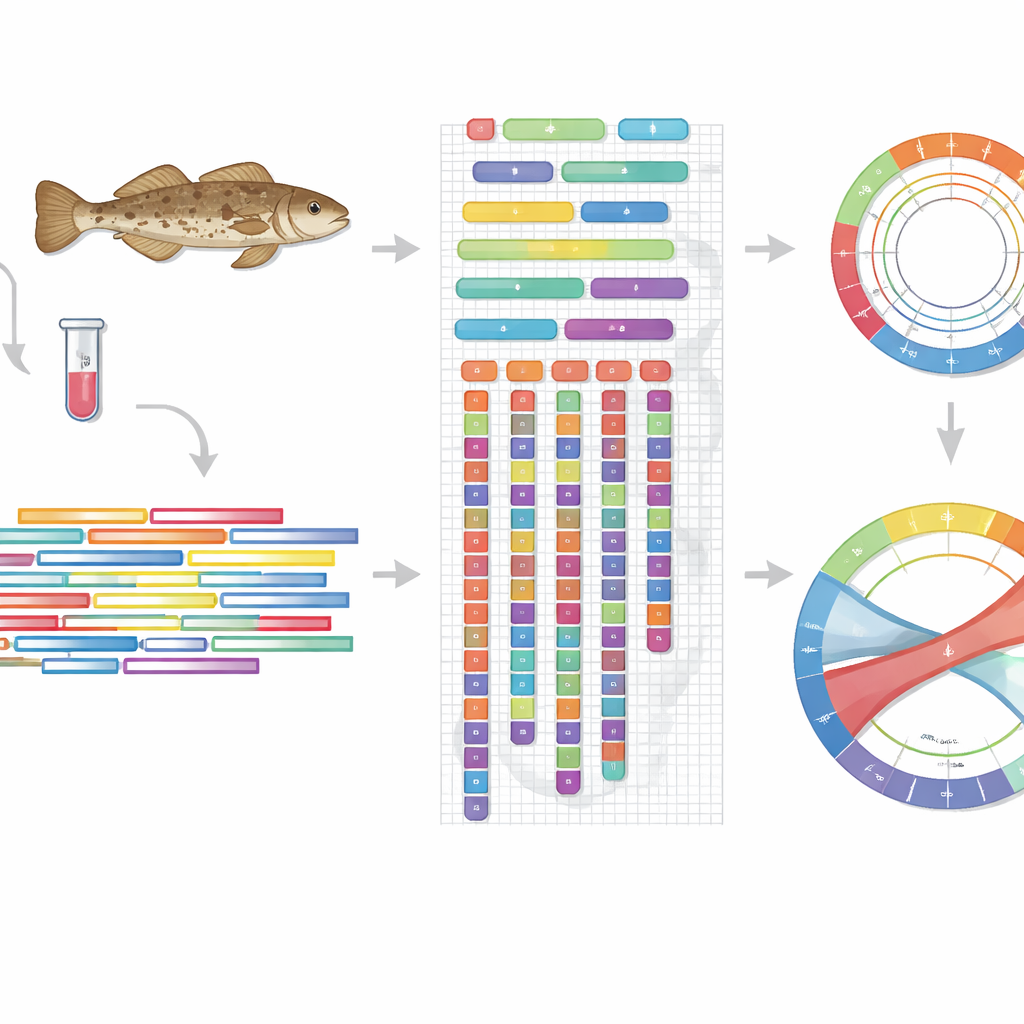
The researchers set out to construct a nearly gap-free, chromosome-level genome for a rock goby collected along the Italian coast. They first preserved multiple tissues and generated three kinds of genetic data: very long, highly accurate DNA reads; special data capturing how pieces of DNA are physically folded and connected inside chromosomes; and RNA sequences from eight different organs, revealing which genes are active. Using advanced assembly software, they stitched the long DNA reads into continuous stretches, checked for errors and contamination, and then used the three-dimensional contact data to arrange these stretches into 23 pseudochromosomes. The final genome spans about 813 million DNA letters, with almost all of them confidently placed onto chromosomes and with quality checks showing it is highly complete and accurate.
What the Genome Reveals Inside
With the basic map in place, the team cataloged the elements that make up the rock goby’s genetic blueprint. They found that roughly 43 percent of the genome consists of repetitive DNA, including mobile genetic pieces known as transposable elements, which can shape how genomes evolve over time. Combining their RNA data with extensive protein reference databases from many other fish and vertebrates, they predicted 23,493 protein-coding genes, and more than 96 percent of these matched known proteins. A circular view of the chromosomes shows how genes, repetitive segments, and DNA base composition are distributed and how stretches of related genes line up across the genome.
Comparing Cousin Species
To place the new genome in an evolutionary context, the authors compared it with the genome of a close relative, the black goby (Gobius niger). By aligning genes between the two species, they identified thousands of shared blocks where gene order is conserved, indicating that much of their chromosome organization has remained stable. At the same time, the analysis highlighted a striking rearrangement: one chromosome in the black goby corresponds to two chromosomes in the rock goby, hinting at past fusion or fission events. These patterns confirm both the robustness of the new assembly and the dynamic nature of goby chromosomes, which have long been known to vary in number and structure.
Foundations for Future Ocean Science
In everyday terms, this study delivers a detailed “instruction manual” for a tough little coastal fish that is especially well suited to living on the front lines of environmental change. By making a high-quality Mediterranean rock goby genome and its gene annotations publicly available, the authors provide a cornerstone for future work on how local populations adapt to different conditions, how pollution and warming seas might affect them, and how their genomes compare with those of other gobies and fishes. This resource will help scientists trace the genetic roots of resilience in coastal ecosystems and better understand how marine life may respond to the changing oceans of the future.
Citation: Franchini, P., Gentile, G., Pippel, M. et al. Highly contiguous chromosome-level assembly of the rock goby (Gobius paganellus) genome. Sci Data 13, 315 (2026). https://doi.org/10.1038/s41597-026-06659-9
Keywords: rock goby genome, marine adaptation, Mediterranean Sea, chromosome assembly, comparative genomics