Clear Sky Science · en
Noise mapping and ambient sound recordings of the urban environment in Uganda
Why city noise matters to everyday life
In many fast-growing cities, the loudness of daily life is more than just an annoyance. Traffic, bars, construction sites, loudspeakers and generators can quietly chip away at sleep, raise stress, and even affect the heart and blood pressure. Yet in much of the world, especially in African cities, officials have very little solid information on when and where this noise occurs. This paper describes the first large, systematic effort to listen to the everyday soundscape of Kampala and Entebbe in Uganda, creating a public dataset that can help guide healthier, better-planned cities.
Listening to the city, block by block
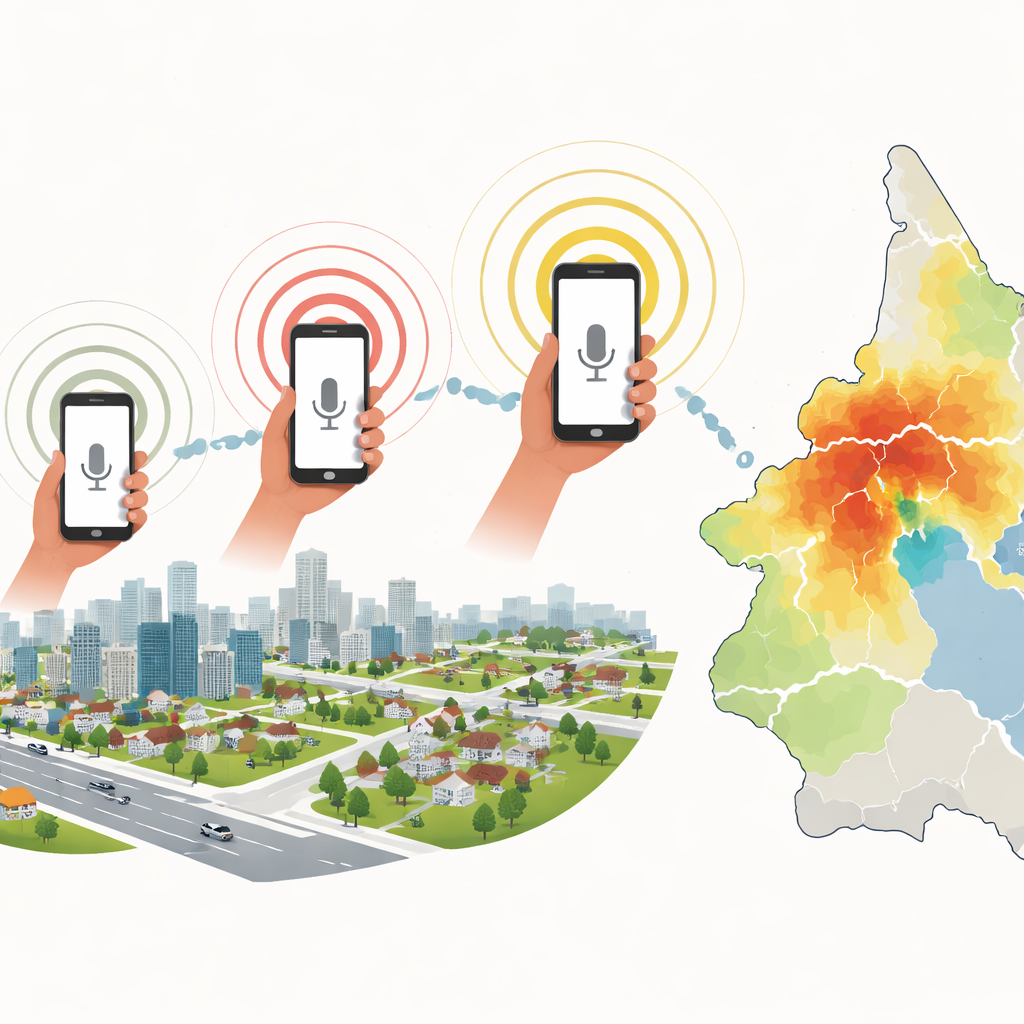
The researchers set out to build a detailed picture of urban noise in two Ugandan cities, where complaints about loud bars, street speakers, religious venues, traffic and workshops are common but rarely backed by data. Over five weeks, a team of 20 trained assistants crisscrossed five divisions of Kampala and four wards of Entebbe on foot and by motorcycle taxi. Using Android smartphones, they captured short audio clips of at least ten seconds along with the loudness level, the exact location, the time, and a simple label describing the source, such as traffic, crowd noise, bar music, schoolyard sounds or generators. This effort produced 61,821 labeled sound samples, making it the largest known urban sound dataset in the world and the first of its kind for an African city.
Turning phones into reliable sound meters
Because the team relied on affordable phones instead of expensive professional equipment, they first had to prove the phones could measure loudness accurately. The researchers calibrated ten Tecno smartphones against a high-grade industrial sound meter across a wide range of noise levels, from relatively quiet to extremely loud. They found that the readings from the phones lined up closely with the professional meter, with only small differences that stayed within accepted error limits. This step is crucial: it shows that, with proper setup, ordinary phones can double as trustworthy noise meters, opening the door to large-scale monitoring in places where resources are limited.
From raw sounds to a usable citywide resource
The project was built on an open-source data system called Open Data Kit, which allowed fieldworkers to fill in standardized forms on their phones, record sounds, and upload everything to a central server whenever a connection was available. Each sound file is paired with rich background information: loudness in decibels, GPS coordinates, the type of noise, the district, and an ID for the contributor. The team also checked the data carefully: they confirmed that recordings did not contain intelligible private conversations, removed corrupted and duplicate files, and verified that audio quality was consistent. The final dataset is neatly organized into folders of sound files and a companion table that describes each recording, ready for other researchers, city planners and technologists to use.
Seeing how the city’s shape shapes its sound
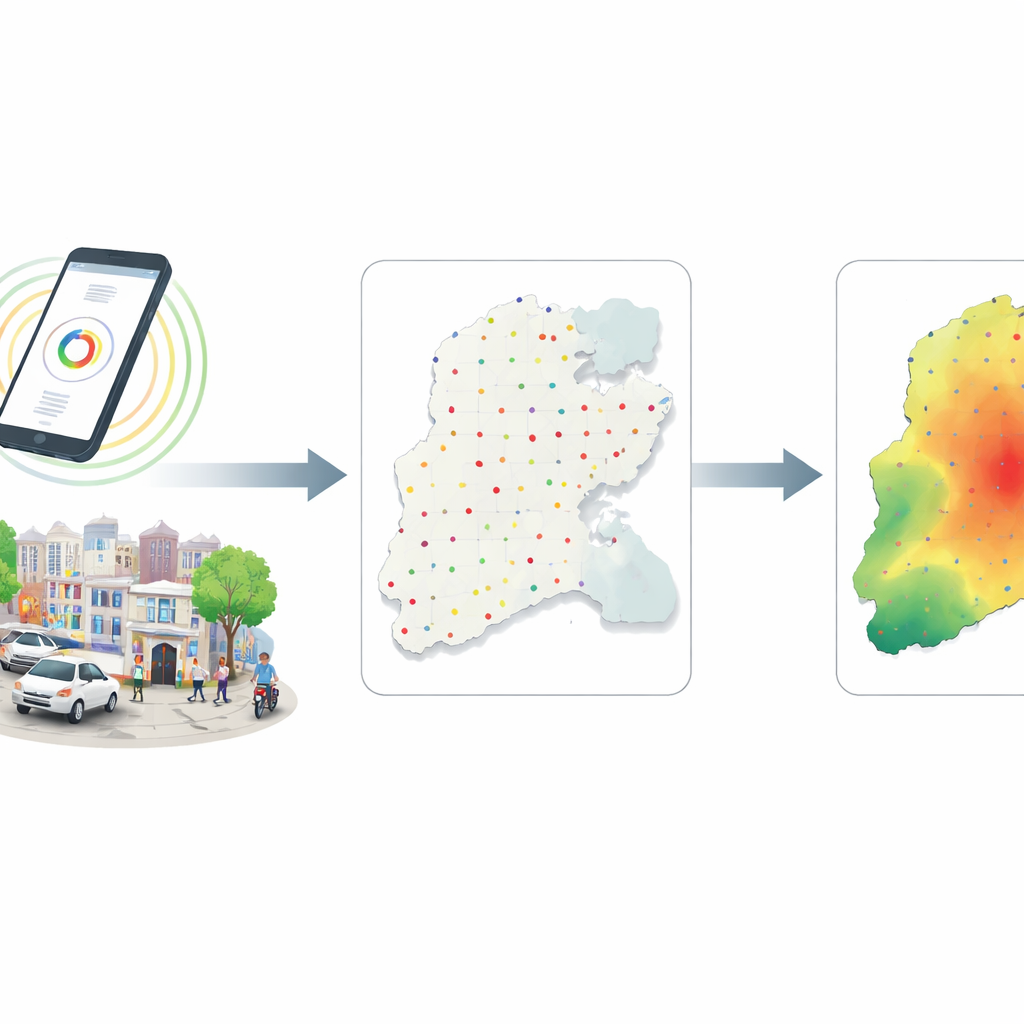
To understand how noise fits into the physical layout of the city, the authors linked each recording to basic measures of urban form. They calculated how densely buildings are packed, how many roads and intersections surround each point, and how steep the terrain is. Dense corridors with many roads and junctions tended to have higher average noise, while steeper areas slightly dampened sound. The team also demonstrated what can be done with the data by creating example maps of average noise in Entebbe, showing louder bands along busy routes and markets and quieter pockets in residential and outlying areas, as well as day–night and hour-by-hour patterns in sound levels.
Why this new sound map matters
For non-specialists, the main message is that city noise can now be measured, mapped and understood in places that have long been overlooked. By using everyday smartphones and open tools, the Uganda team has created a detailed snapshot of how loud different parts of Kampala and Entebbe are, and what activities are responsible. This public dataset can help health researchers study the effects of noise, guide city officials as they enforce noise rules, and support planners designing quieter neighborhoods and transport routes. More broadly, it offers a model that other low- and middle-income cities can follow, bringing the hidden burden of noise pollution into the open where it can be managed.
Citation: Nsumba, S., Muhanguzi, T., Ouma, E.N. et al. Noise mapping and ambient sound recordings of the urban environment in Uganda. Sci Data 13, 345 (2026). https://doi.org/10.1038/s41597-026-06658-w
Keywords: urban noise pollution, sound mapping, Kampala, smartphone sensing, environmental health