Clear Sky Science · en
First Chromosome-level Genome Assembly and Annotation of an Endangered Freshwater Stingray (Fontitrygon garouaensis) from Africa
A Rare River Resident Gets a Genomic Spotlight
In the muddy rivers of West Africa lives an unusual stingray that has done what almost all of its shark and ray relatives have not: it has moved permanently into freshwater. This smooth freshwater stingray, Fontitrygon garouaensis, is also endangered and poorly studied. The paper behind this article delivers the first complete, chromosome-level map of its DNA, offering a powerful new tool to understand how such an ancient marine lineage has adapted to life in rivers and how we might better protect it.
Why This Stingray Matters
Sharks and rays belong to one of the oldest branches of the vertebrate family tree, splitting from the ancestors of bony fishes hundreds of millions of years ago. Yet, for all their evolutionary importance, their genomes remain sparsely charted, especially for species living in African waters. Fontitrygon garouaensis is particularly special: it is the only stingray known to be fully adapted to African freshwater systems, and it shows distinctive body features such as a reduced or missing row of spines on its back. Because moving from salty seas into fresh rivers is rare and physiologically challenging for sharks and rays, this species offers a natural experiment in how animals retool their biology to cope with new environments.
Building a Genetic Reference Map
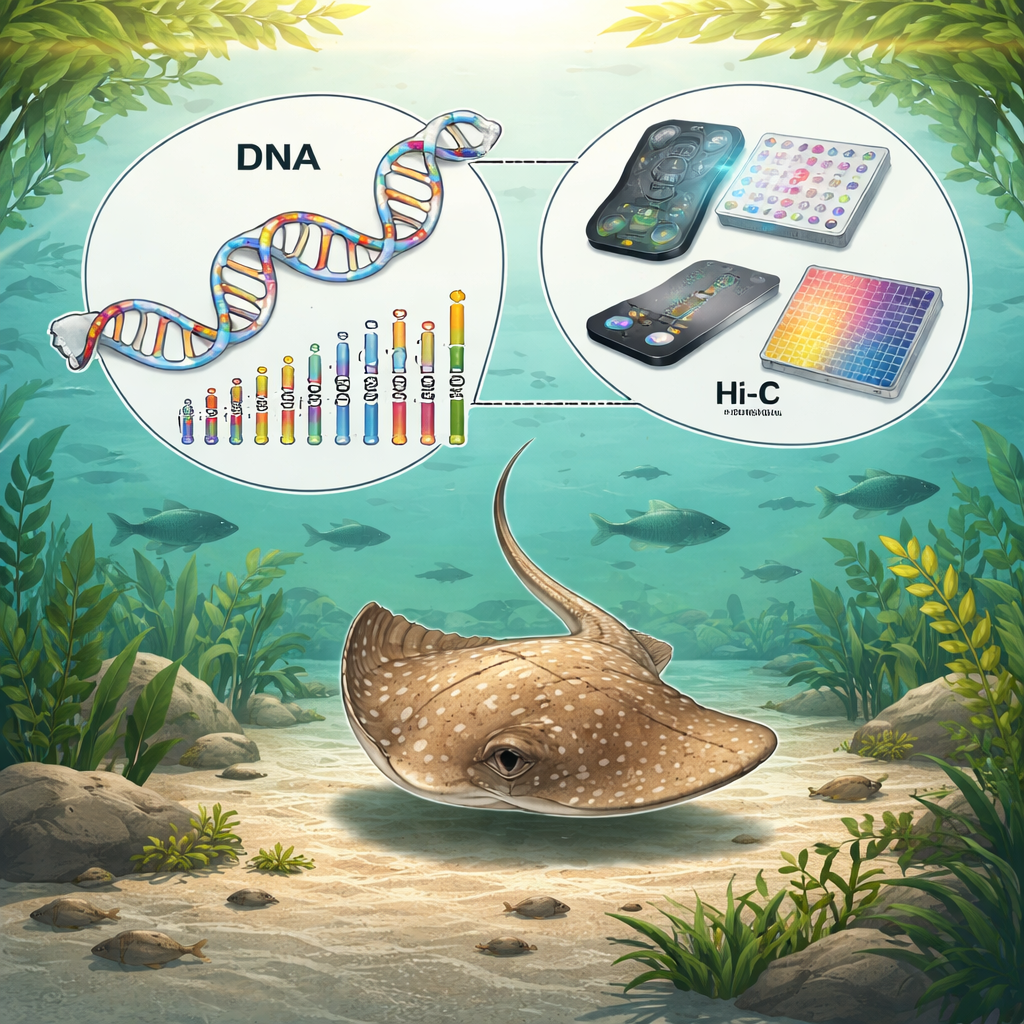
To unlock the stingray’s genetic blueprint, the researchers collected a single adult female from the Niger River in Nigeria and extracted high-quality DNA and RNA from multiple tissues. They then used a “hybrid” strategy that combines three cutting-edge sequencing approaches. Short-read Illumina sequencing provides enormous numbers of tiny DNA snippets, long-read PacBio HiFi sequencing generates much longer and more continuous stretches, and Hi-C sequencing captures how DNA folds and interacts inside the cell nucleus. By weaving these datasets together with specialized software, the team assembled a genome of about 4.19 billion DNA letters, organized into 41 chromosome-scale pieces—comparable in size to some of the largest shark genomes known.
What the Genome Reveals
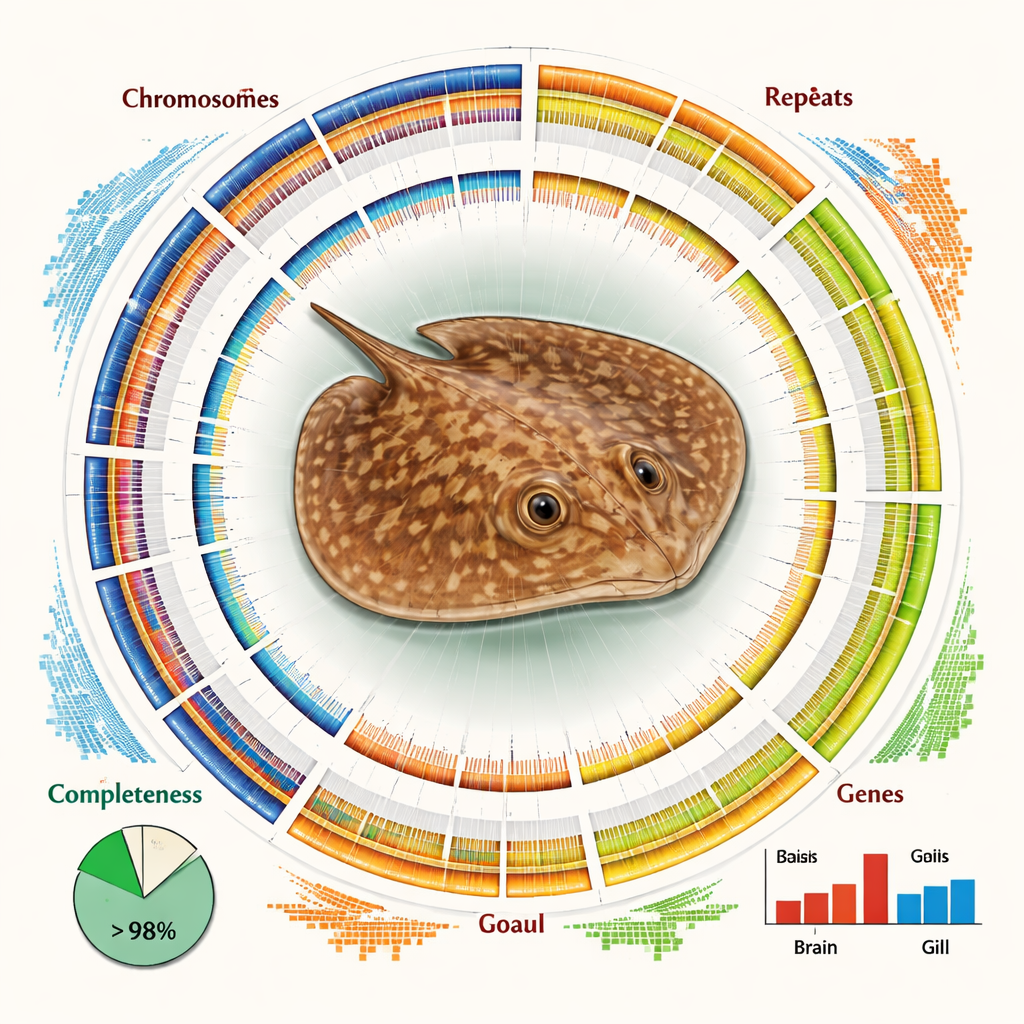
The finished assembly is both large and remarkably complete. Independent quality checks show that more than 93 percent of expected core vertebrate genes are present and intact, and over 84 percent of the total DNA sequence is confidently assigned to specific chromosomes. The genome is dominated by repetitive DNA—stretches of sequence that occur many times—making up roughly two thirds of its length. Many of these repeats belong to mobile genetic elements such as LINEs and LTRs, which have copied and inserted themselves throughout the genome over evolutionary time. Despite this complexity, the researchers identified nearly 30,000 protein-coding genes, and could assign likely functions to over 98 percent of them using international protein and pathway databases.
Clues to Freshwater Life and Evolution
Having a chromosome-level map allowed the team to do more than just list genes. By comparing the stingray’s chromosomes with those of related sharks and rays, they uncovered a history of structural reshuffling—breaks, fusions, and rearrangements of whole chromosome segments—that distinguishes this lineage. These changes may have helped shape the species’ unique traits and ecological niche. The authors also examined gene activity in two key tissues: the gills, which mediate breathing and salt balance with the surrounding water, and the brain. They found clear differences in which genes are turned on, with gill genes enriched for pathways involved in energy use and fat metabolism, hinting at the biochemical adjustments needed to survive in freshwater.
A New Foundation for Conservation
At its core, this work turns an obscure, threatened river stingray into one of the best-characterized cartilaginous fishes at the DNA level. For non-specialists, that means scientists now have a detailed reference manual for the species, from its chromosomes down to individual genes. This reference can guide future studies on how it copes with changing water quality, how its populations are structured across rivers, and how it is related to other rays. Just as important, it provides a genomic foundation for conservation planning, offering new ways to track genetic diversity, identify distinct populations worth protecting, and understand how this rare freshwater specialist might respond to ongoing environmental pressures.
Citation: Nneji, L.M., Oladipo, S.O., Oyebanji, O.O. et al. First Chromosome-level Genome Assembly and Annotation of an Endangered Freshwater Stingray (Fontitrygon garouaensis) from Africa. Sci Data 13, 302 (2026). https://doi.org/10.1038/s41597-026-06646-0
Keywords: freshwater stingray, genome assembly, elasmobranch evolution, conservation genomics, African river biodiversity