Clear Sky Science · en
Chromosome-level genome assembly of narrow-leaf bur-reed (Sparganium angustifolium Michx., Typhaceae)
A Quiet Lake Plant With a Big Genomic Story
Narrow-leaf bur-reed is a modest-looking water plant that you might paddle past without a second glance, yet it quietly shapes life in many northern lakes and ponds. It shelters small fish, feeds waterfowl, and carpets the water’s surface with floating leaves. In this study, scientists reveal a detailed genetic blueprint of this plant, opening a new window into how plants adapt to life underwater and providing a valuable reference for both conservation and basic biology. 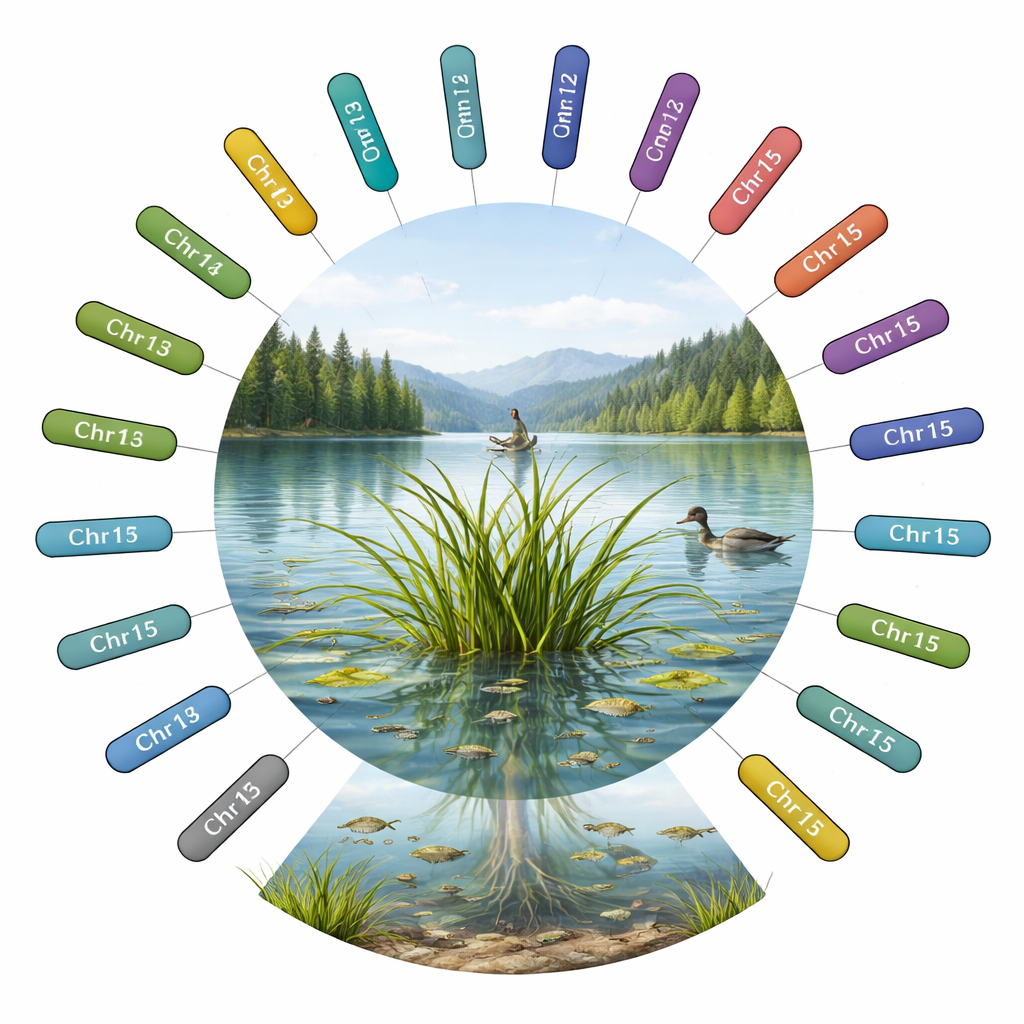
Why This Underwater Resident Matters
Narrow-leaf bur-reed (scientific name Sparganium angustifolium) is common across temperate regions of the Northern Hemisphere. Unlike reed-like plants that mostly stand above the water’s surface, this species grows in deeper water, with long, slender leaves that are largely submerged or floating. Its thick patches create underwater forests that provide hiding places for aquatic animals, while its fruits and leaves feed ducks and other wild birds. Because it sits near the base of an important branch of the grass-and-grain family tree (the order Poales, which also includes crops like rice and corn), it offers a key comparison point for understanding how plants made the leap from dry land to aquatic environments.
Building a High-Resolution Genetic Blueprint
To uncover the plant’s genome, researchers collected a specimen from a river in Inner Mongolia, China, and used several cutting-edge DNA sequencing techniques. They combined long, highly accurate DNA reads, short-read sequencing, and a method called Hi-C, which captures how different regions of DNA sit next to each other in 3D space inside the cell. By weaving together these data, they assembled the plant’s DNA into 15 chromosomes, covering almost the entire genome—about 487 million “letters” of genetic code. Measures of assembly quality showed that large stretches of DNA were stitched together without breaks and that more than 96% of expected core plant genes were present, indicating a very complete and reliable reference genome.
Repetitive DNA and Thousands of Genes
Once the genome was assembled, the team set out to identify its main features. They found 23,767 protein-coding genes—segments of DNA that can be turned into proteins that build and run the plant’s cells. To understand what these genes might do, they compared them against several major scientific databases and were able to assign likely functions to more than 96% of them. The researchers also discovered that the majority of the genome—just over 70%—is made up of repetitive DNA, much of it in the form of jumping genetic elements known as retrotransposons. These stretches do not directly code for proteins, but they strongly shape genome size and structure and can influence how nearby genes behave. 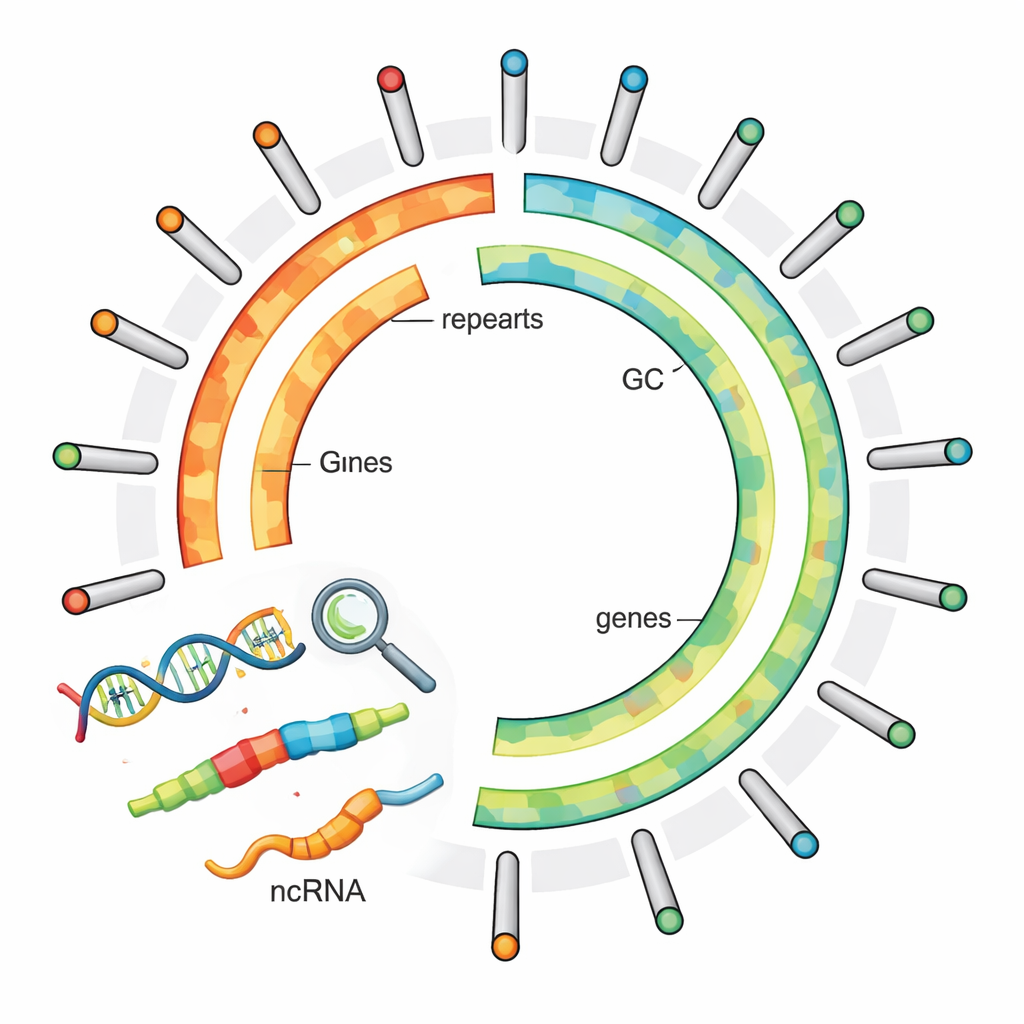
The Plant’s Hidden RNA Toolkit
Beyond genes that make proteins, the genome houses many non-coding RNAs, molecules that help control and fine-tune gene activity. The researchers identified more than 3,300 such elements, including thousands of ribosomal RNAs that form the core of the cell’s protein factories, hundreds of transfer RNAs that deliver building blocks for new proteins, and small RNAs that can guide which genes are turned on or off. This rich RNA toolkit suggests that narrow-leaf bur-reed has multiple layers of regulation to respond to changes in light, oxygen, temperature, and water movement in its aquatic home.
From One Plant to a Broader Evolutionary Picture
By making this chromosome-level genome publicly available in international databases, the authors provide a powerful new resource for scientists studying how plants adapt to life in water. Comparing this genome with those of related species that live at the water’s edge or on land can reveal which genes and DNA features are shared, and which are unique to fully aquatic lifestyles. For non-specialists, the takeaway is straightforward: by decoding the genetic script of a seemingly ordinary lake plant, researchers have created a foundation for understanding how plants engineer themselves to thrive underwater, knowledge that could ultimately inform wetland conservation and even the breeding of more resilient crops.
Citation: Shi, X., Xue, J. & Xu, X. Chromosome-level genome assembly of narrow-leaf bur-reed (Sparganium angustifolium Michx., Typhaceae). Sci Data 13, 284 (2026). https://doi.org/10.1038/s41597-026-06640-6
Keywords: aquatic plants, genome assembly, wetland ecology, plant evolution, Sparganium