Clear Sky Science · en
Long-term biodiversity monitoring data from two hydroelectric dam projects in northeast Portugal, 2006–2023
Why Dams and Wildlife Matter to All of Us
As the world races to build more renewable energy, we often forget to ask what happens to the plants and animals that share those rivers and valleys. This paper describes nearly two decades of careful wildlife monitoring around two large hydroelectric dams in northeast Portugal. Rather than leaving the information locked away in company reports, the authors turned it into one of the most open and comprehensive biodiversity datasets ever produced by a private developer. Their work offers a rare, transparent look at how big energy projects reshape nature over time—and how sharing data can help balance clean power with healthy ecosystems.
Two River Valleys Under the Spotlight
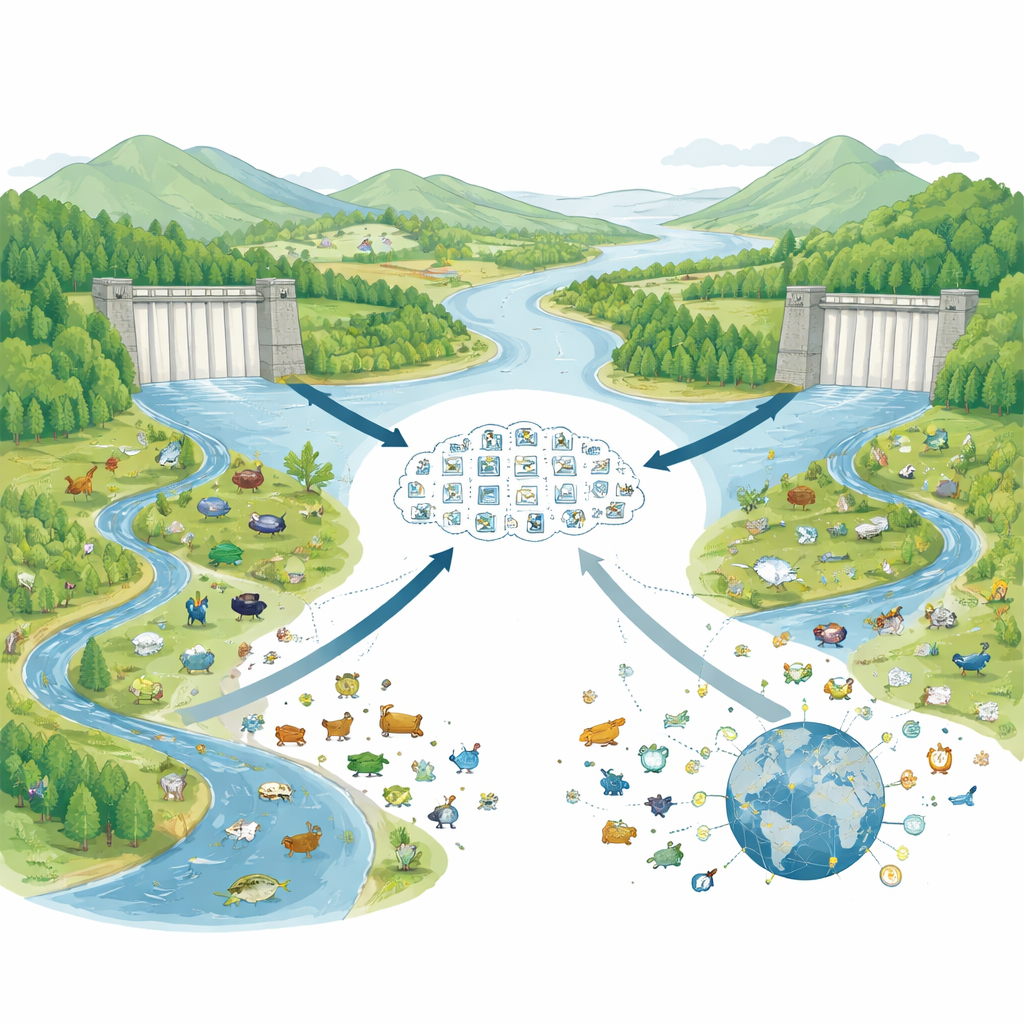
The study focuses on two dam projects in tributaries of Portugal’s Douro River: Baixo Sabor and Foz Tua. Both were controversial from the start. One sits inside a European protected area, the other in a UNESCO World Heritage wine region. Because of this, authorities required strict checks on their environmental effects. Beginning in 2006, teams of consultants, researchers and company staff surveyed wildlife in and around the river valleys before construction, during building, as reservoirs filled, and throughout operation. They also monitored nearby control areas not directly affected by the dams, allowing comparisons through time and space. This long-term commitment created a rare opportunity to follow ecological change as it unfolded.
Turning Field Notes into a Living Library of Life
Over 17 years, experts used a wide range of tried-and-tested methods to track life in the rivers and on land. They netted and released fish, sampled tiny organisms in the water, walked transects counting birds and mammals, set camera traps for elusive species like otter and wolf, and checked plants and insects along fixed routes. Each observation was tied to a precise place, date, and survey method. In total, the effort produced almost two million records covering around 3,800 types of organisms, from bacteria and fungi to trees, dragonflies, frogs, birds and bats. This breadth makes the dataset unusually rich for understanding how an entire landscape responds to major construction.
From Scattered Spreadsheets to Clean, Shareable Data
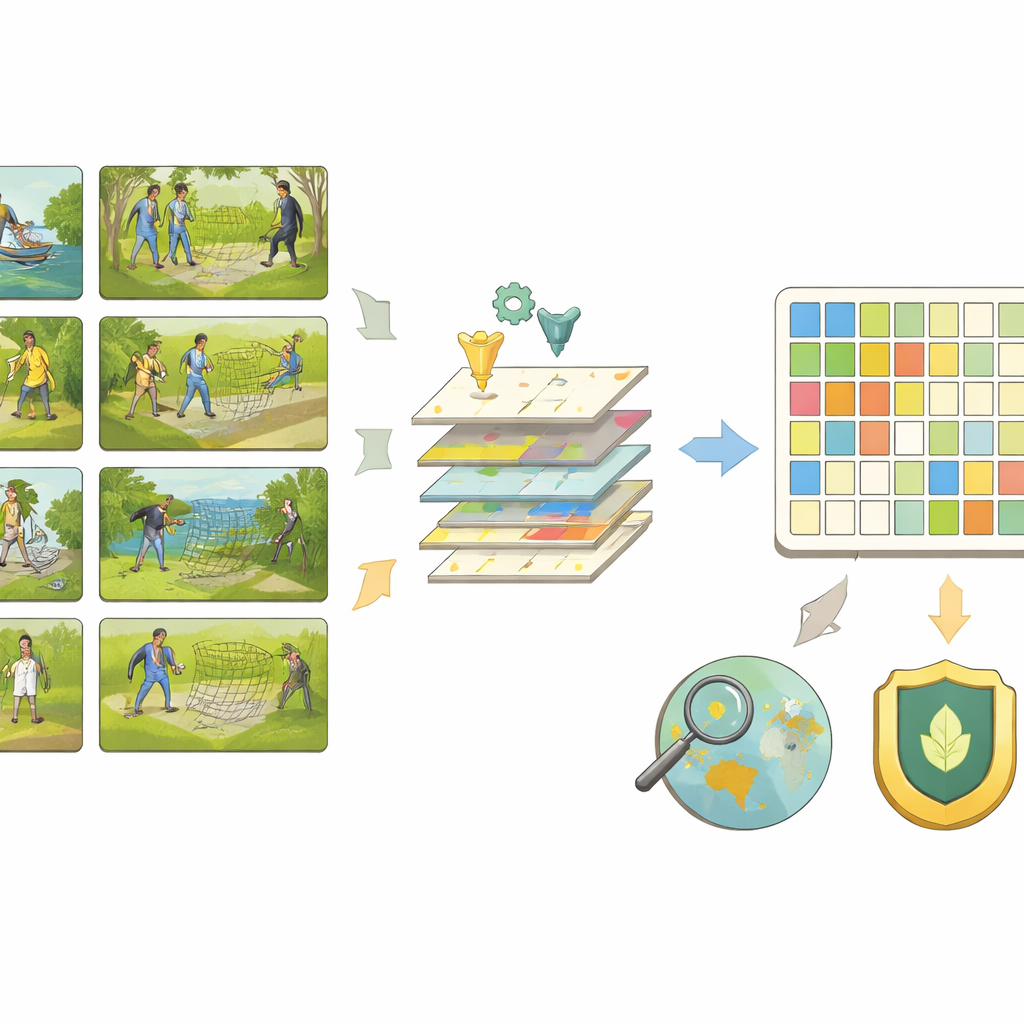
Originally, the information was scattered across 149 separate datasets produced by different contractors and phases of the projects. To turn this patchwork into a usable resource, the authors created central information systems for each dam and applied a common international standard known as Darwin Core. They checked that every record could be linked to a specific sampling event, harmonised species names using global taxonomic catalogues, and verified that coordinates and dates made sense. They also cleaned up categories such as sex, life stage, and whether a species was present or confidently not detected in a survey. Duplicate or clearly erroneous entries were removed, while uncertain ones were flagged. The result is a single, consistent occurrence table that can be downloaded from the Global Biodiversity Information Facility (GBIF) with a permanent digital identifier.
What the Data Can Reveal About Nature and Dams
The authors do not present new statistical results here; instead, they provide the foundation for others to ask deeper questions. Because the dataset includes both presences and explicit absences for many surveys, it can support powerful analyses of where species can live, how their numbers change, and how quickly they recover from disturbance. Researchers can, for example, track long-term trends in cliff-nesting birds, fish communities, or rare mammals as the dams moved from planning to operation. Conservation planners can explore which habitats around the reservoirs still hold high biodiversity and where restoration might be most effective. Regulators and policy-makers can use the data to test whether promised mitigation measures actually worked.
A Blueprint for Open Nature Data from Industry
Perhaps the most important message for non-specialists is not about any single species, but about how companies handle information on nature. This paper shows that private developers can work with scientists to share high-quality environmental data openly, even across changes in ownership. By publishing the full monitoring record under an open licence through GBIF, the dam operators have turned what might have been forgotten reports into a lasting public good. For citizens, this means a clearer view of how large projects shape local wildlife; for decision-makers, it offers a model of transparency and accountability. In a world where both renewable energy and biodiversity protection are urgent priorities, such open data efforts help society make better-informed choices about the future of our rivers and landscapes.
Citation: Múrias, T., Figueira, R., Madeira, J. et al. Long-term biodiversity monitoring data from two hydroelectric dam projects in northeast Portugal, 2006–2023. Sci Data 13, 363 (2026). https://doi.org/10.1038/s41597-026-06636-2
Keywords: hydropower biodiversity, long-term ecological monitoring, environmental impact assessment, open biodiversity data, river valley ecosystems