Clear Sky Science · en
Chromosome-level genome assembly of agar-producing red seaweed Gracilaria vermiculophylla
Why a Red Seaweed Genome Matters
Agar, the jelly-like substance that sets our desserts, thickens soups, and supports lab-grown microbes, often comes from a humble red seaweed called Gracilaria vermiculophylla. This seaweed is not only an industrial workhorse but also an invader spreading along coastlines in North America and Europe. Until now, scientists lacked a complete, high-quality map of its DNA, limiting efforts to improve agar production, understand its invasiveness, or explore its health-related compounds. This study delivers that missing genetic blueprint at the level of entire chromosomes, opening the door to both practical applications and new basic research.
A Coastal Plant with Many Roles
Gracilaria vermiculophylla is a red seaweed native to parts of Asia and the northwest Pacific, now thriving—and sometimes causing problems—in estuaries around the world. Farmers use it as a source of agar and other valuable molecules with potential medical and nutritional benefits, such as boosting iodine levels in farmed fish or helping organisms cope with stress. At the same time, ecologists study it as a model for how marine species adapt quickly to new environments and warming oceans. Because this seaweed has a complex life cycle and shows striking genetic diversity, a complete genome map is essential for making sense of how its biology works and how it responds to changing seas.
From Sea to Sequencer
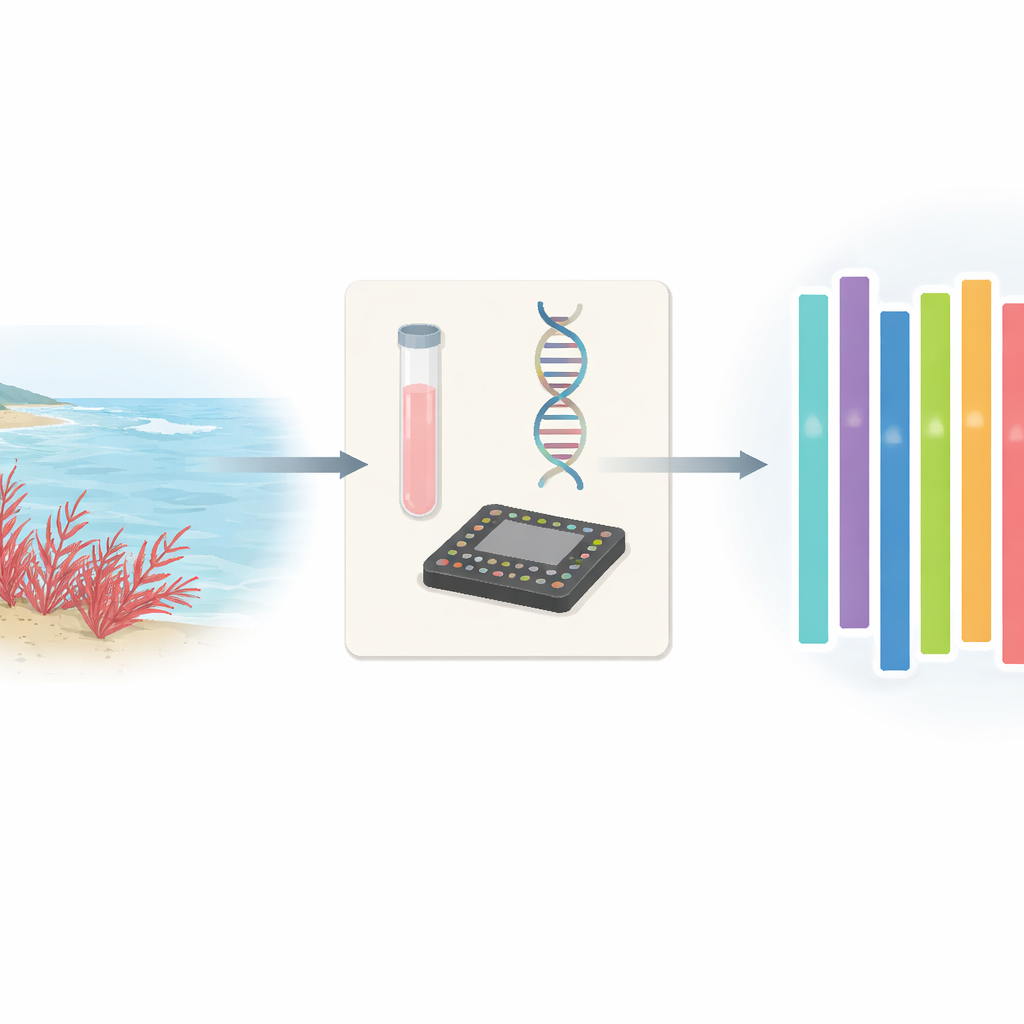
To build that map, the researchers collected seaweed from China’s eastern coast and carefully cleaned and preserved it to obtain high-quality DNA. They then combined three modern sequencing approaches: short, highly accurate DNA fragments; much longer but noisier reads that help span gaps; and a special technique called Hi-C that captures which pieces of DNA sit near each other inside the cell’s nucleus. Together, these methods allow scientists to not only read the seaweed’s genetic code but also assemble it into long stretches that correspond to complete chromosomes, while filtering out stray DNA from bacteria and other hitchhikers living on the plant.
Piecing Together the Genetic Puzzle
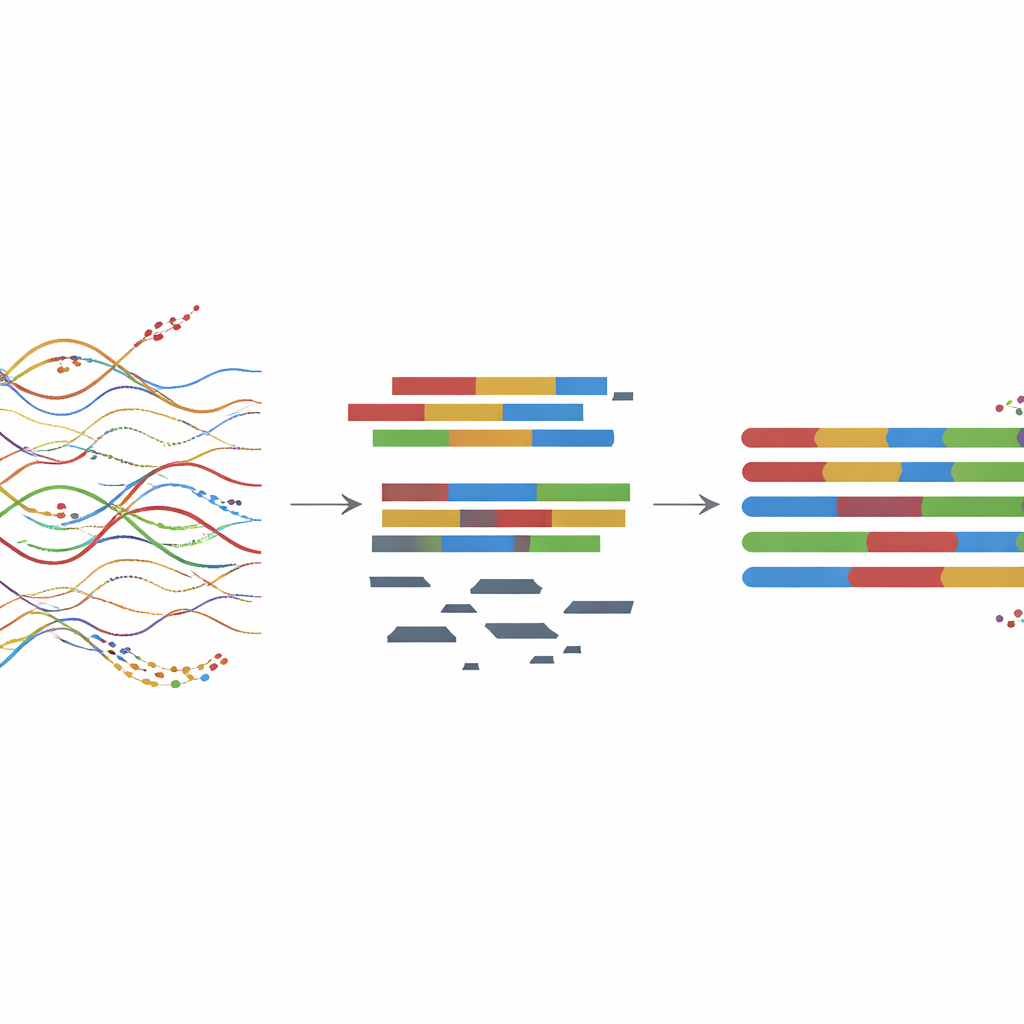
Using these data, the team assembled a nuclear genome about 77.5 million “letters” long, organized into 22 large pieces called pseudochromosomes. This is a major improvement over earlier draft versions, which were smaller, more fragmented, and missed entire chromosome regions. The new assembly has far fewer breaks and much longer continuous stretches, meaning researchers can now trace genes and larger patterns across whole chromosomes. Careful checks of sequence accuracy, coverage, and base composition showed that contamination was successfully removed and that most core genes expected in similar organisms are present and complete.
Hidden Repeats and Working Genes
The study did more than just stitch the DNA pieces together. The team scanned the genome for repeated sequences, discovering that nearly 60 percent of it consists of mobile genetic elements, particularly a type called long terminal repeats. These repeated segments, often seen as genomic “jumping genes,” can shape how genomes evolve over time. The researchers also identified 10,689 protein-coding genes, with over 86 percent linked to known functions by comparing them against multiple biological databases. Many of these genes participate in basic cell processes, metabolism of sugars and other molecules, and responses to environmental conditions—features that are directly relevant to agar production and adaptation to stress.
A New Foundation for Future Work
By delivering a chromosome-level genome for Gracilaria vermiculophylla, this work turns a previously blurry genetic picture into a detailed atlas. For industry, it offers a roadmap to pinpoint genes involved in agar quality and yield, potentially guiding breeding or biotechnological improvements. For ecologists and evolutionary biologists, it provides the tools to explore how this seaweed thrives in new habitats and changing climates. In short, this genome assembly transforms G. vermiculophylla from a useful but genetically mysterious seaweed into a well-charted model organism for food, industry, and environmental science.
Citation: Jian, J., Luo, Y., Xu, J. et al. Chromosome-level genome assembly of agar-producing red seaweed Gracilaria vermiculophylla. Sci Data 13, 334 (2026). https://doi.org/10.1038/s41597-026-06635-3
Keywords: red seaweed genome, agar production, marine invasive species, chromosome-level assembly, Gracilaria vermiculophylla