Clear Sky Science · en
Fungal photobiont and microbiome genome composition in the Cladonia uncialis tripartite symbiosis
Life on Bare Rock
Lichens are among nature’s toughest pioneers, able to colonize bare rock, frozen tundra, and sun-blasted cliffs where few other organisms survive. This study takes a deep look inside one such species, Cladonia uncialis, treating it not as a single organism but as a tiny living community of fungus, algae, and bacteria. By decoding the DNA of all these partners at high resolution, the authors build a genomic “blueprint” that helps explain how this miniature ecosystem endures harsh environments and shapes new habitats.
A Three-Partner Team
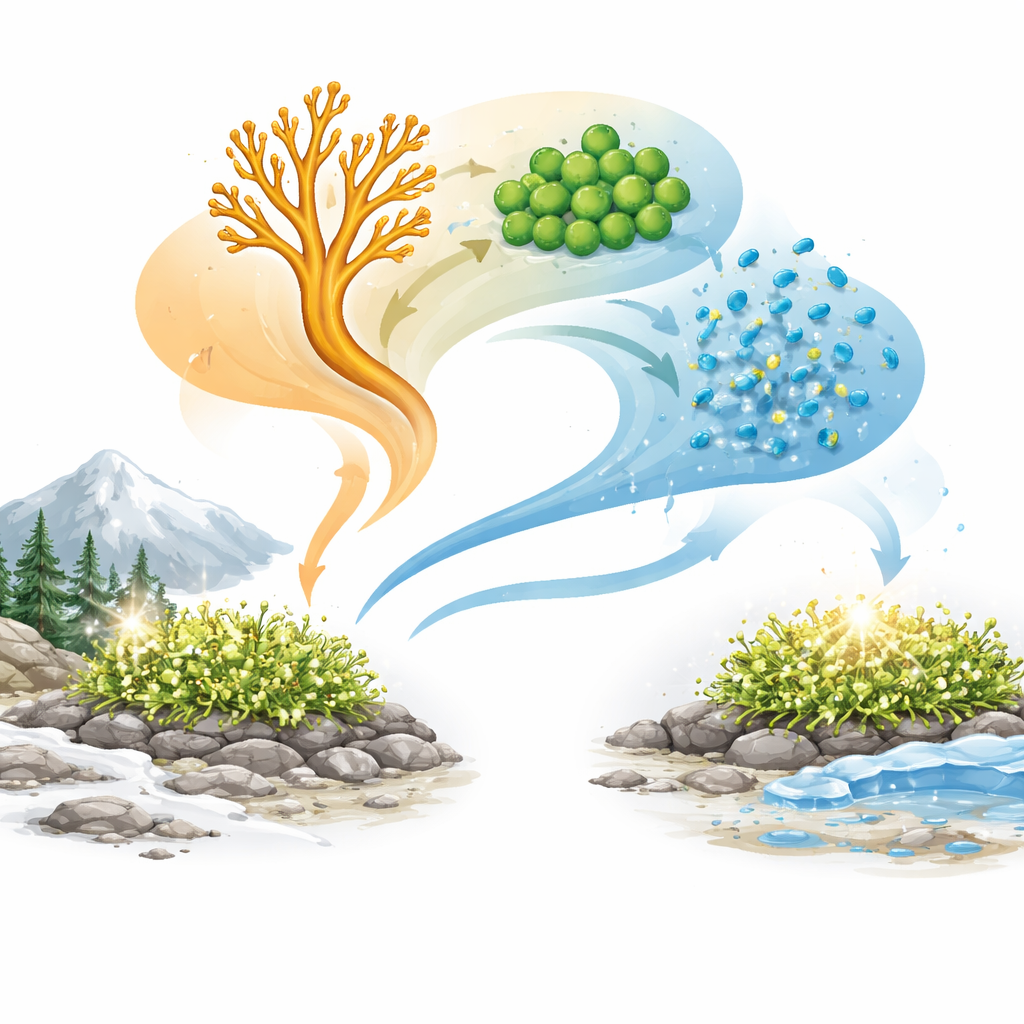
Cladonia uncialis is a fruticose lichen with hollow, twig-like branches that spreads across humus-rich or sandy ground in cold conifer forests and heathlands of the Northern Hemisphere. It is already known for making special lichen acids, rare chemicals that may help it fend off microbes or cope with stress. Like other lichens, C. uncialis is built around a fungus (the mycobiont) that houses photosynthetic partners (the photobionts, here algae) plus a diverse cast of bacteria. Earlier genome work relied on short DNA snippets, leaving a patchy picture of how these partners are organized and how they collectively adapt to cold, drought, and strong radiation.
Building a Complete Genetic Blueprint
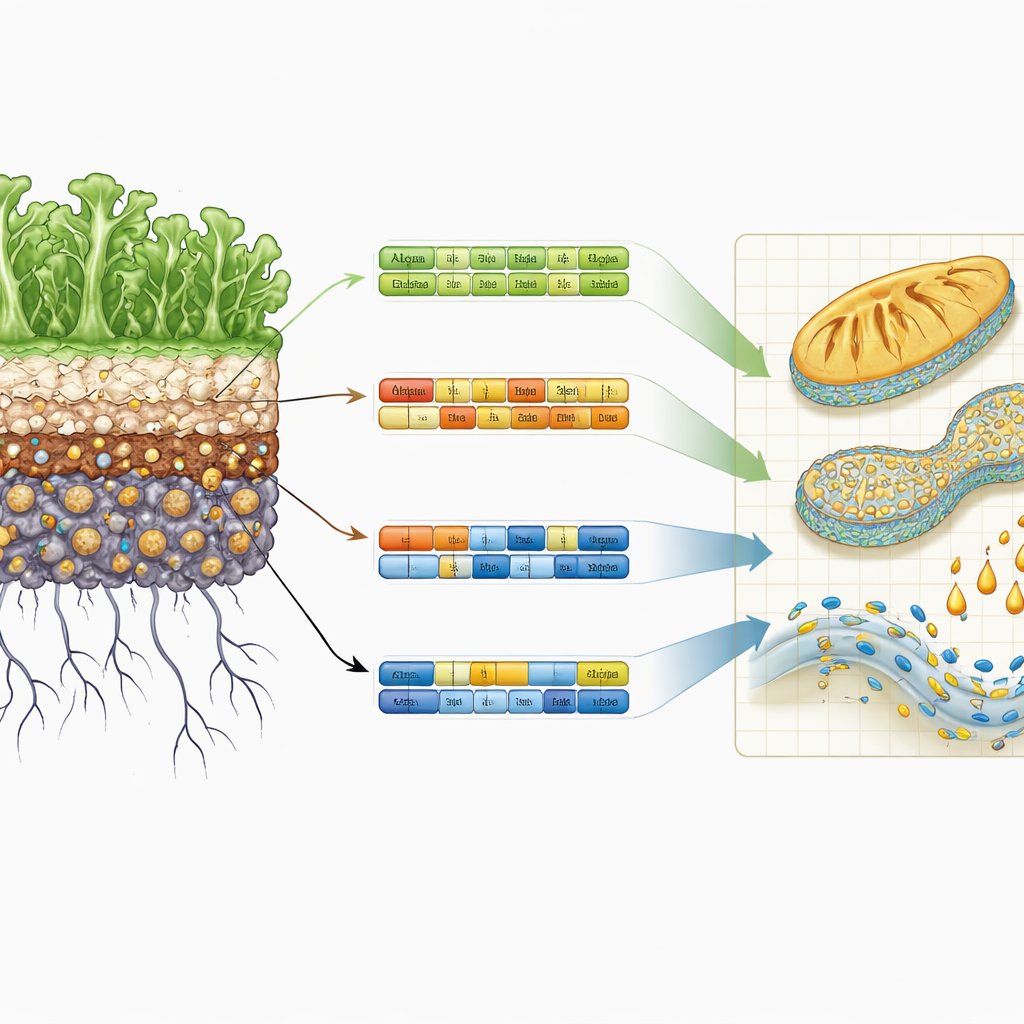
To sharpen that picture, the researchers used long-read DNA sequencing combined with chromosome-linking (Hi-C) technology to assemble nearly complete genomes. For the fungal partner, they reconstructed 28 chromosomes totaling about 43.5 million DNA letters, with almost all the sequence anchored cleanly to chromosomes, indicating a highly continuous, reliable assembly. For the algal photobiont, they assembled a 60.0 million–letter genome, with most of it organized into 18 chromosomes, revealing a clear separation between fungal and algal DNA based on their distinct base composition. They then predicted and refined over 11,000 fungal genes, cataloged non-coding RNAs, and mapped repetitive elements such as transposable elements and long terminal repeats.
Tracing Evolution and Hidden Strengths
Placing C. uncialis in an evolutionary family tree alongside other lichen-forming fungi, the team found that it forms a tight group with the Antarctic species Cladonia borealis, diverging from its broader family roughly 60 million years ago. Detailed comparisons of gene families uncovered hundreds of groups that have either expanded or shrunk, suggesting strong evolutionary pressures. The expanded sets are enriched in functions tied to redox reactions, energy production, and the manufacture of fatty acids and related small organic acids. Network and pathway analyses point to bolstered oxidative phosphorylation (the cell’s main power-generating process), amino acid and sugar metabolism, and the building and upkeep of flexible cell membranes—all traits that would support life under cold, dry, and high-radiation conditions.
The Hidden Bacterial Helpers
Beyond fungus and algae, the authors probed the lichen’s bacterial inhabitants using both short- and long-read metagenomic sequencing. They identified more than 300,000 non-redundant bacterial genes and reconstructed 31 draft bacterial genomes from the lichen surface and interior. The community is dominated by Ascomycota fungi and bacterial groups such as Proteobacteria (here called Pseudomonadota) and Bacteroidota, with notable genera including the lichen fungus Cladonia and the bacterium Flavobacterium. Long-read sequencing greatly improved detection of rare bacterial species, revealing a “core-satellite” structure in which a few lineages are common and many others hover at low abundance. Functional profiling shows that many of these bacteria possess complete pathways for fatty acid synthesis and breakdown, energy generation, and surface sugar production, hinting that they help the lichen manage lipids, generate ATP, and shape protective outer layers.
Why This Tiny World Matters
Together, these results provide the first chromosome-level view of the C. uncialis symbiotic system and a detailed census of its microbial partners. For non-specialists, the key takeaway is that a lichen is not just a fungus with a bit of algae, but a tightly integrated mini-ecosystem whose resilience emerges from shared genetic tools for energy use, stress defense, and membrane maintenance. By making all of these genomic and metagenomic data publicly available, the study offers a foundation for future work on how life conquers extreme environments, how symbiotic communities evolve, and how the unique chemistry of lichens might be harnessed in biotechnology or medicine.
Citation: Dong, Z., Sun, M.S., He, Y.D. et al. Fungal photobiont and microbiome genome composition in the Cladonia uncialis tripartite symbiosis. Sci Data 13, 319 (2026). https://doi.org/10.1038/s41597-026-06624-6
Keywords: lichen symbiosis, Cladonia uncialis, microbiome, genome assembly, extreme environments