Clear Sky Science · en
Transcriptomic Resource of Trissolcus cultratus: A Key Biological Control Agent for Halyomorpha halys
Why tiny wasps matter for our food
The brown marmorated stink bug may not look like much, but this invasive insect has been chewing through fruit and vegetable crops across the world. One of the most promising allies in this battle is a pin‑head‑sized wasp, Trissolcus cultratus, which lays its eggs inside stink bug eggs and kills them before they hatch. Curiously, populations of this wasp from China and Switzerland differ in how well they attack the pest. The study described here builds a detailed catalog of the genes that are switched on in female wasps from both regions, laying the groundwork for understanding why some wasps are better natural pest fighters than others.
A natural enemy with two personalities
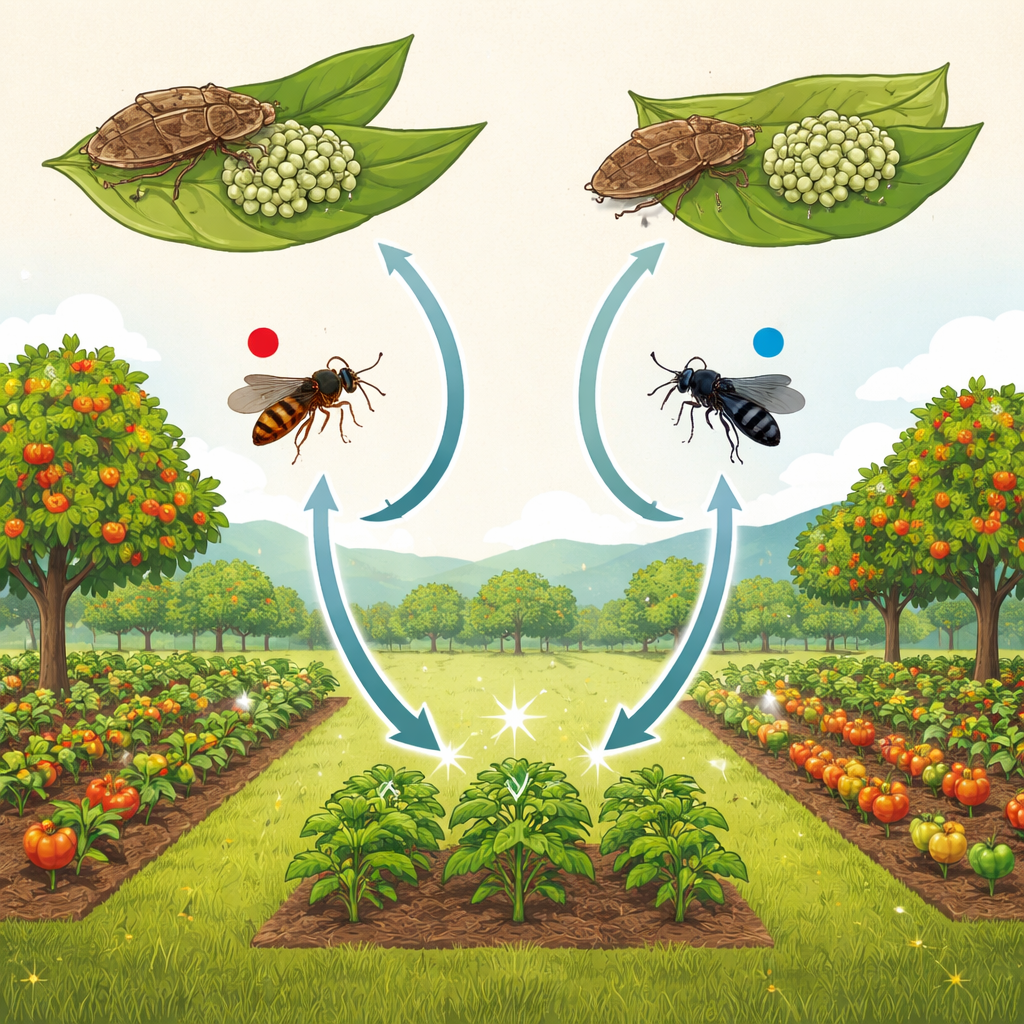
Farmers and scientists are searching for environmentally friendly ways to control the brown marmorated stink bug, which has spread from East Asia to many parts of the globe. In its native range in China, Trissolcus cultratus successfully parasitizes fresh and cold‑stored stink bug eggs, both in the lab and in orchards. In Switzerland, however, local wasps usually succeed only on frozen eggs that scientists place in the field as sentinels, and they rarely complete development in freshly laid eggs. These contrasting abilities suggest that, over time and distance, the Chinese and Swiss populations have diverged biologically, perhaps in how their genes respond to the host. Until now, there were no large‑scale genetic resources for this species to investigate such differences.
Reading the wasp’s genetic messages
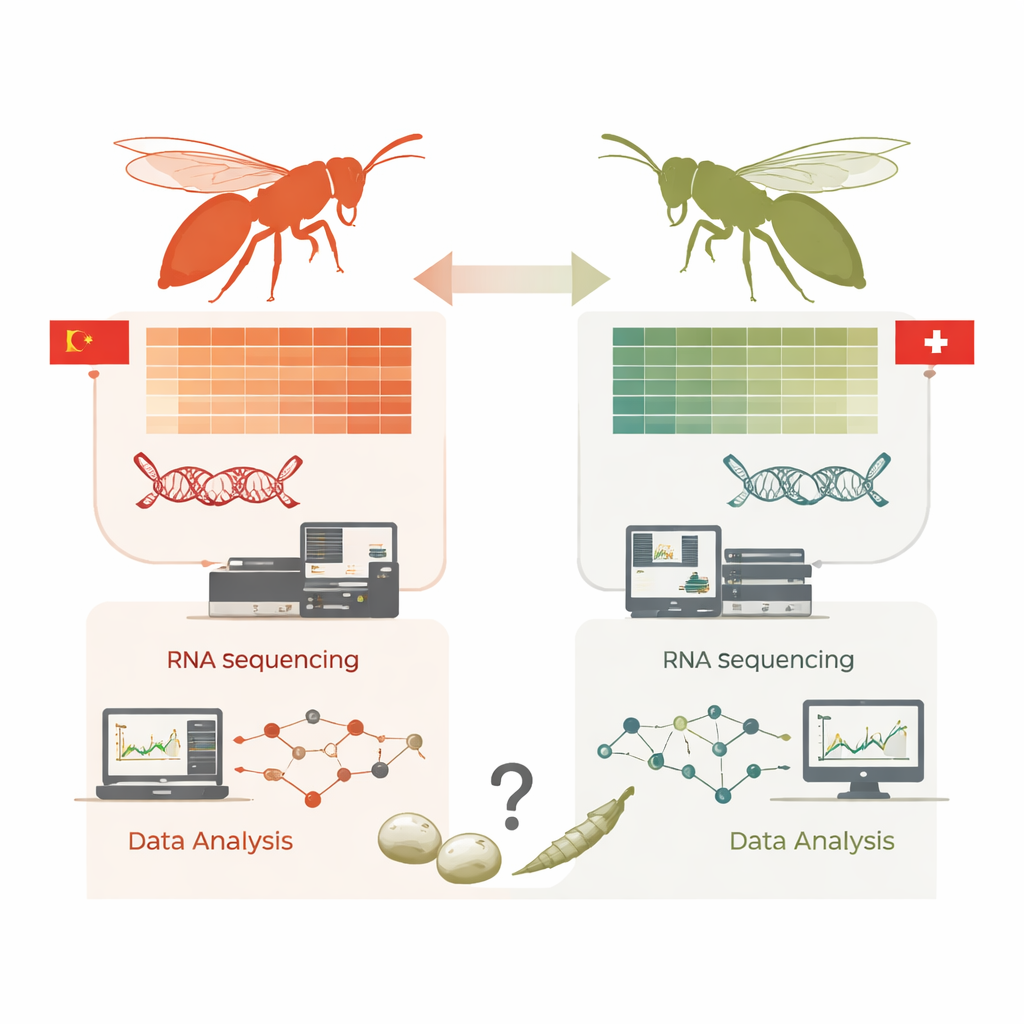
The researchers focused on the “transcriptome” of the wasps—the collection of RNA messages that show which genes are active in particular tissues. They collected large numbers of three‑day‑old, mated females from both China and Switzerland, carefully dissecting heads, chests, and abdomens. From each body part, they extracted high‑quality RNA and used a powerful sequencing machine to read millions of short fragments of genetic code. For the Chinese strain, this produced about 185 million clean reads; for the Swiss strain, about 195 million. Because no full reference genome exists for this species, the team stitched these fragments together from scratch, building 19,280 distinct gene units (unigenes) for the Chinese wasps and 16,322 for the Swiss wasps. Quality checks showed that the assemblies captured nearly all expected insect genes, giving confidence that the dataset is both broad and reliable.
Putting names and functions to thousands of genes
Once assembled, the sequences needed to be interpreted. The team compared each unigene against major public protein and gene databases to find likely matches in other organisms. Roughly half of the unigenes from each population could be linked to known genes, especially in a large non‑redundant protein collection and in databases that group genes by shared families, functions, and pathways. Using standard classification systems, they sorted the wasp genes into categories such as basic cell maintenance, information processing, and metabolism. Many genes were involved in binding to other molecules or speeding up chemical reactions—roles that underlie energy use, growth, and development. The researchers also identified more than 550 transcription factors in each population; these are “control switches” that help turn other genes on or off and are often key players in evolutionary change.
Comparing the Chinese and Swiss genetic toolkits
With this catalog in hand, the team could begin to compare the two wasp populations more systematically. Thousands of predicted proteins from each strain were grouped into functional classes and signaling pathways, such as those involved in how cells sense their environment or process information. In both the Chinese and Swiss wasps, signal‑transduction pathways—used by cells to receive and respond to cues—were especially prominent, as were genes involved in protein modification and turnover. The researchers also used specialized software to pick out complete protein‑coding regions, first by matching to known proteins and then by predicting new ones. This two‑step approach uncovered many sequences that have no current match in databases, hinting at genes that may be unique or highly specialized in T. cultratus and potentially important for its interaction with stink bug eggs.
What this means for future pest control
This paper does not yet pinpoint the exact genes that make Chinese wasps more successful biocontrol agents than their Swiss relatives. Instead, it provides the essential raw material: a high‑quality, publicly available map of which genes exist and are active in female Trissolcus cultratus from two distant populations. Other scientists can now mine these data to search for genes linked to host finding, egg penetration, cold tolerance, or the ability to exploit fresh versus frozen eggs. In the long run, such knowledge could guide the careful selection or breeding of wasp strains that are best suited to protecting crops in different regions—offering a precise, nature‑based alternative to heavy pesticide use.
Citation: Li, FQ., Zhong, YZ., Haye, T. et al. Transcriptomic Resource of Trissolcus cultratus: A Key Biological Control Agent for Halyomorpha halys. Sci Data 13, 293 (2026). https://doi.org/10.1038/s41597-026-06617-5
Keywords: biological control, brown marmorated stink bug, parasitoid wasp, transcriptome, invasive pest management