Clear Sky Science · en
A Benchmark Dataset of Chinese Development Finance with Climate Relevance and SDG Annotations from 2000–2021
Why tracking climate money matters
As climate change intensifies, billions of dollars are being spent to cut emissions and protect vulnerable communities. Yet for one of the world’s biggest players—China—there has been no clear, project‑by‑project picture of where its money goes and how much of it truly serves climate and broader development goals. This article introduces a new, openly available dataset that finally makes China’s overseas climate finance transparent and comparable, helping citizens, researchers, and policymakers see how financial promises translate into real projects on the ground. 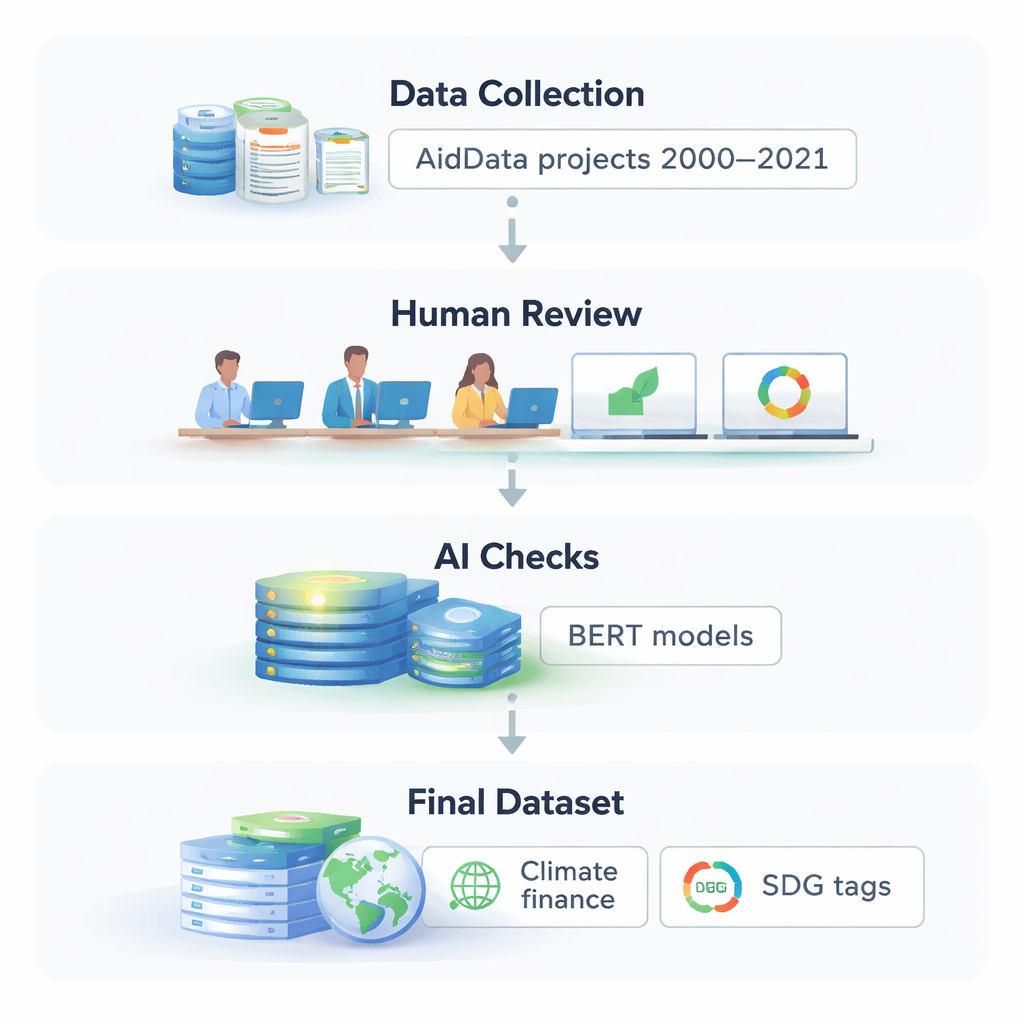
A global map of China’s climate role
China has rapidly become a major financier in the Global South, backing everything from railways and power plants to water systems and hospitals. Many of these investments are tied to big initiatives like the Belt and Road and South–South Climate Cooperation. Until now, however, most estimates of China’s climate spending relied on simple keyword searches or narrow sector lists, which missed important projects and made comparisons with other countries difficult. The new dataset compiles detailed information on 20,985 Chinese development finance projects in 165 low‑ and middle‑income countries between 2000 and 2021, and then carefully identifies which of them truly count as climate‑related.
From raw records to climate and SDG labels
The authors built an online platform that showed project titles, descriptions, locations, sectors, and funding details to trained annotators. Postgraduate students with climate policy expertise spent more than 750 hours reviewing every project. For each one, they judged whether it focused on reducing greenhouse gas emissions (mitigation), helping societies cope with climate impacts (adaptation), or neither. They used a three‑step scale: no climate aim, climate as an important side benefit, or climate as the main goal. At the same time, they linked each project to specific targets of the United Nations Sustainable Development Goals (SDGs), such as clean energy, clean water, or reduced poverty, based strictly on what the project description said it would do.
Blending human judgment with artificial intelligence
To ensure that the labels were consistent and scalable, each project was independently reviewed by at least three annotators, and disagreements were settled by senior climate experts. The team then used state‑of‑the‑art language models, including ClimateBERT and several SDG‑focused BERT models, to automatically predict whether projects were climate‑related and which SDGs they might support. These model predictions were compared to the human labels, and about 3% of cases were revisited and corrected. The result is a cross‑checked benchmark: 1,383 projects, worth about 421 billion US dollars, are identified as climate‑related, and all 20,985 projects carry carefully vetted SDG tags. 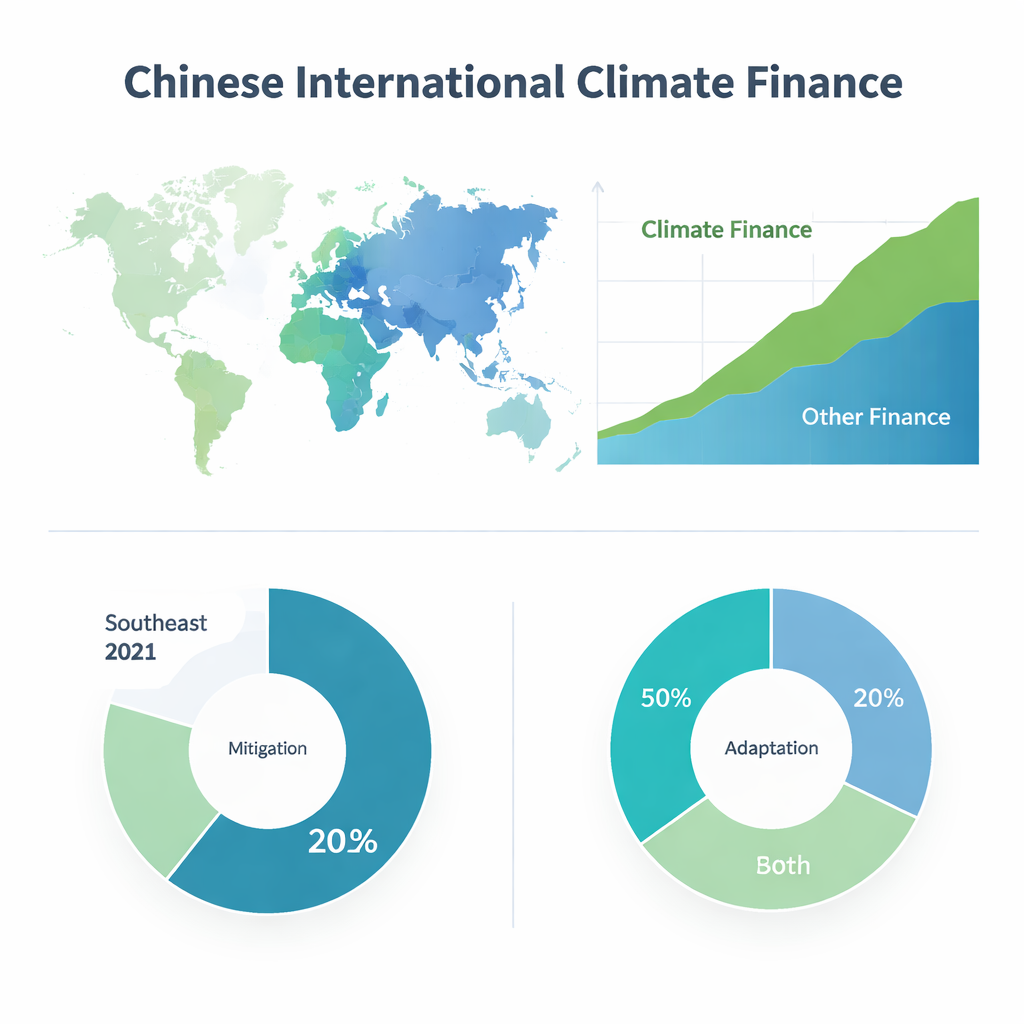
What the numbers reveal about China’s climate support
With this structured dataset, the authors show how Chinese climate finance has evolved over time and across regions. They distinguish funding for mitigation, such as renewable energy and cleaner transport, from adaptation projects like flood defenses, water management, and disaster relief. The data highlight shifts in China’s geographic focus and financing tools—such as loans versus grants—and how closely projects line up with SDGs like affordable clean energy, sustainable cities, and climate action. Compared with earlier keyword‑based databases and raw AI outputs, this approach captures far more relevant projects and records whether climate benefits are central or merely incidental to each investment.
Why this resource changes the conversation
For non‑specialists, the key achievement of this work is to turn scattered, opaque project descriptions into a clear, searchable map of China’s climate‑relevant finance and its links to global development goals. The dataset does not tell us whether every project delivered on its promises, but it does show where and how China has pledged climate‑related support, and how those efforts connect to cleaner energy, safer cities, and poverty reduction. By serving as a high‑quality benchmark for both researchers and AI tools, it lays the groundwork for more honest comparisons between countries, sharper evaluations of climate commitments, and better‑informed debates about how financial flows can help the world both tackle climate change and advance sustainable development.
Citation: Qi, J., Tang, Y., Zhang, Z. et al. A Benchmark Dataset of Chinese Development Finance with Climate Relevance and SDG Annotations from 2000–2021. Sci Data 13, 277 (2026). https://doi.org/10.1038/s41597-026-06605-9
Keywords: Chinese development finance, climate finance, Belt and Road, sustainable development goals, benchmark dataset