Clear Sky Science · en
Haplotype-resolved chromosome-level genome assemblies of nineteen apple (Malus domestica Borkh.) cultivars
Why Apple DNA Matters to Your Fruit Bowl
Apples are more than a lunchbox staple—they are a global crop worth billions, grown in thousands of varieties from tart ‘Granny Smith’ to aromatic ‘Cox’s Orange Pippin’. Behind this diversity lies a complex genetic story that influences how apples taste, how long they store, and how well they stand up to pests and a changing climate. This study digs deep into that hidden story by reading the full DNA of nineteen apple varieties, offering a powerful toolbox for breeders who want to grow better, hardier apples for farms and consumers alike.
A Closer Look Inside Nineteen Kinds of Apples
Instead of treating each apple tree as if it had a single, blended genome, the researchers separated and assembled both sets of chromosomes that every apple inherits—one from each parent. Using a high-accuracy “long read” sequencing technology, they built detailed, chromosome-level DNA maps for nineteen cultivars, from famous names like ‘Granny Smith’ and ‘McIntosh’ to less familiar but genetically valuable varieties. Each half-genome, or “haplome,” was large—about two-thirds of a billion DNA letters on average—and contained roughly 47,000 protein‑coding genes. Independent quality checks showed these assemblies were highly complete, capturing almost all of the genes expected in a modern apple tree. 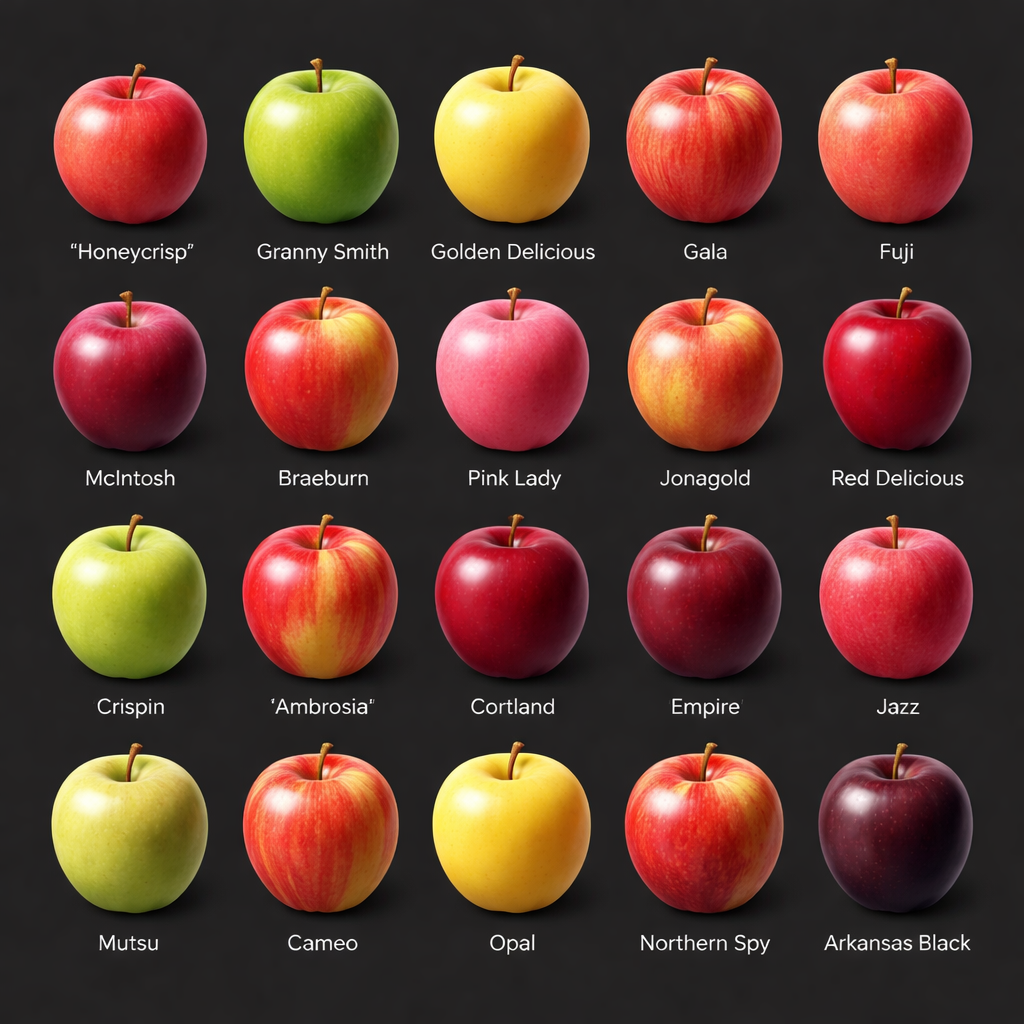
Selecting Apples for Maximum Diversity
The team did not simply pick popular supermarket apples at random. Many of the chosen cultivars came from a carefully curated reference population used by breeders in Europe. They were selected to cover a wide spread of traits and genetic backgrounds, including differences in tiny pores on the leaves called stomata that help control water use and gas exchange. Historical and commercially important cultivars were included alongside lesser-known lines that carry unusual genetic features. By spanning this wide range, the new DNA maps capture both mainstream breeding material and rare genetic combinations that might prove crucial for future improvements.
Turning Raw DNA into Usable Maps
Transforming raw sequencing data into something breeders and scientists can use required a multi-step computational pipeline. Specialized software assembled the long DNA reads into two separate chromosome sets for each variety, then aligned these to an existing apple reference to order them into chromosomes. The researchers scanned the genomes to identify and mask repeated DNA, predicted where genes start and end, and assigned likely functions to many of those genes by comparing them with large international databases. To check that each chromosome copy truly represented a single parental line, they compared the assemblies to detailed genetic marker data, confirming that, in most cases, each chromosome was cleanly phased with only a few switches between parental segments.
New Genes Hidden in Familiar Fruit
With all these genomes in hand, the team compared nearly two million predicted proteins to group related genes into “orthogroups”—families of genes shared across apples and their relatives. They found over 60,000 such groups and discovered hundreds of gene families present in all of the new apple genomes that had been missed in earlier reference sequences. This means that even well-studied cultivars like ‘Golden Delicious’ did not fully capture apple’s genetic richness. The new data reveal both the shared backbone of the apple genome and its many unique twists, shaped by ancient genome duplication, domestication, and modern breeding.
What This Means for Future Apples
For non-specialists, the key message is simple: we now have some of the most detailed DNA blueprints ever made for apples, and not just for one variety but for nineteen. These haplotype‑resolved, chromosome‑level genomes will help breeders link specific DNA differences to traits people care about—crispness, flavor, disease resistance, and resilience to heat or drought. They also provide a foundation for more precise breeding tools, such as genome‑wide association studies and DNA‑guided selection, that can speed up the development of new cultivars. In practical terms, the work reported here lays the groundwork for future apples that are tastier, more sustainable to grow, and better adapted to a changing world. 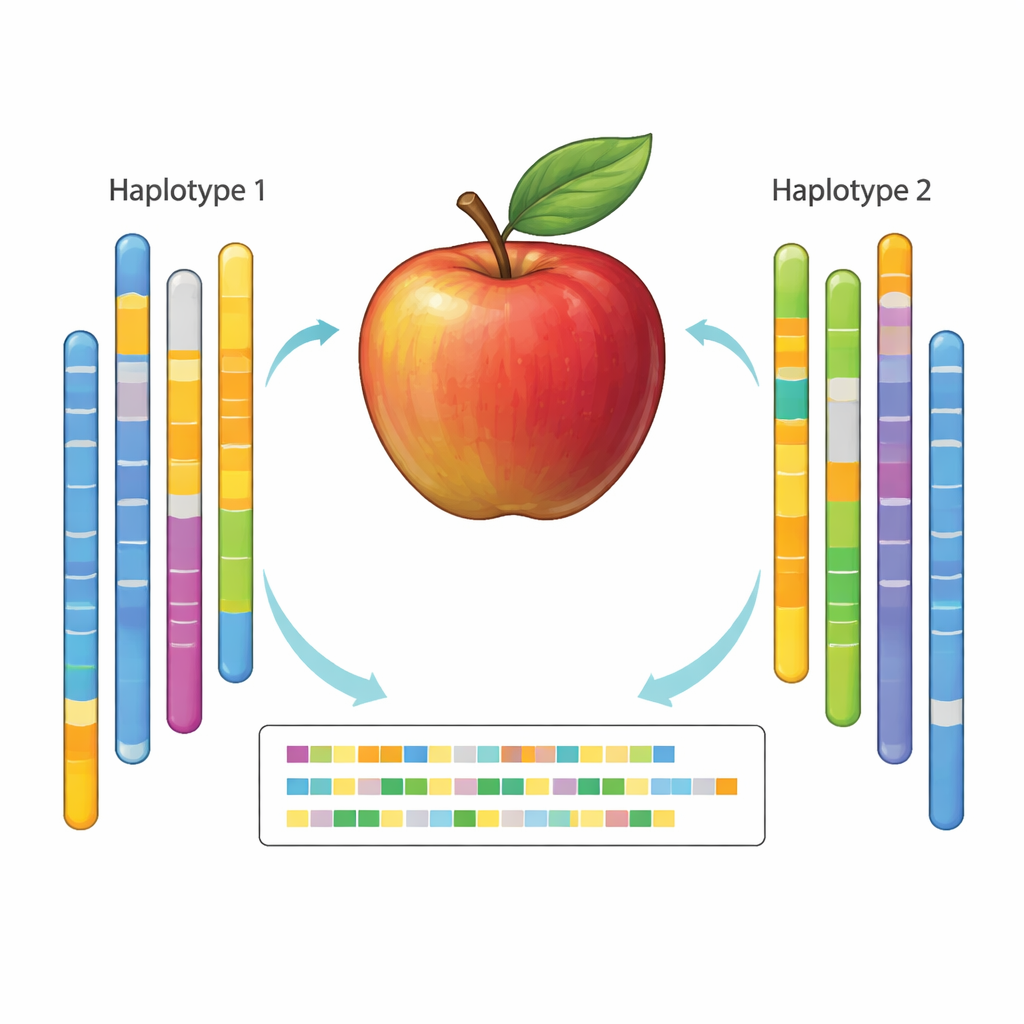
Citation: Watts, S., Yates, S., Vanderzande, S. et al. Haplotype-resolved chromosome-level genome assemblies of nineteen apple (Malus domestica Borkh.) cultivars. Sci Data 13, 258 (2026). https://doi.org/10.1038/s41597-026-06583-y
Keywords: apple genomics, fruit breeding, genetic diversity, genome assembly, crop improvement