Clear Sky Science · en
A telomere-to-telomere genome assembly for Cyperus difformis
Why a rice field weed matters
Across the world’s rice paddies, a small grass-like plant called Cyperus difformis quietly saps harvests. This weed grows faster than rice, produces huge numbers of seeds, and has evolved resistance to many weedkillers. As a result, farmers can spray their fields and still watch this sedge survive. The study described here delivers a crucial new tool: a complete, end‑to‑end map of the weed’s DNA, giving scientists a detailed blueprint they can use to understand how resistance arises and how it might be curbed.

A troublesome guest in rice paddies
Cyperus difformis, sometimes called smallflower umbrella sedge, is native to parts of Europe, Africa, Asia and Australia, but has spread widely and now infests rice fields in at least 46 countries. It thrives in both rich and poor soils and completes its life cycle in about a month—far quicker than rice. Because it germinates and grows alongside the crop, it competes for light and nutrients throughout key stages of rice development, cutting the number of grain-bearing panicles and lowering yields. Modern rice production methods, especially direct seeding instead of transplanting seedlings into flooded fields, have made conditions even more favorable for this weed in places like China.
When weedkillers stop working
Farmers mainly rely on chemical herbicides to hold back Cyperus difformis. But decades of repeated spraying have created intense evolutionary pressure. Populations of this weed have now evolved resistance to multiple types of herbicides, including drugs that block key enzymes needed for plant growth. Resistant plants have been reported from Australia, Europe, the Americas and Asia. Scientists know that resistance can arise when herbicide target sites in the plant change, or when the plant ramps up other cellular systems that detoxify or avoid the chemicals. However, without a high‑quality genome, it has been difficult to pinpoint exactly which genes and DNA changes drive these abilities.
Building a complete DNA blueprint
To solve this, the researchers assembled a “telomere‑to‑telomere” genome for Cyperus difformis—meaning that most chromosomes are captured from one end to the other. They started with leaves from a single plant collected in a Chinese rice field and extracted its DNA and RNA. Using several cutting‑edge sequencing technologies, they generated long strings of DNA sequence, shorter high‑accuracy reads, and special “Hi‑C” data that reveal how different regions of the genome sit next to each other inside the cell nucleus. Powerful computer programs then stitched these pieces together, checking for completeness and accuracy. The final genome is about 220 million DNA letters long, with 18 chromosomes and 35 chromosome ends identified.
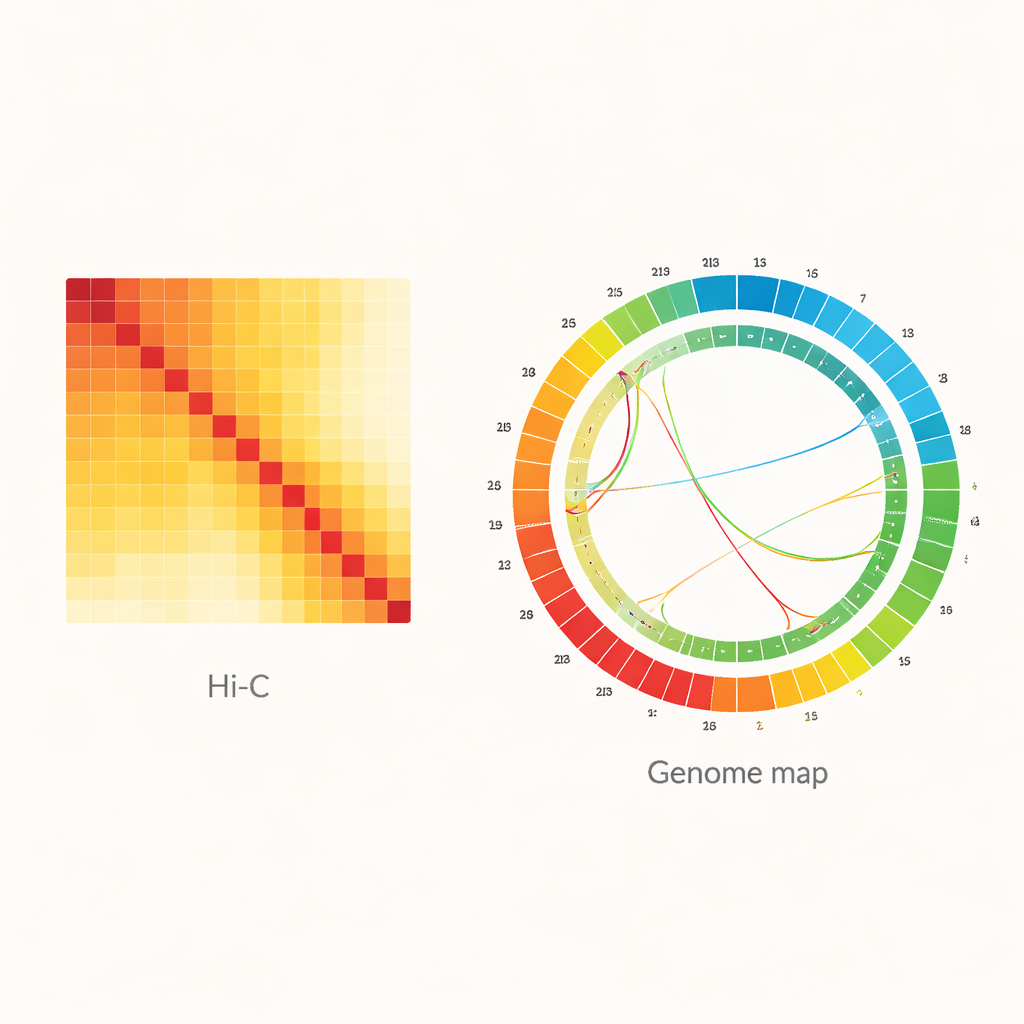
What the genome reveals about the weed
The assembled genome shows that about one‑third of the Cyperus difformis DNA consists of repeated elements—stretches that occur many times, often made of mobile genetic pieces. The researchers predicted 21,069 genes that code for proteins, with an average of five to six coding segments per gene. Using several major biological databases, they could assign likely functions to nearly 92% of these genes, indicating that the genome is both complete and biologically meaningful. They also cataloged thousands of non‑coding RNA genes, such as transfer RNAs, ribosomal RNAs and microRNAs, which help control how genetic information is translated into the plant’s traits.
A new foundation for smarter weed control
For non‑specialists, the key outcome is that we now have a highly detailed parts list for one of the world’s most problematic rice‑field weeds. This genome will allow researchers to track which genes differ between resistant and susceptible populations, follow how resistance spreads, and search for weaknesses that new control strategies could exploit. In the long run, such knowledge could help design more sustainable weed management practices—reducing over‑reliance on single herbicides, protecting rice yields, and slowing the arms race between farmers and this fast‑evolving plant.
Citation: Li, J., Zhao, J., Zheng, W. et al. A telomere-to-telomere genome assembly for Cyperus difformis. Sci Data 13, 257 (2026). https://doi.org/10.1038/s41597-026-06582-z
Keywords: weed genomics, rice agriculture, herbicide resistance, Cyperus difformis, genome assembly