Clear Sky Science · en
Chromosome-level genome assembly and annotation of two Asian bumble bees
Why these bees matter to our food
Bumble bees are some of nature’s hardest‑working farmhands. They pollinate wildflowers in mountain meadows and help set fruit in greenhouse crops such as tomatoes and peppers. This study focuses on two Asian bumble bee species that are especially promising for use in agriculture. By decoding their DNA in unprecedented detail, scientists are building tools that could help secure future pollination, support bee domestication, and guide conservation as wild pollinators face growing environmental pressures.
Two little‑known pollinators with big potential
The research centers on Bombus patagiatus and Bombus lantschouensis, two bumble bee species native to East Asia. Both can be bred in captivity: more than 70% of queens successfully start colonies, and each colony can produce over 200 worker bees. This makes them attractive candidates for commercial pollination, much like the already domesticated European bumble bee Bombus terrestris. Yet, until now, scientists lacked high‑quality reference genomes for these Asian species, limiting what could be learned about their biology, adaptability, and traits important for farming.
Reading an entire bee genome from end to end
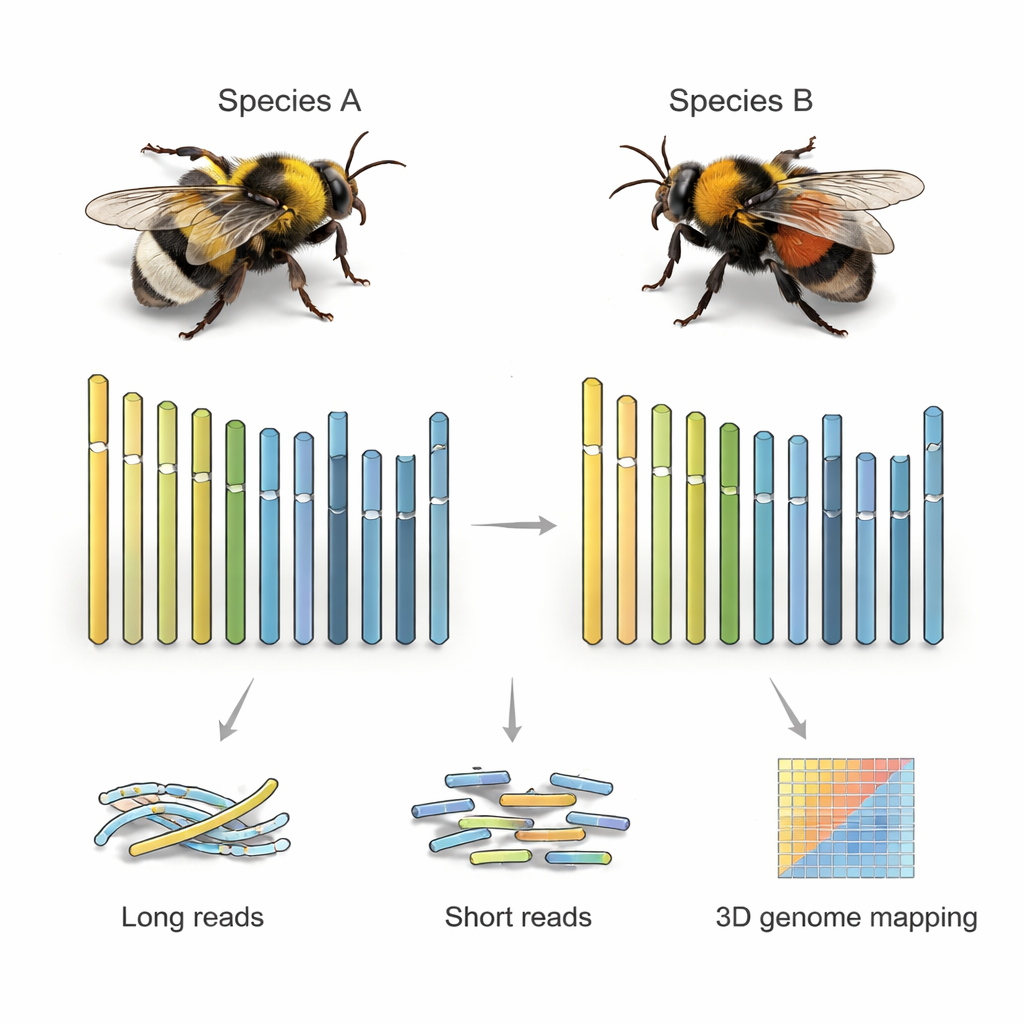
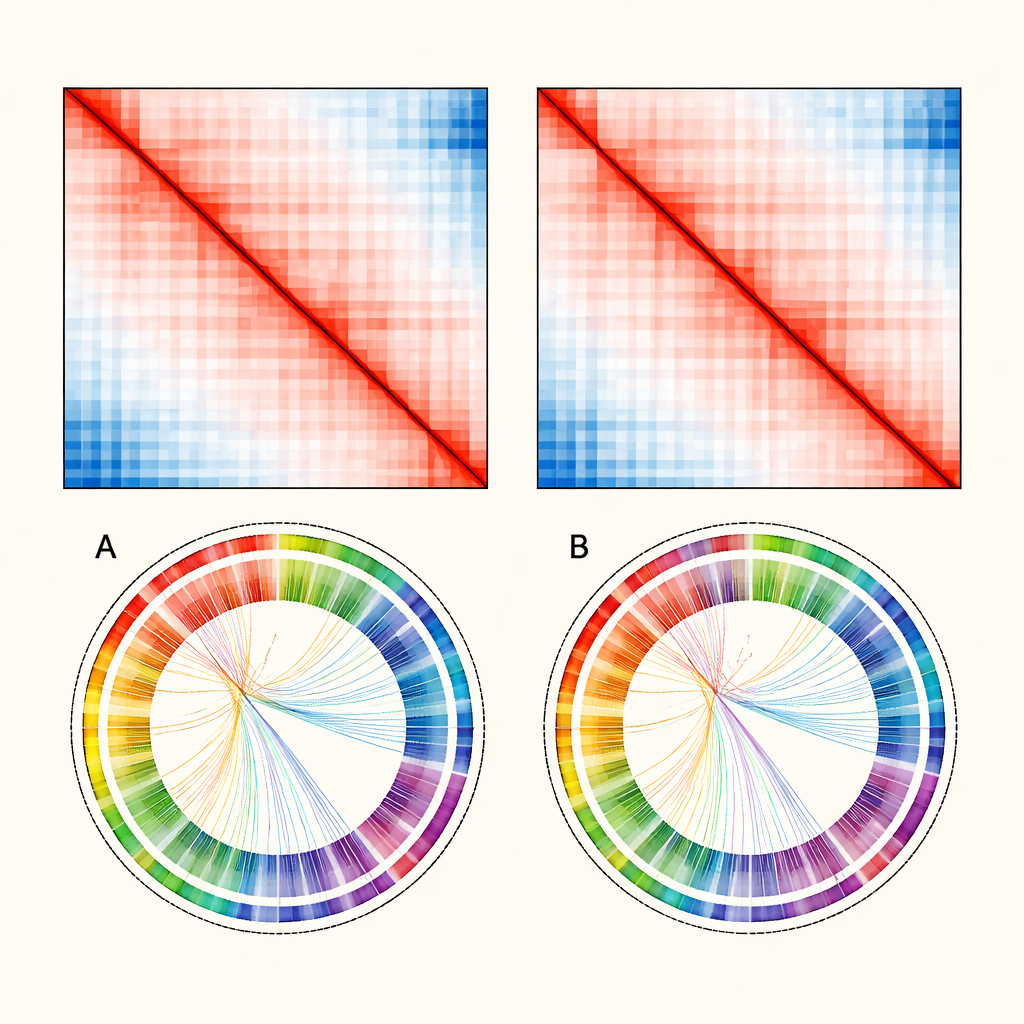
To tackle this gap, the team used a combination of cutting‑edge DNA technologies. They collected wild male bumble bees from northern China, carefully confirmed their species identity, and then extracted very pure DNA from selected body parts to avoid contamination. Long‑read sequencing (which reads extended stretches of DNA), short‑read sequencing (which provides very accurate letter‑by‑letter checks), and a technique called Hi‑C (which captures how pieces of DNA are folded together inside the cell) were combined. By weaving these data sources together, the researchers built “chromosome‑level” maps, arranging most of each bee’s DNA into 18 large chromosomes, the main packages that carry genetic information.
What the finished bee blueprints look like
The final genome for B. patagiatus measured about 240 million DNA letters, and the one for B. lantschouensis about 241 million—sizes typical for bumble bees. Roughly 94% of each genome was confidently placed onto the 18 chromosomes, a strong sign of completeness and order. Computer tools then scanned these sequences to identify genes, the stretches of DNA that contain instructions for building proteins. The scientists found 17,351 protein‑coding genes in B. patagiatus and 16,023 in B. lantschouensis. Most of these genes could be linked to known functions by comparing them with gene catalogs from other insects, helping to connect DNA sequences to processes like metabolism, immunity, and behavior.
Hidden repeats and quality checks
Not all DNA encodes genes. A significant slice of each genome—about one‑fifth—is made up of repetitive DNA, including mobile genetic elements sometimes described as “jumping genes.” The team cataloged these repeats, revealing both similarities and differences between the two species. To make sure their assemblies were trustworthy, they put them through stringent quality tests. Almost all expected core insect genes were present and intact, and nearly all of the original sequencing data could be matched back to the assembled genomes. These benchmarks indicate that the new genetic blueprints are both highly complete and accurate.
What this means for bees, farms, and conservation
For a non‑specialist, the takeaway is that we now have detailed instruction manuals for two promising Asian bumble bee species. With these genomes, researchers can begin to pinpoint the genes that help bees cope with cold, disease, pesticides, or new diets, and those that make them easier to raise in greenhouses. The data will also help track wild populations, identify unique lineages worth protecting, and compare these bees with their relatives worldwide. In short, this work does not immediately solve the pollinator crisis, but it delivers powerful new tools to understand and support the bees that help put food on our tables.
Citation: Cui, J., Xu, Y., Liu, J. et al. Chromosome-level genome assembly and annotation of two Asian bumble bees. Sci Data 13, 248 (2026). https://doi.org/10.1038/s41597-026-06568-x
Keywords: bumble bee genomics, pollinator conservation, crop pollination, bee domestication, insect genomes