Clear Sky Science · en
Haplotype-resolved chromosome-level genome assembly of creeping bentgrass, Agrostis stolonifera
Why the Grass on Greens Matters
Creeping bentgrass is the velvety, uniform turf you see on golf course putting greens and other high-end sports surfaces. Keeping these carpets of grass healthy under heavy foot traffic, close mowing, heat, drought, and disease is a constant challenge. This study delivers a powerful new tool: a complete, high‑resolution map of the plant’s DNA, opening the door to breeding tougher, more sustainable turf that uses fewer resources and stands up better to a changing climate.
From Everyday Turf to Genetic Puzzle
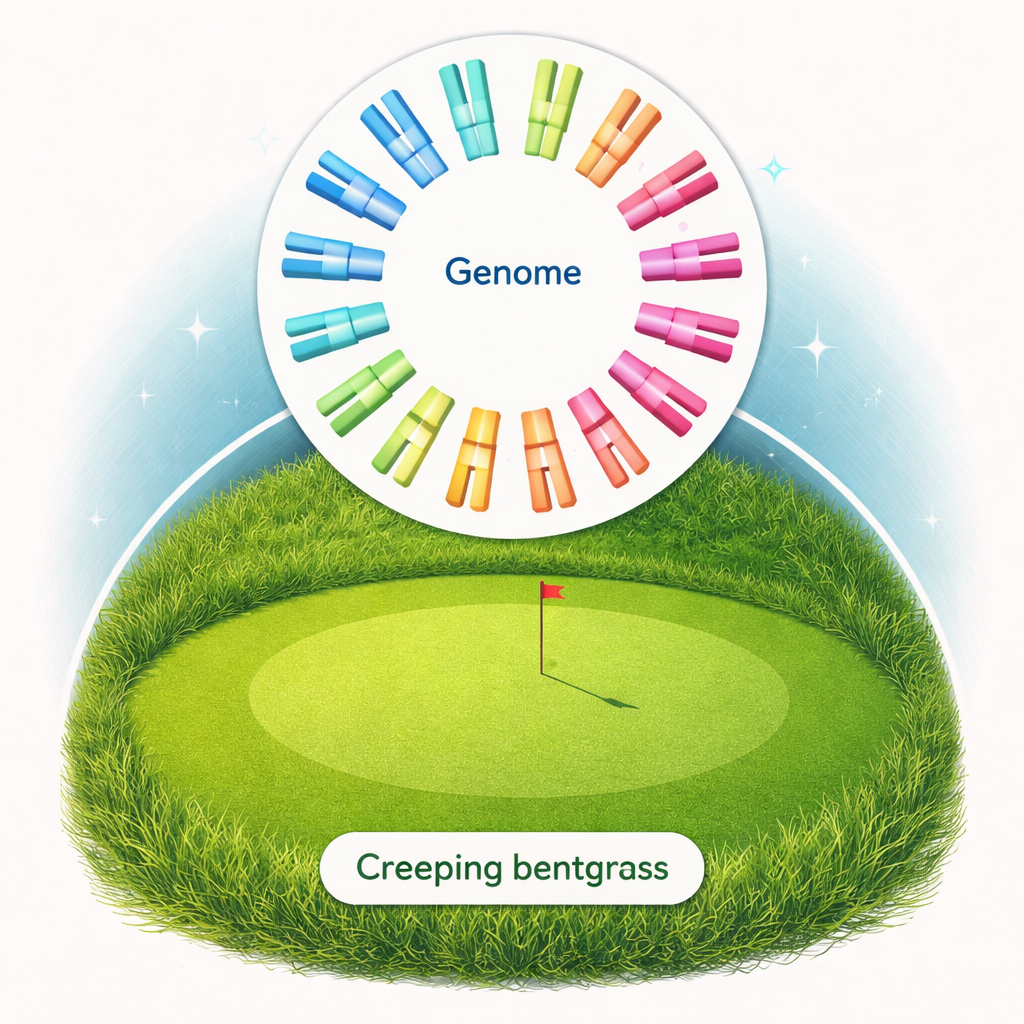
Although creeping bentgrass looks simple to the eye, its genetic makeup is anything but. It carries four full sets of chromosomes instead of the usual two, and much of its DNA is made up of repeated sequences. These features have long frustrated scientists trying to piece together its genome. Without a clear genetic blueprint, breeders have had to rely mostly on slow, traditional methods to improve traits like drought tolerance, disease resistance, and recovery from wear, even as golf courses and sports facilities face mounting pressure to reduce water, fertilizer, and pesticide use.
Building a Complete DNA Map
The research team tackled this challenge using several advanced sequencing technologies that read very long stretches of DNA and capture how pieces of the genome are physically arranged inside the cell. By combining PacBio HiFi sequencing, Oxford Nanopore sequencing, and a 3D DNA-mapping method called Omni‑C, they assembled the bentgrass genome into 28 long, continuous chromosome-like pieces. These chromosomes are grouped into two underlying "subgenomes," each represented by two slightly different copies, reflecting the plant’s origins from the joining of two ancestral species. Quality checks showed that more than 98% of the expected genes are present, indicating an exceptionally complete and reliable assembly.

What the Genome Reveals
With this new map, the researchers identified over 146,000 protein‑coding genes and found that nearly 80% of the genome consists of various repeated DNA elements. A large share of these repeats belong to a family called LTR‑Gypsy, which helps shape the structure and size of the chromosomes. By comparing patterns of these repeats, short DNA signatures, and overall DNA similarity, the team could clearly separate the two subgenomes and see how they differ from one another. They also documented numerous structural changes—like inversions and swaps of chromosome segments—between the subgenomes, offering clues to how this complex plant genome has evolved over time.
Connecting Bentgrass to Its Grass Relatives
The scientists compared the new bentgrass genome to that of perennial ryegrass, another important turf species. Long stretches of matching DNA line up between the two, confirming that they share a common backbone of chromosome organization. At the same time, clear differences highlight where bentgrass has followed its own evolutionary path. These comparisons provide a framework for transferring knowledge between species—if a gene linked to drought tolerance or disease resistance is known in ryegrass, its counterpart can now be more easily located in bentgrass, speeding up the search for useful traits.
What This Means for Future Lawns and Greens
For non-specialists, the key takeaway is that we now have a detailed, trustworthy reference map of creeping bentgrass DNA. This resource will help researchers pinpoint genes that control stress tolerance, growth, and turf quality, and then track or modify those genes much more efficiently in breeding programs. Over time, this could translate into golf greens and other turf areas that stay greener with less water, bounce back faster after damage, and resist diseases with fewer chemical treatments—benefits that matter not just to players and groundskeepers, but also to broader efforts to manage landscapes more sustainably.
Citation: Robbins, M.D., Park, S., Bushman, B.S. et al. Haplotype-resolved chromosome-level genome assembly of creeping bentgrass, Agrostis stolonifera. Sci Data 13, 241 (2026). https://doi.org/10.1038/s41597-026-06561-4
Keywords: creeping bentgrass genome, turfgrass breeding, polyploid plants, stress tolerant turf, plant genomics