Clear Sky Science · en
Remote monitoring of heart failure exacerbations using a smartwatch
Keeping an Eye on the Heart from Home
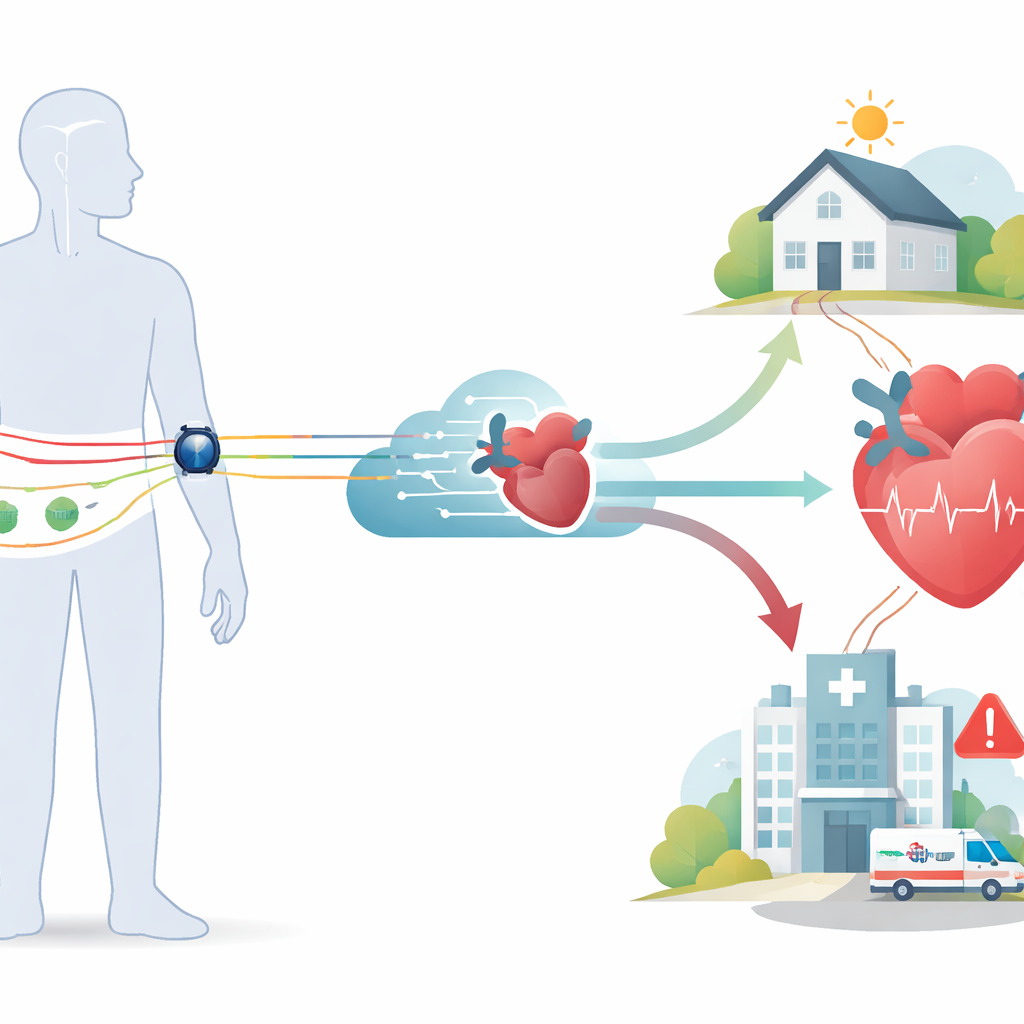
For millions of people living with heart failure, a sudden downturn often means a rushed trip to the emergency room. Yet these crises rarely come out of the blue; the body usually sends early warning signals that our current clinic visits and tests can miss. This study explores whether an everyday gadget—a smartwatch—can quietly watch over patients at home, spotting subtle changes in fitness days to weeks before trouble strikes, and opening the door to earlier, less disruptive care.
Why Heart Failure Needs Better Watchdogs
Heart failure is a chronic condition in which the heart cannot pump enough blood to meet the body’s needs. It affects more than 60 million people worldwide and leads to frequent hospital stays, lost work, and shortened lives. Doctors currently rely on tools like specialized exercise tests, short six-minute walks in clinic hallways, blood tests, and symptom checklists to gauge how patients are doing. These snapshots are helpful but infrequent, and they can easily miss the ups and downs that happen between appointments. As a result, many patients appear stable in clinic yet still land in hospital weeks later.
Turning a Wrist Device into a Health Sentinel
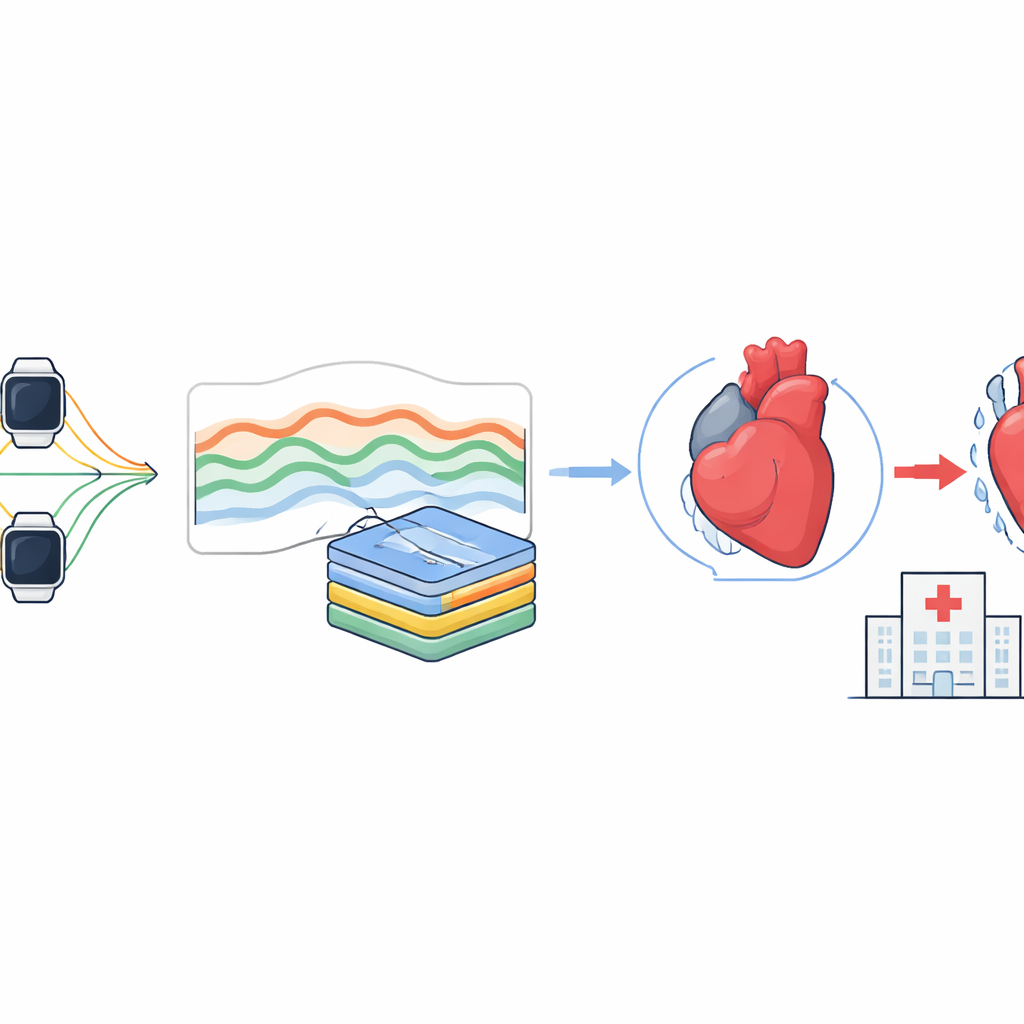
The researchers launched the TRUE-HF study to test whether data from Apple Watch devices could fill in these gaps. Over about three months, 217 people with heart failure went about their daily lives wearing a smartwatch that captured heart rate, activity, and other signals. At the beginning and end of the study, participants also underwent gold-standard treadmill or bike testing to measure how much oxygen their bodies could use at peak effort—a key marker of heart fitness known as peak oxygen uptake. Using nearly a month’s worth of smartwatch readings at a time, the team trained a modern artificial-intelligence model to estimate this fitness level every day from the comfort of a person’s home.
What the Smartwatch Could See
In a separate group of patients used only for checking accuracy, the model’s daily fitness estimates lined up closely with the in-clinic exercise tests. The better someone’s heart fitness in the lab, the higher the model’s estimate from their watch data. More importantly, the system was good at recognizing when a person’s fitness had meaningfully declined over the three-month period. Compared with the watch’s built-in fitness feature, the new model was more accurate and provided far more frequent readings, especially for sicker patients who could not reach the intensity levels required by off-the-shelf algorithms.
Early Signals of Trouble Ahead
The team then asked a more pressing question: Do drops in the watch-based fitness measure foreshadow unexpected doctor visits or hospitalizations? Among the TRUE-HF participants, people whose daily fitness estimate fell by at least 10% were much more likely to need unplanned care soon after. On average, these warning dips appeared about a week before an emergency visit or urgent treatment. Each additional 10% drop was linked to more than a threefold higher risk of an unplanned event. Traditional markers measured only at the start of the study—such as blood tests, clinic walk distances, or standard risk scores—did not predict these near-term crises as well as the constantly updated smartwatch measure.
Testing the Idea in a Different Crowd
To see if the approach could work beyond a single hospital and a single brand of device, the researchers turned to the U.S. All of Us Research Program, which includes people using Fitbit wearables. Here they built a simpler version of their model that relied only on heart rate and step counts, the data types both systems had in common. Among 193 heart failure patients in this national cohort, drops in the daily fitness estimate still signaled a higher chance of an upcoming hospital stay or need for intravenous medicine, this time with a typical lead time of about three weeks. Even with fewer sensors and a more diverse population, the trend remained: a sliding fitness curve predicted looming trouble.
What This Could Mean for Everyday Care
This work suggests that smartwatches, paired with advanced algorithms, could act as continuous early-warning systems for people with heart failure. Rather than waiting for breathlessness or swelling to become severe, clinicians might one day receive alerts when a patient’s daily fitness quietly drifts downward, allowing time to adjust medications or schedule a quick check-up. While more testing is needed before such tools are built into routine care, the study points toward a future in which a simple device on the wrist helps keep vulnerable hearts out of the hospital and patients living more safely at home.
Citation: Gao, Y., Moayedi, Y., Foroutan, F. et al. Remote monitoring of heart failure exacerbations using a smartwatch. Nat Med 32, 924–933 (2026). https://doi.org/10.1038/s41591-026-04247-3
Keywords: heart failure, smartwatch monitoring, wearable health, artificial intelligence, remote patient care