Clear Sky Science · en
Genetic regulation across germline and somatic variation on the Y chromosome contributes to type 2 diabetes
Why this study matters for men's health
Type 2 diabetes is often blamed on diet, body weight and exercise. But this study asks a less obvious question: could part of men’s risk be written on the Y chromosome, the piece of DNA that only males carry? By tracking genetic patterns in hundreds of thousands of men from Japan, other East Asian regions and Europe, the researchers uncover how inherited Y lineages and age‑related loss of the Y chromosome together shape diabetes risk in surprisingly different ways across populations.
Tracing male lineages across the globe
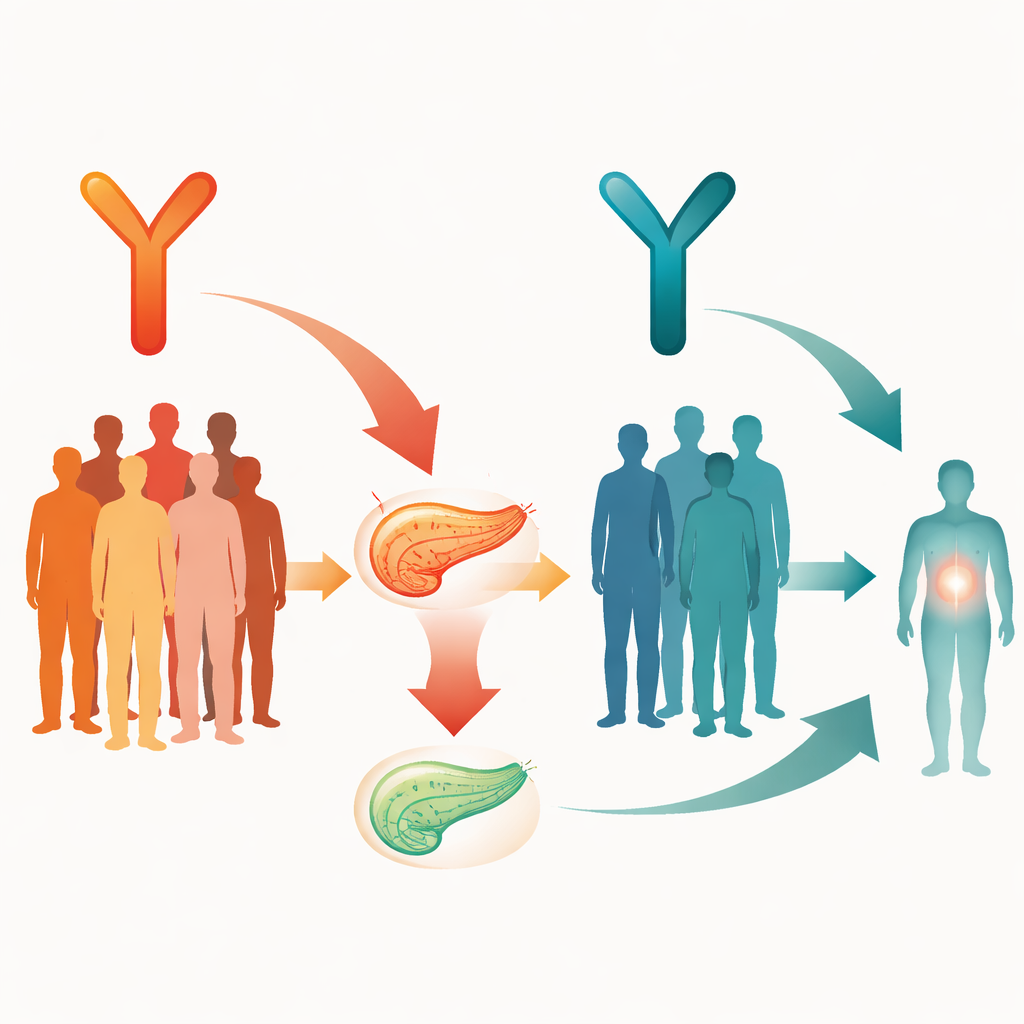
The team first mapped the major Y chromosome "families"—called haplogroups—in more than 300,000 men from large biobanks in Japan and the United Kingdom. These haplogroups reflect deep paternal ancestry, similar to branches on a family tree. In Japanese men, three main branches dominated, with one, known as D, being largely unique to Japan and especially common in the Ryukyu Islands in the south. In European men, a different set of branches prevailed. This careful cataloging showed that Y lineages are not uniformly spread around the world, setting the stage to ask whether any of them track with common diseases.
Aging, smoking and the disappearing Y
Beyond inherited lineages, the researchers examined a second kind of Y variation: mosaic loss of the Y chromosome (LOY). LOY happens when some blood cells in a man’s body lose their Y chromosome as he ages, a process made more likely by smoking. Using subtle shifts in DNA signal intensity, the team identified LOY in about 8% of Japanese men and 12% of European men. As expected, LOY became more common with age and in current smokers. They also found that certain inherited Y lineages changed the likelihood of developing LOY; notably, the Japanese‑specific D lineage slightly protected against losing the Y chromosome in blood cells.
Links between Y variation and diabetes
The heart of the study was a broad scan across 90 health‑related traits, from height and blood counts to dozens of diseases. Two striking patterns emerged for type 2 diabetes in East Asian men. First, men carrying haplogroup D had a modestly lower risk of diabetes and tended to be slightly shorter and show favorable profiles in several blood markers. Second, men whose blood cells showed LOY had a higher risk of developing diabetes and asthma, even after accounting for age, smoking and body mass index. In follow‑up over time, men with LOY were more likely to be diagnosed with diabetes in the future, suggesting LOY is a warning sign rather than just a by‑product of illness.
Why Europeans show the opposite pattern
Curiously, the relationship between LOY and diabetes in European men pointed in the opposite direction: those with LOY had, on average, lower diagnosed diabetes risk, even though LOY was tied to higher blood sugar levels. The authors propose that this reversal reflects different drivers of diabetes between populations. In Europeans, obesity‑related insulin resistance dominates; higher body mass strongly raises diabetes risk but, paradoxically, seems to lower the chance of LOY. In East Asians, by contrast, diabetes often stems from weaker insulin production in the pancreas despite less obesity, and in this setting LOY appears to aggravate risk rather than offset it. These contrasts highlight how the same cellular change can have different consequences depending on the broader metabolic backdrop.
Zooming in on cells and improving risk prediction
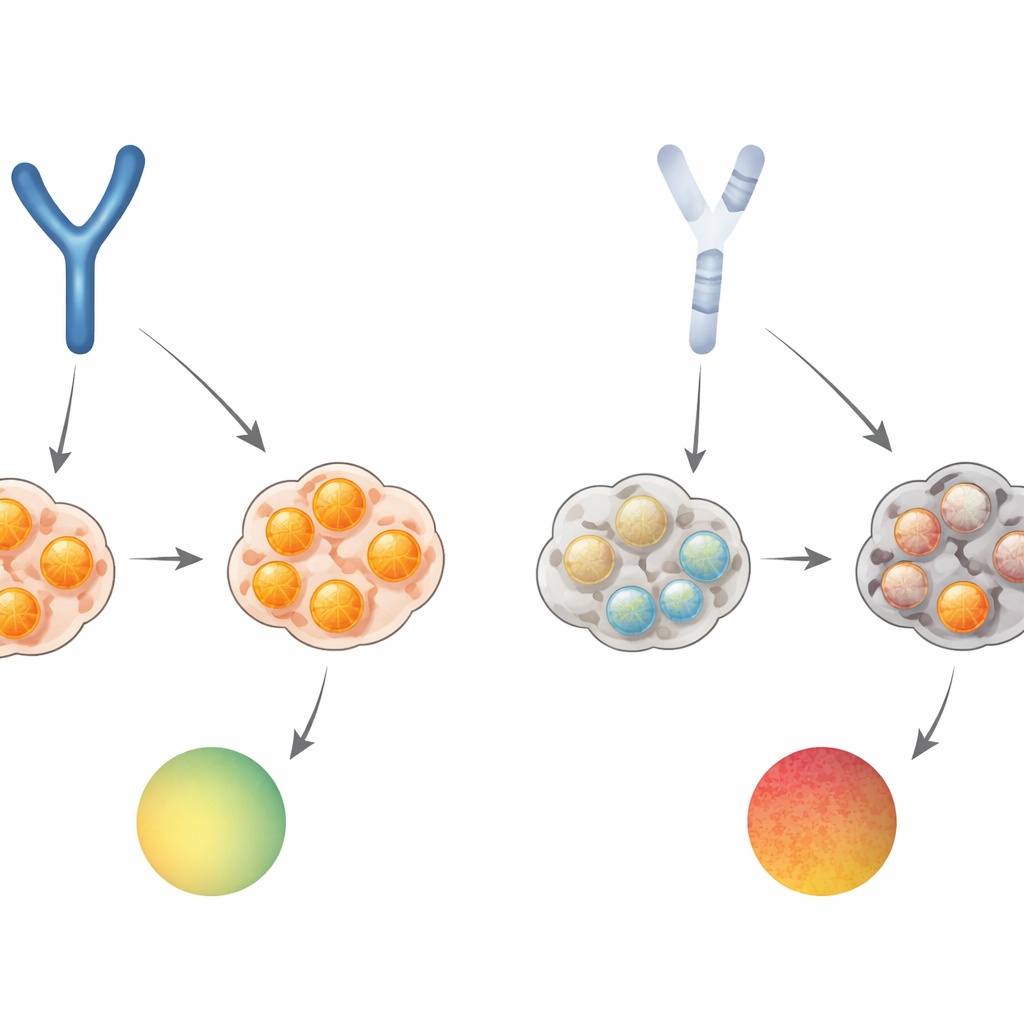
To move from statistics to biology, the researchers turned to single‑cell sequencing data from blood, pancreas and lung. They found that cells lacking the Y chromosome accumulate in specific cell types: monocytes (a kind of immune cell) in blood and, crucially, insulin‑producing beta cells in the pancreas. In beta cells with LOY, pathways that help cells survive and respond to blood sugar were dialed down, suggesting that Y loss could directly weaken insulin production. Finally, the team asked whether adding Y information could sharpen genetic risk scores for diabetes. In East Asian men, including Y haplogroup and LOY status slightly improved prediction beyond standard scores based on the rest of the genome; a similar strategy using X‑chromosome changes improved prediction in women. Notably, LOY had the strongest impact among men whose inherited risk from other chromosomes was low, offering a "second route" to diabetes risk.
What this means for understanding diabetes
Altogether, the study shows that the Y chromosome is more than a bystander in men’s health. Inherited Y lineages and age‑related loss of Y both leave detectable fingerprints on disease risk, especially for type 2 diabetes, and these effects differ between East Asian and European populations. For lay readers, the key message is that diabetes risk is shaped by a three‑way interplay between genes we are born with, mutations acquired as we age, and lifestyle factors such as smoking and body weight. In the future, tracking Y chromosome changes in blood alongside conventional risk factors could help identify some men who are at hidden risk for diabetes and related conditions, opening the door to earlier monitoring and prevention.
Citation: Sato, G., Yamamoto, Y., Sonehara, K. et al. Genetic regulation across germline and somatic variation on the Y chromosome contributes to type 2 diabetes. Nat Med 32, 894–905 (2026). https://doi.org/10.1038/s41591-026-04213-z
Keywords: Y chromosome, type 2 diabetes, genetic risk, East Asian populations, mosaic loss of Y