Clear Sky Science · en
Microfluidic automation improves oocyte recovery from follicular fluid of patients undergoing in vitro fertilization
Why finding every egg matters
For people turning to in vitro fertilization (IVF), every single egg can feel priceless. Yet during standard care, some healthy eggs are quietly thrown away because they are hard to spot in the cloudy fluid drawn from the ovaries. This study introduces a small automated chip that can sift that fluid far more carefully than human eyes alone, uncovering extra mature eggs that can lead to more embryos—and even healthy babies—without changing how patients are treated in the clinic.
A hidden resource in routine IVF
IVF begins when doctors gently drain fluid from ovarian follicles in search of eggs. Embryologists then scan this follicular fluid under a microscope, picking out egg-containing clusters by hand. The job is tedious and the fluid is messy, full of blood cells and bits of tissue that can hide eggs from view. Success in IVF is tightly linked to how many eggs are recovered; more eggs usually mean more embryos and higher chances of at least one live birth. Yet the basic method for finding eggs has changed little in decades, even as other parts of IVF have become more automated and precise.
A tiny chip that does the sorting
The researchers designed a palm-sized device, called FIND-Chip, that takes over the egg-fishing step. Instead of relying on sight, the chip guides the follicular fluid through a series of microscopic channels and pillars. Larger clumps, including egg clusters, are first held back while smaller cells flow past. Enzyme treatment and gentle back‑and‑forth flow strip away the surrounding tissue so that bare eggs remain. The fluid is then concentrated and routed through a final section that physically holds the eggs in place while letting smaller debris wash away. In the end, the chip returns a small droplet containing clean, ready‑to‑use eggs, all handled under tightly controlled and repeatable conditions. 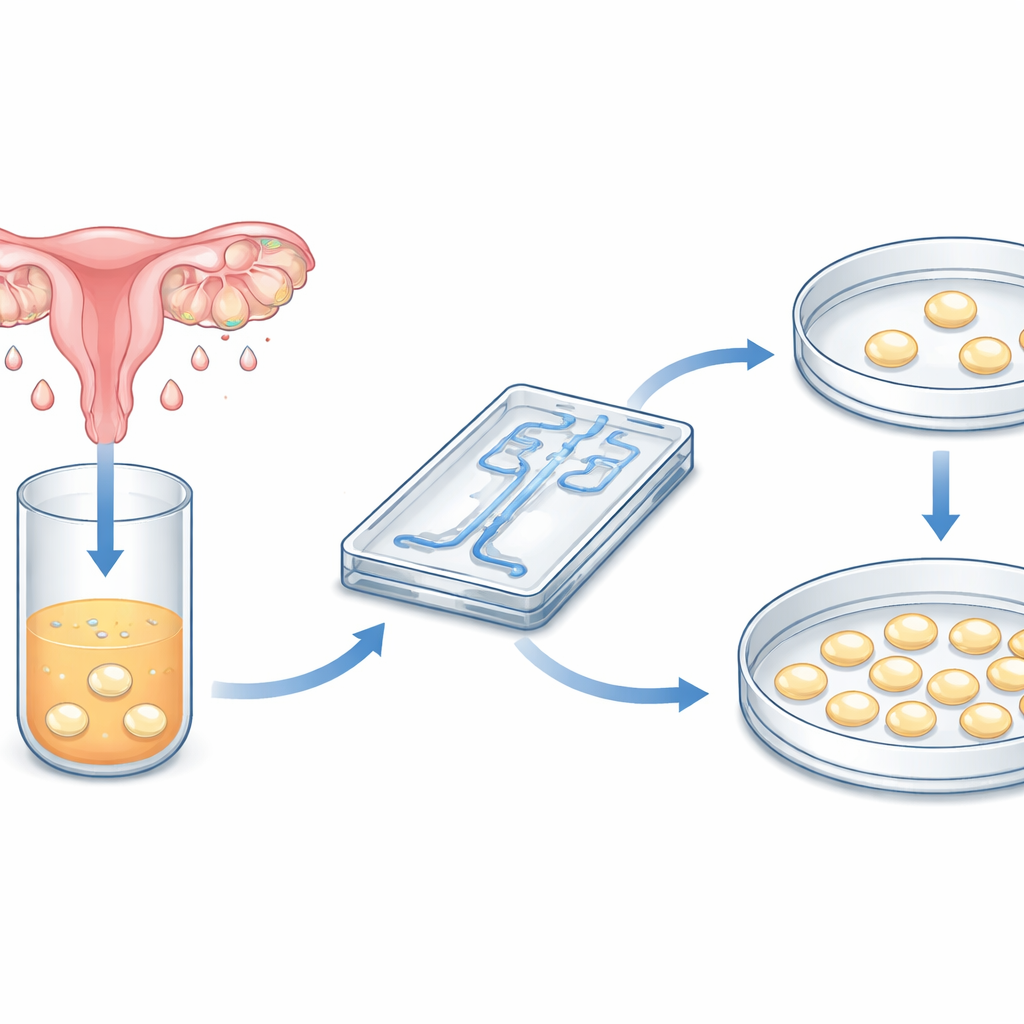
Proving the eggs stay healthy
Before testing the system with patients, the team ran extensive trials using cow eggs, which are similar in size to human eggs. They showed that eggs processed on the chip fertilized and grew into early embryos just as well as eggs cleaned by skilled technicians using traditional pipetting. In some measures of embryo quality, chip-processed eggs actually looked more consistent than those handled by hand, suggesting that the controlled flows in the device may be gentler and more uniform than manual techniques.
Discovering eggs that would have been lost
The most striking results came when the chip was used on human samples. In one set of experiments, patients donated a few eggs that were marked with a fluorescent dye and mixed back into their own already‑screened follicular fluid. FIND-Chip reliably found every tagged egg—and, unexpectedly, often uncovered additional, untagged eggs that had been missed by manual screening. In a pilot clinical study with 19 patients, the chip was run on the "discarded" fluid immediately after standard care. More than half of the patients gained at least one extra egg, increasing their total egg counts by about 10 percent on average. Many of these extra eggs were fully mature and were fertilized and grown alongside the eggs found by hand. The resulting embryos were similar in quality, and one extra egg even led to a healthy live birth for a patient whose first embryo transfer, from a manually recovered egg, had failed. 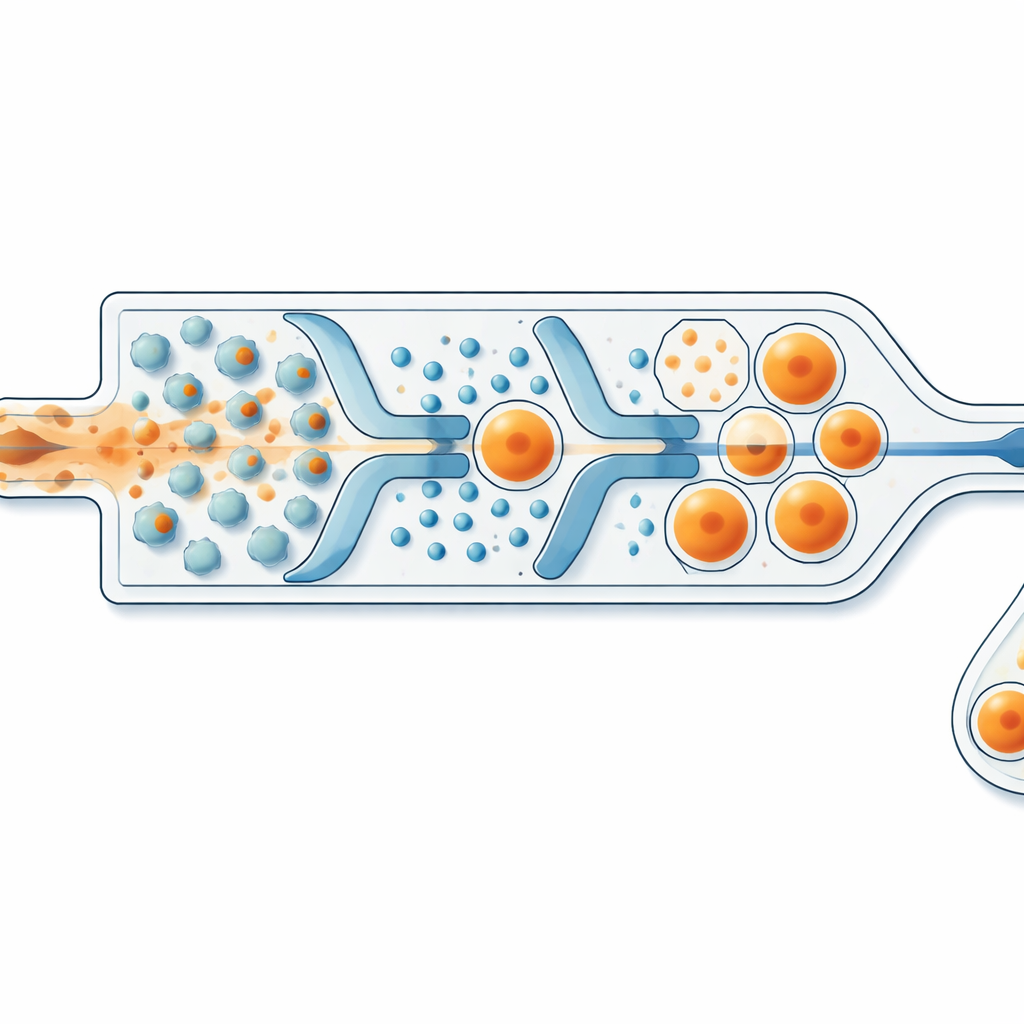
How common are missed eggs?
To see whether this problem was widespread, the team collected discarded follicular fluid from 582 IVF patients treated at four different clinics that used varying procedures and staff. FIND-Chip recovered at least one extra egg in just over half of all cases, across all age groups and starting egg counts. In total, 583 additional eggs were found, and more than 40 percent of them were mature enough to be used immediately. Even patients with very few eggs to begin with sometimes gained several more, a difference that could meaningfully shift their odds of success based on large IVF outcome studies.
What this could mean for future families
By quietly rescuing eggs that current methods overlook, this automated chip has the potential to boost the total number of embryos available from each retrieval, especially for patients with low egg yields. That could translate into higher chances of a first birth, and more opportunities for siblings, without extra hormone cycles or procedures. Because the system is closed and can be run by non‑experts, it could also help decentralize parts of IVF, allowing satellite clinics to collect and prepare eggs before sending them to central labs. In simple terms, the study shows that a smart piece of plastic plumbing can turn what used to be medical waste into real chances at new life.
Citation: Mutlu, B.R., Civale, S.C., Diettrich, J. et al. Microfluidic automation improves oocyte recovery from follicular fluid of patients undergoing in vitro fertilization. Nat Med 32, 906–914 (2026). https://doi.org/10.1038/s41591-026-04207-x
Keywords: in vitro fertilization, microfluidic chip, oocyte recovery, fertility treatment, IVF automation