Clear Sky Science · en
Bimagrumab plus semaglutide alone or in combination for the treatment of obesity: a randomized phase 2 trial
Why This Study Matters for Everyday Health
Many people trying to lose weight worry not just about the number on the scale, but about what they are actually losing—fat or precious muscle. This study tests whether pairing two different medicines can drive large, surgery‑like reductions in body fat while largely preserving muscle, potentially changing how we think about medical treatment for obesity.
A New Drug Pair for Weight Management
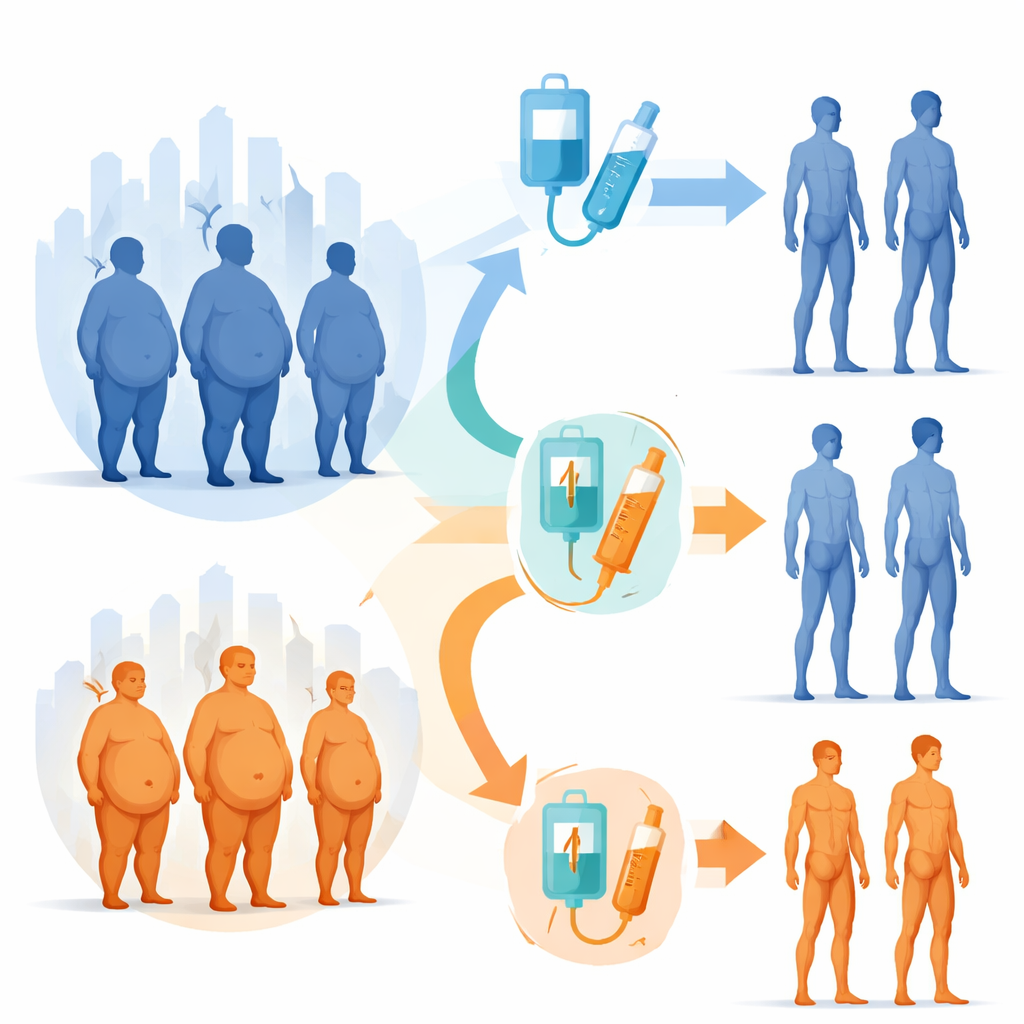
The trial focuses on two medications that work in very different ways. Semaglutide is a widely used weekly injection that curbs appetite and leads people to eat less. Bimagrumab is an experimental antibody given by intravenous infusion every 12 weeks; it blocks specific cell‑surface receptors involved in muscle and fat regulation. Earlier work suggested that bimagrumab can shrink fat stores while supporting muscle growth. The researchers asked whether using both together could produce deeper, better‑quality weight loss than either drug alone in adults with obesity but without diabetes.
Inside the 72-Week Clinical Trial
In this phase 2 study, 507 adults with obesity were randomly assigned to nine groups. Some received only placebo, some got one of two doses of bimagrumab, some received one of two doses of semaglutide, and others received various combinations of the two drugs. Treatments lasted 48 weeks, followed by a 24‑week extension to week 72. Everyone also received counseling to modestly cut calories and increase physical activity. The main measure was how much body weight changed by weeks 48 and 72, but the team also carefully tracked waist size, detailed body composition by whole‑body scans, blood sugar control, blood fats, inflammation markers and side effects.
More Weight Off, Mostly from Fat
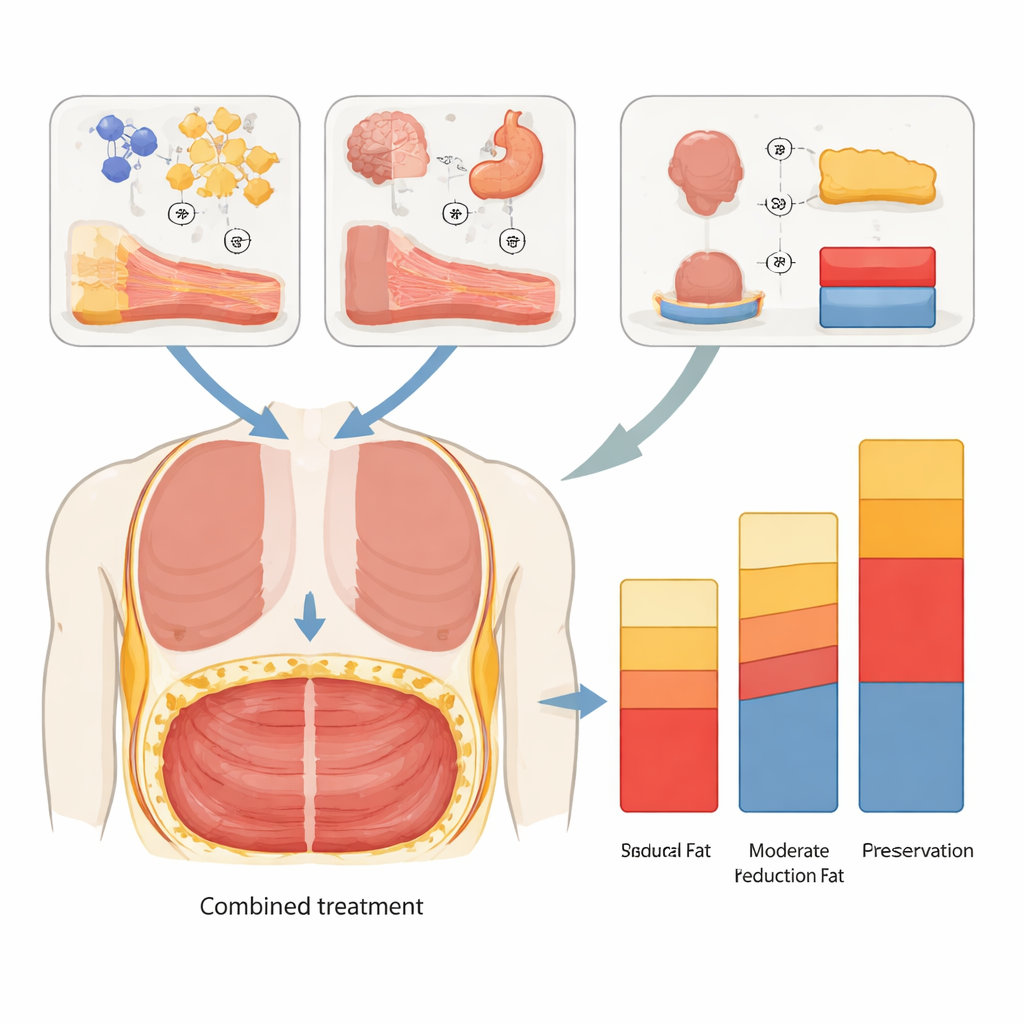
By week 48, people on the higher‑dose combination of bimagrumab and semaglutide had lost an average of about 18 kilograms, versus 14 kilograms with high‑dose semaglutide alone and only 3 kilograms with placebo. When followed to week 72, weight loss deepened further: roughly 24 kilograms (about 22% of starting weight) with the high‑dose combination, 16.5 kilograms (16%) with semaglutide alone and 12 kilograms (11%) with bimagrumab alone. Importantly, the scans showed that the extra weight lost with the combination came mostly from fat, particularly the harmful fat packed around abdominal organs, while muscle was largely preserved. In the bimagrumab‑only group, lean mass even rose slightly, and in the combination groups most of the lost weight—over 90% in the high‑dose arm—was fat rather than muscle.
Benefits Beyond the Scale
The combined treatment also reshaped several measures linked to long‑term health. Waistlines shrank more with the combination than with either drug alone, mirroring the large drops in deep belly fat. Blood tests showed improved markers of metabolism: large boosts in the hormone adiponectin, sizable drops in leptin, better fasting insulin levels and marked reductions in C‑reactive protein, a signal of body‑wide inflammation. People who started the study with prediabetes were especially affected: by week 72, all participants with prediabetes in the combination groups had blood sugar levels back in the normal range, compared with just over half of those on placebo. Changes in cholesterol were mixed—"bad" LDL cholesterol rose with bimagrumab alone but was largely neutralized when paired with higher‑dose semaglutide—while blood pressure shifts were modest.
Safety, Side Effects and Study Limits
As with any potent medical therapy, side effects mattered. Bimagrumab was most often linked to muscle cramps, diarrhea and acne, while semaglutide commonly caused nausea, diarrhea, constipation and fatigue; combination groups showed patterns similar to each drug’s known profile. Serious side effects were uncommon and spread across groups, and no deaths occurred. Some participants stopped treatment because of side effects, more often in groups receiving bimagrumab alone. The trial also had limits: semaglutide could not be blinded, bimagrumab required intravenous infusions rather than simpler injections, and muscle was assessed by whole‑body scans rather than more precise imaging. Longer follow‑up will be needed to see how durable the benefits are and how risks evolve over time.
What This Could Mean for Future Treatment
To a lay reader, the main message is that it may soon be possible not just to lose a large amount of weight with medication, but to lose the right kind of weight. Pairing bimagrumab with semaglutide produced weight loss approaching that seen after some forms of bariatric surgery, while keeping most muscle tissue intact and aggressively shrinking deep belly fat. If future studies confirm these findings and refine dosing and delivery, this kind of dual‑pathway approach could offer people living with obesity a powerful new option that targets both the quantity and the quality of weight lost.
Citation: Heymsfield, S.B., Aronne, L.J., Montgomery, P. et al. Bimagrumab plus semaglutide alone or in combination for the treatment of obesity: a randomized phase 2 trial. Nat Med 32, 869–882 (2026). https://doi.org/10.1038/s41591-026-04204-0
Keywords: obesity treatment, weight loss drugs, body composition, semaglutide, bimagrumab