Clear Sky Science · en
High-dose nusinersen for spinal muscular atrophy: a phase 3 randomized trial
Why this matters for families
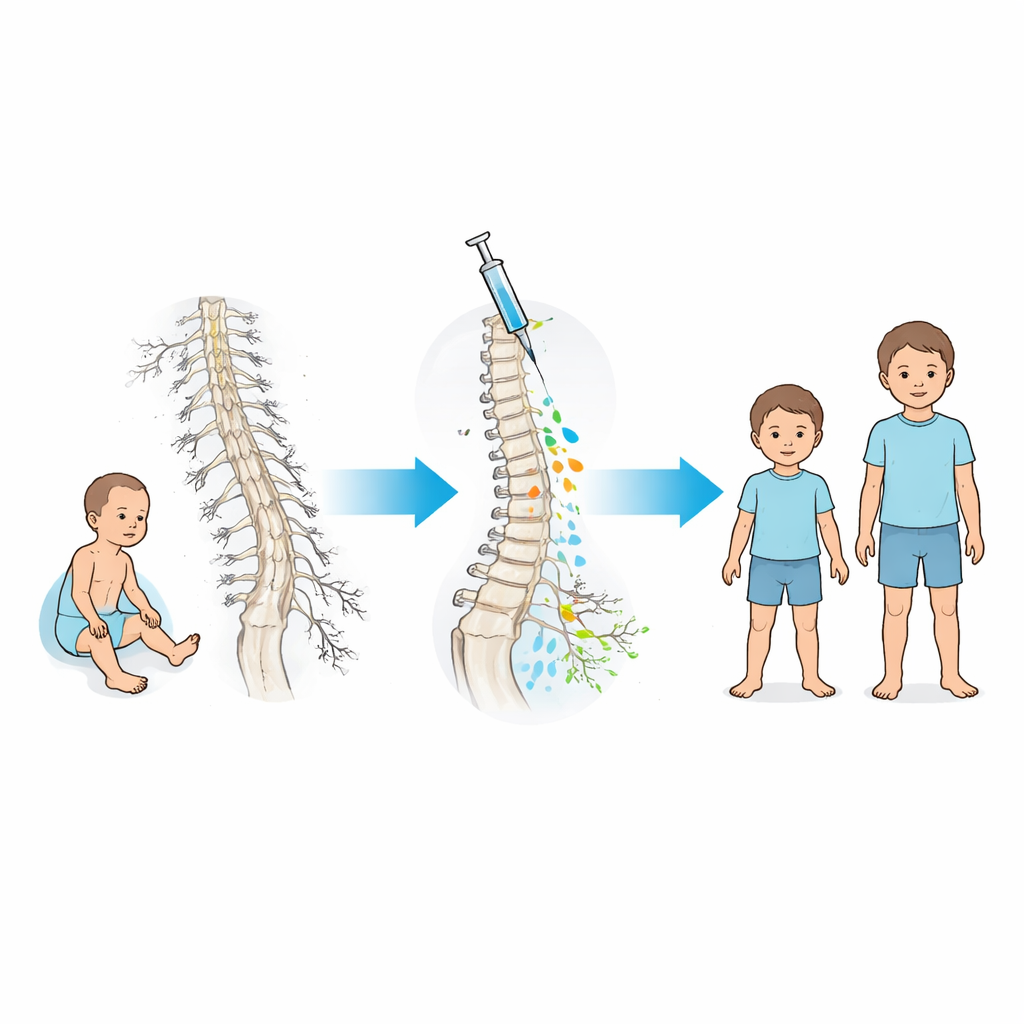
For decades, a diagnosis of spinal muscular atrophy (SMA) in a baby meant a future of progressive weakness, breathing problems and, too often, early death. Nusinersen, the first disease‑modifying drug for SMA, changed that story, helping many children sit, breathe and live longer. But many still struggle with weakness and delayed milestones. This study asks a simple but crucial question: if we safely give nusinersen at a higher dose, can we better protect fragile motor nerves and give children with SMA a stronger start in life?
A nerve disease that starts in infancy
SMA is a genetic condition in which the nerve cells that control muscles slowly die off, leading to muscle wasting and loss of movement. The problem lies in missing or faulty instructions for making a protein that motor neurons need to survive. A backup gene produces only small amounts of this protein, so babies born with fewer backup copies tend to have earlier and more severe disease. Nusinersen works by coaxing this backup gene to make more of the full‑length protein, delivered directly into the fluid around the spinal cord. The approved dose has already transformed outcomes, but many children remain weaker than their peers, suggesting that standard treatment might not be doing enough, early enough, to fully protect their motor neurons.
Testing a stronger dosing schedule
The DEVOTE trial was a large, global study designed to find out whether a higher nusinersen dose could safely boost its benefits. In the main part of the study, treatment‑naive infants with early‑onset SMA were randomly assigned to receive either a high‑dose schedule (larger initial doses followed by higher maintenance doses) or the standard regimen. Their results were also compared with carefully matched infants from an earlier trial who had received a sham procedure instead of active drug. A smaller group of older, treatment‑naive children with later‑onset SMA took part as well. In a third arm, children and adults who had already been on standard nusinersen for at least a year were switched to the high‑dose schedule to see whether they could gain additional function.
Slowing nerve damage and improving movement
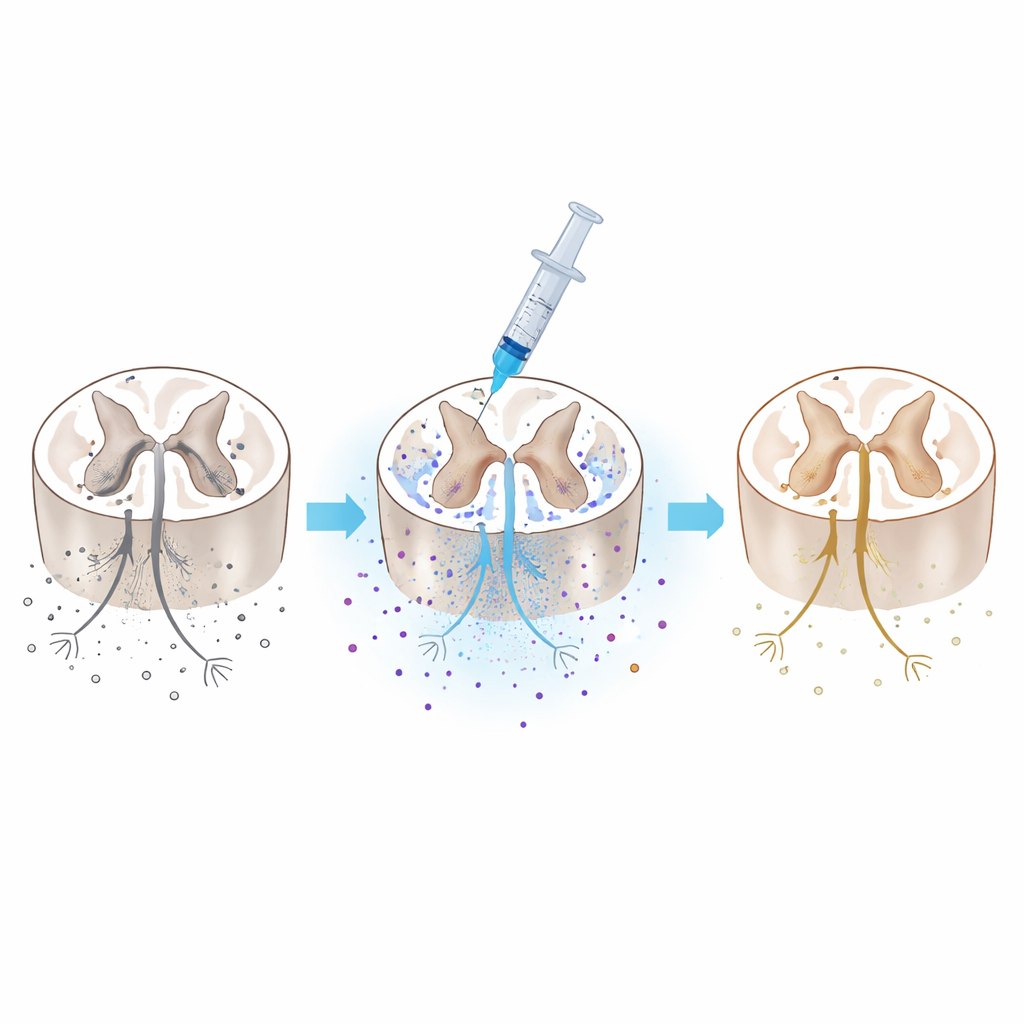
In infants with the most severe form of SMA, the high‑dose regimen clearly outperformed doing nothing. Over six months, babies on high‑dose nusinersen improved their scores on a detailed infant motor scale, while matched infants who had received sham treatment worsened substantially. More high‑dose infants reached key early milestones such as better head control and rolling. A blood marker called neurofilament light chain, which reflects ongoing injury to nerve fibers, dropped by about 94% in high‑dose infants but only 30% in the sham group, indicating that the stronger dosing slowed neurodegeneration dramatically. When directly compared with the standard regimen, the study was too small to prove clear statistical differences, but infants on high dose tended to show faster drops in neurofilament and signals of better survival without the need for permanent breathing support.
What happened in older children and those already treated
Among later‑onset children who had never been treated before, those on high dose generally gained more motor function on scales that measure whole‑body movements and arm and hand use than those on the standard regimen, although small numbers made results variable. When their progress was contrasted with matched children from an earlier trial who had received sham procedures or standard nusinersen, the high‑dose group compared favorably. In the cohort of children and adults who were already on standard nusinersen and then switched to high dose, average motor scores continued to creep upward over the next 10 months, even though many had been stable for years and some were already near the top of the scales—situations where further gains are usually hard to achieve.
Safety and what it means going forward
Any plan to increase a drug dose must balance potential extra benefit against added risk. In DEVOTE, the overall safety profile of the high‑dose regimen looked much like that of the standard schedule. Most side effects reflected the underlying illness, common childhood infections or the spinal tap procedure needed to deliver the drug. Serious complications and deaths were actually less frequent in nusinersen‑treated infants than in matched sham controls, and no new safety concerns emerged. Together, these results suggest that giving nusinersen at a higher dose can more quickly quiet nerve damage and may offer extra gains in movement and survival for people with SMA, while maintaining a similar level of safety. For families and clinicians, this work points toward a future where optimizing dose—not just starting treatment—could further shift SMA from a devastating early‑life disease toward a more manageable condition.
Citation: Finkel, R.S., Crawford, T.O., Mercuri, E. et al. High-dose nusinersen for spinal muscular atrophy: a phase 3 randomized trial. Nat Med 32, 1095–1104 (2026). https://doi.org/10.1038/s41591-025-04193-6
Keywords: spinal muscular atrophy, nusinersen, high-dose therapy, motor neuron protection, neurofilament biomarker