Clear Sky Science · en
A large language model for complex cardiology care
Smarter Heart Care for Everyone
Serious heart conditions often need highly specialized doctors, but many people live far from major medical centers or face long waits for expert care. This study asks a timely question: can an advanced AI language system help regular heart doctors make safer, more complete decisions for patients with rare, inherited heart diseases—and do so without replacing the human doctor?
The Problem of Missing Heart Experts
Inherited heart muscle diseases, such as hypertrophic cardiomyopathy, can cause sudden death in otherwise healthy young adults, yet many patients are never properly diagnosed. In more than half of U.S. states, there is no specialized center for these conditions, and worldwide the shortage is even more severe. As a result, people may bounce between clinics, miss crucial tests, or receive life‑saving treatments too late. The authors argue that if general cardiologists could safely tap into subspecialist‑level knowledge at the click of a button, more patients could get the right care, at the right time, close to home.
An AI Partner at the Cardiologist’s Desk
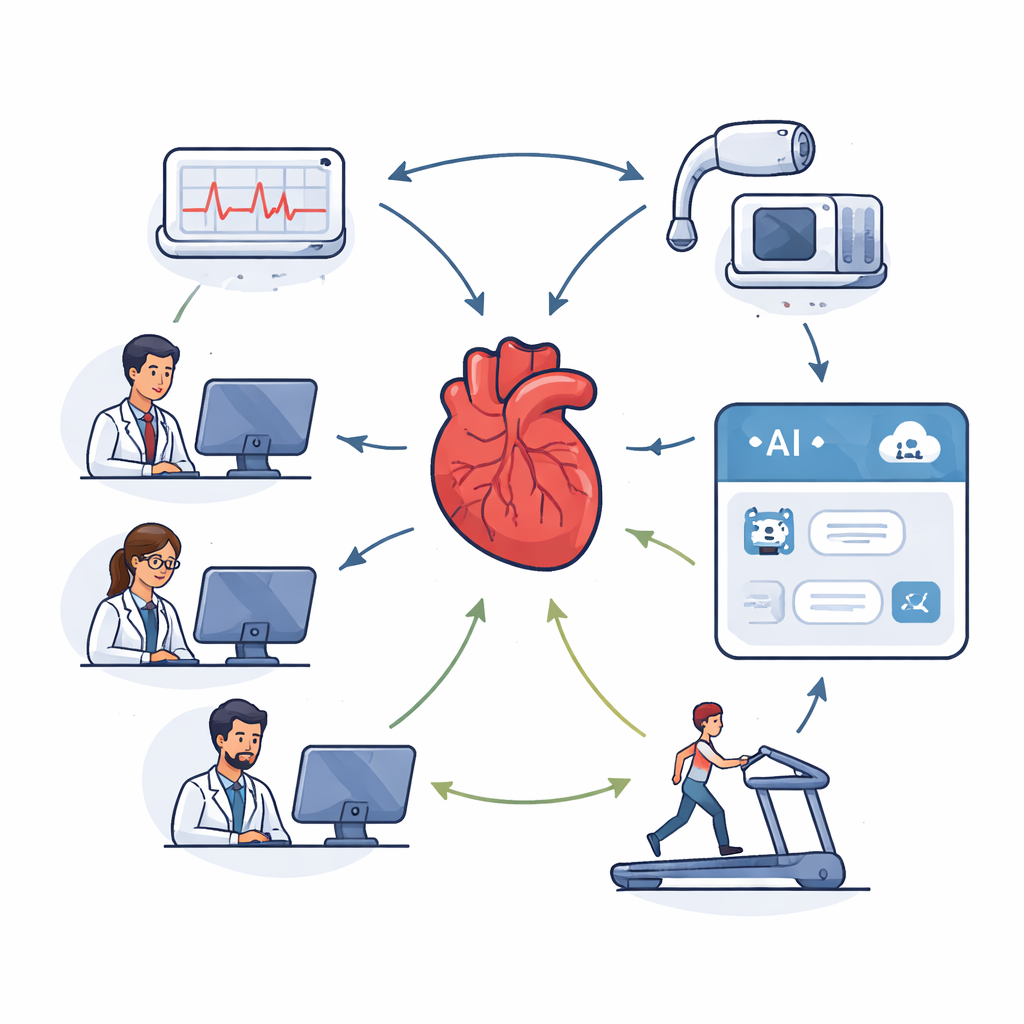
The research team evaluated an experimental system called Articulate Medical Intelligence Explorer (AMIE), built on a large language model similar in spirit to advanced chatbots. Instead of working from simple text descriptions, AMIE was given detailed reports from real patients’ heart tests—electrocardiograms, echocardiograms, cardiac MRI scans, exercise stress tests and heart rhythm monitors. In a randomized trial, nine general cardiologists each reviewed 107 complex cases suspected of genetic heart disease. For every patient, one cardiologist worked alone, while another had access to AMIE’s full written assessment and could chat with the AI to refine diagnoses, triage decisions and treatment plans.
Experts Judge the Results
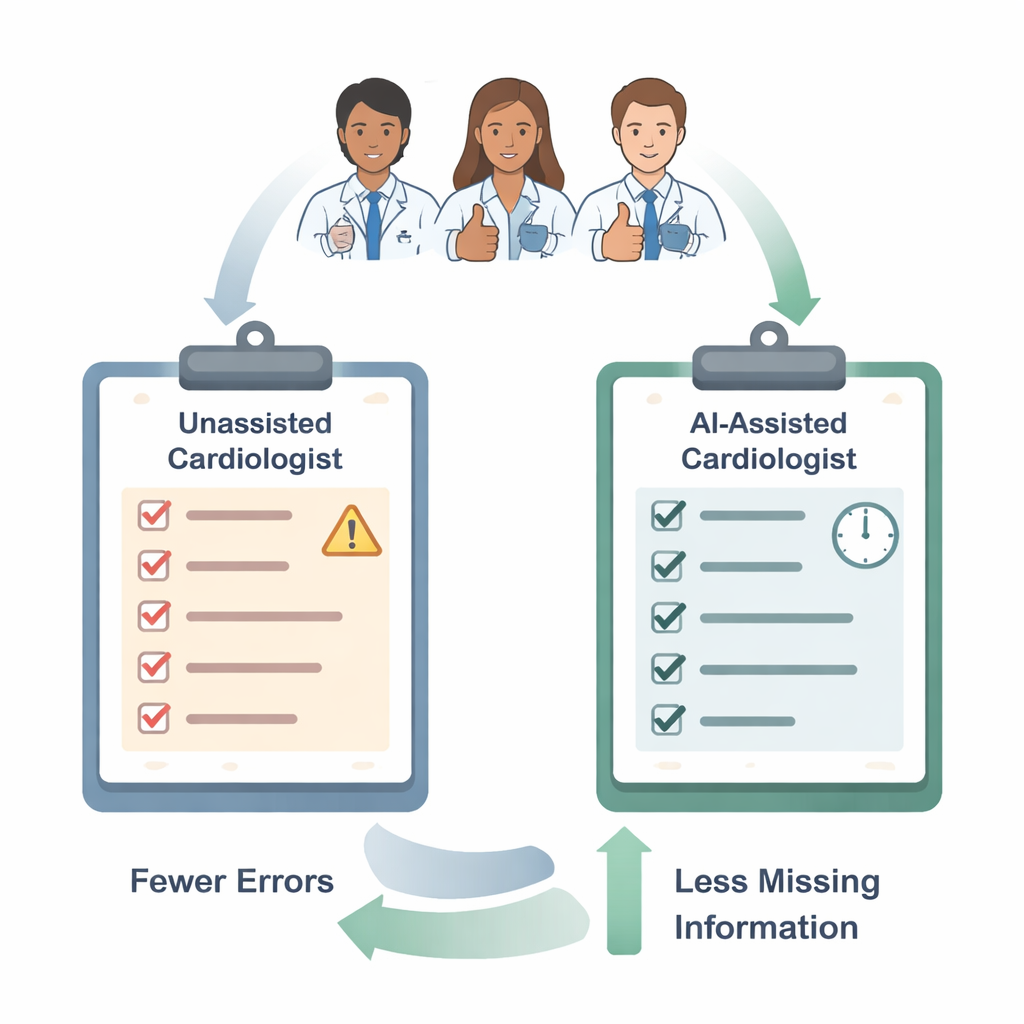
To see whether AI truly helped, three subspecialist heart doctors, blinded to who had written what, compared paired reports for each patient—one from a cardiologist alone and one from a cardiologist using AMIE. They rated which they preferred in multiple areas, including overall quality, recommended tests and management plans, and also checked each report for important mistakes and missing information. Across the 107 cases, they preferred the AMIE‑assisted assessments almost half the time and chose the cardiologist‑only reports about one‑third of the time, with the rest judged as ties. Crucially, reports written with AI support had about half as many clinically important errors and contained far fewer omissions of key details.
What Front‑Line Doctors Experienced
The cardiologists who used AMIE were also surveyed about their day‑to‑day experience. In a majority of cases, they felt the AI made their assessments better and boosted their confidence, and they reported saving time in about half of all patients, sometimes cutting their effort by more than 50 percent. The AI was not flawless: doctors noted occasional “hallucinations,” where AMIE invented or misread findings, and some instances where it overlooked information or repeated tests that had already been done. However, these issues were relatively infrequent, and doctors often got the system to correct itself by challenging its statements, underscoring the importance of human oversight.
Promise, Limits, and Next Steps
This trial suggests that, when paired with careful clinicians, an AI language system can help make complex heart care more complete, somewhat safer and more efficient. It did not replace the cardiologist’s judgment, and the authors stress that the technology is not ready to work on its own or to be widely deployed without further safeguards, larger studies and close attention to bias, cost and patient perspectives. Still, for people living far from major heart centers—or waiting months to see a specialist—this work points to a future where their local doctor, backed by a well‑tested AI assistant, can deliver a level of care that looks much more like what they would receive from an expert clinic.
Citation: O’Sullivan, J.W., Palepu, A., Saab, K. et al. A large language model for complex cardiology care. Nat Med 32, 616–623 (2026). https://doi.org/10.1038/s41591-025-04190-9
Keywords: cardiology AI, large language models, genetic heart disease, clinical decision support, randomized controlled trial