Clear Sky Science · en
BCMA-directed mRNA CAR-T cell therapy for myasthenia gravis: exploratory biomarker analysis of a placebo-controlled phase 2b trial
Resetting a Misfiring Immune System
Myasthenia gravis is a disease where the body’s own defense system mistakenly interferes with the signals that tell muscles to move, leaving people weak and easily fatigued. Current treatments often work by broadly damping down immunity, which can invite infections and requires ongoing therapy. This study explores a new, more precise way to "reset" the immune system using temporary, genetically instructed immune cells, aiming to quiet the attack on muscles while leaving normal defenses largely untouched. 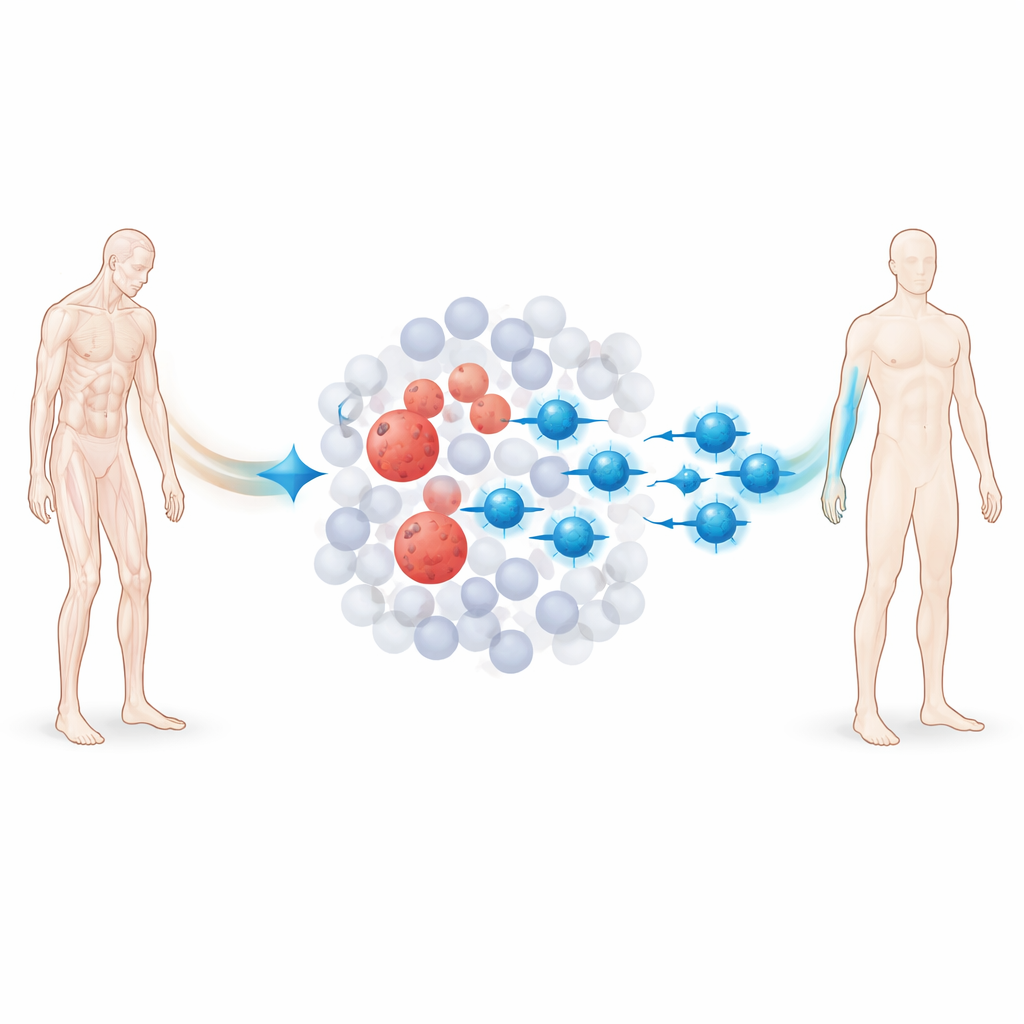
A New Kind of Custom Cell Treatment
The researchers tested an experimental therapy called Descartes-08 in people with generalized myasthenia gravis. Doctors first collected each patient’s own T cells, a type of white blood cell that normally patrols for threats. In the lab, they briefly equipped these cells with a set of molecular “grippers” encoded by messenger RNA (mRNA). These grippers, known as chimeric antigen receptors, help the T cells recognize a marker called BCMA that sits mainly on a small group of antibody-producing cells and on certain dendritic cells that fuel inflammation. Because the instructions are carried on mRNA rather than permanently stitched into the cells’ DNA, the engineered receptors appear for days, not months or years, and then fade away.
Targeting the Right Immune Culprits
In both lab dishes and a mouse model, Descartes-08 cells homed in on BCMA-bearing cells and killed them efficiently, while sparing other immune cells. This selectivity is important because the BCMA-high cells include plasma cells that secrete disease-driving antibodies and plasmacytoid dendritic cells that release powerful inflammatory signals. When the team moved into a placebo-controlled phase 2b trial in people, they found that Descartes-08 products could be manufactured reliably from many different donors and contained healthy, non-exhausted T cells. Patients received six weekly infusions in an outpatient clinic and did not need the chemotherapy pre-treatment that usually accompanies cell therapies for cancer.
Fine-Tuning, Not Wiping Out, Immunity
To understand what was happening inside patients, the scientists tracked multiple types of immune cells, antibody patterns and soluble proteins in the blood over time. After Descartes-08, the BCMA signal on circulating precursors of plasma cells dropped, and activation markers on plasmacytoid dendritic cells decreased, suggesting that the most overactive players were being dialed back. Yet the overall numbers of B cells, T cells, and other major immune populations remained stable. Total antibody levels and pre-existing vaccine responses against measles, mumps, tetanus and other infections were preserved for at least a year. At the same time, key inflammatory molecules linked to myasthenia gravis severity, including interleukin-6, declined only in the treated group and often stayed lower well beyond the period when the engineered receptors were detectable.
Rewriting the Body’s Antibody and T Cell Footprint
The team also looked at the “autoreactome” — a broad fingerprint of self-directed antibodies measured against thousands of human proteins at once. In patients who received Descartes-08, this fingerprint shifted much more over months than in those given placebo, indicating a substantial reshaping of self-reactive antibodies. Notably, the classic myasthenia antibody test, which measures the titer against the acetylcholine receptor, did not closely track with clinical improvement, hinting that changes in quality and diversity of antibodies may matter more than sheer amount. In parallel, sequencing of T cell receptors showed that many T cell clones in treated patients expanded or contracted over time, even though the visible mix of T cell types in blood stayed largely unchanged. Single-cell gene expression analyses revealed that helpful regulatory T cells and other immune cells in responders turned on gene programs associated with effective, balanced immune responses rather than broad shutdown. 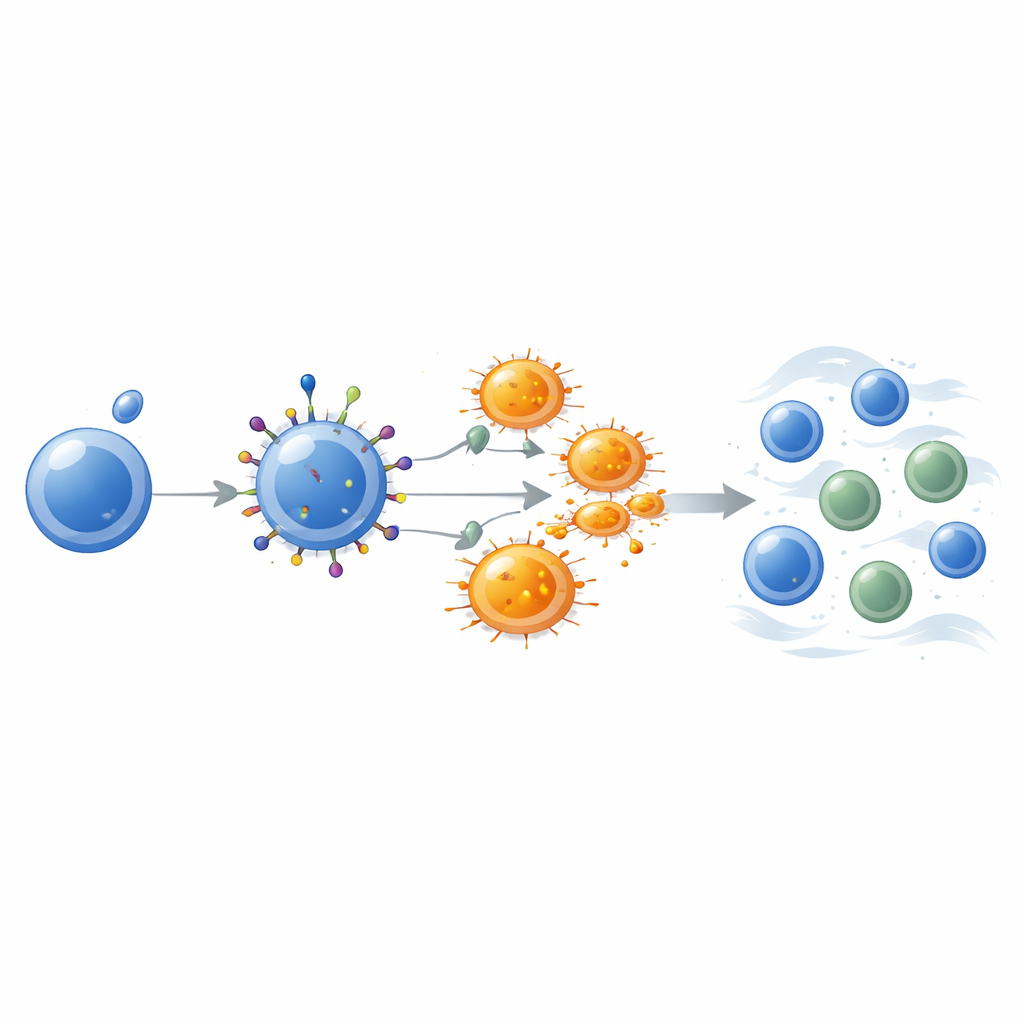
What This Could Mean for People With Autoimmune Disease
Together, these findings suggest that a short course of RNA-guided, BCMA-targeted T cells can selectively prune the most troublesome immune cells, calm inflammatory signals and remodel both antibody and T cell landscapes, all without the deep, long-lasting immune suppression seen with many current treatments. For people living with myasthenia gravis, that translated into lasting improvements in muscle function for many participants, with benefits persisting long after the engineered receptors had vanished. More broadly, the work points to a future in which autoimmune diseases might be treated with brief, outpatient procedures that “retune” rather than erase the immune system, potentially offering durable relief while preserving the body’s ability to fight everyday infections.
Citation: Fedak, R.R., Ruggerie, R.N., Shan, Y. et al. BCMA-directed mRNA CAR-T cell therapy for myasthenia gravis: exploratory biomarker analysis of a placebo-controlled phase 2b trial. Nat Med 32, 1118–1130 (2026). https://doi.org/10.1038/s41591-025-04170-z
Keywords: myasthenia gravis, CAR-T cell therapy, autoimmune disease, BCMA targeting, mRNA cell therapy