Clear Sky Science · en
A short-acting psychedelic intervention for major depressive disorder: a phase IIa randomized placebo-controlled trial
Why This Matters
Depression affects hundreds of millions of people worldwide, and many find that standard antidepressant pills either do not help enough or cause troubling side effects. This study explores a very different approach: using a brief, carefully supported psychedelic experience with a fast-acting compound to rapidly ease depressive symptoms, potentially in a single treatment session.
A New Kind of Treatment Session
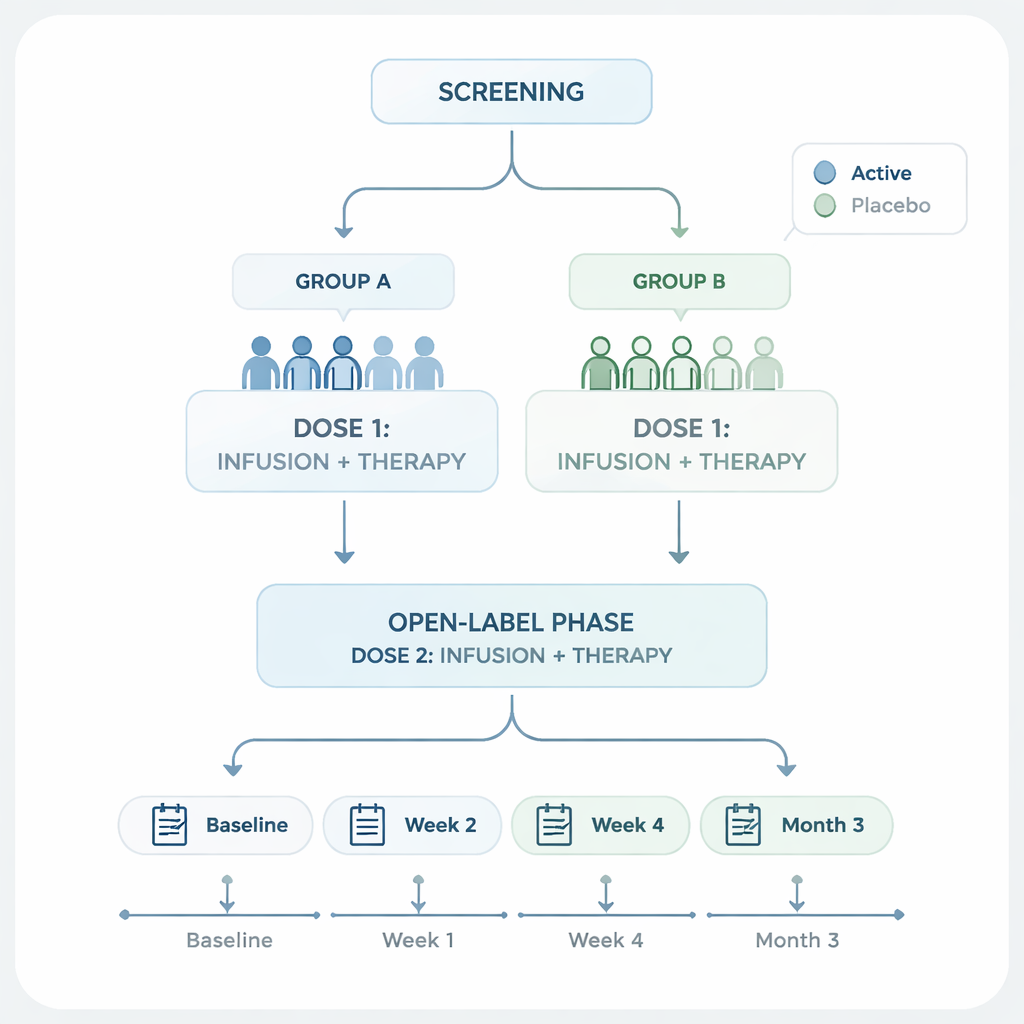
The researchers tested an intravenous infusion of a psychedelic compound called DMT, given together with structured psychological support, in adults with moderate-to-severe major depressive disorder. Unlike traditional antidepressants, which must be taken daily for weeks before noticeable change, DMT acts within minutes and wears off within about half an hour. This makes it attractive as a possible “day procedure” treatment, where people receive a single guided session instead of taking ongoing medication.
How the Study Was Set Up
Thirty-four volunteers, most of whom had lived with depression for around a decade and had already tried other treatments, were randomly assigned to two groups. In the first, double-blind stage, one group received a 10-minute DMT infusion plus psychotherapy, while the other group received a placebo infusion plus the same psychotherapeutic support. Neither the participants nor the raters knew who was in which group. Two weeks later, in an open-label stage, everyone was offered an active DMT session: those who had started with DMT could receive a second dose, and those who had started with placebo could receive their first.
Rapid Changes in Mood
The team tracked depression using a standard clinician-rated scale that measures symptom severity. Two weeks after the first infusion, people who had received DMT showed a substantially larger drop in depression scores than those given placebo. The difference between groups was large enough to be statistically meaningful, and signs of improvement were already clear after one week. When all participants were later followed in the open-label phase, the antidepressant effects of DMT tended to last up to three months, and in many cases were still noticeable six months later. Interestingly, people who received a second DMT dose did not clearly improve more than those who only ever received a single dose, hinting that one well-supported session may be enough for many.
Safety, Side Effects and the Psychedelic Experience
The treatment was generally well-tolerated. Most side effects were mild or moderate and short-lived, such as pain at the infusion site, nausea, temporary anxiety, or restlessness. No serious treatment-related medical problems, deaths, or dangerous changes in heart rhythm were seen, although brief rises in blood pressure and heart rate were noted after dosing. Measures of suicidal thoughts did not show concerning changes. The researchers also collected questionnaires about the nature of the psychedelic experience. People who reported more intense “mystical” or unity-type experiences tended to show larger improvements in mood, suggesting that what happens during the session—psychologically as well as biologically—may be important for recovery.
What This Could Mean for the Future
This early-stage trial suggests that a single, carefully supervised DMT session combined with psychotherapy can rapidly reduce depressive symptoms and that these benefits can last for weeks to months in many patients. Because DMT is so short-acting, it might offer a more time-efficient and scalable version of psychedelic-assisted therapy compared with longer-acting compounds. However, the study was small, involved mostly white participants, and combined the drug with a specific therapeutic framework, so it is not yet clear how broadly the results will apply or how much of the benefit comes from the drug versus the therapy. Larger, longer studies comparing DMT directly with existing treatments will be needed before this approach could move into routine care, but the findings add to growing evidence that brief, intensive psychedelic sessions may offer new hope for people living with stubborn depression.
Citation: Erritzoe, D., Barba, T., Benway, T. et al. A short-acting psychedelic intervention for major depressive disorder: a phase IIa randomized placebo-controlled trial. Nat Med 32, 591–598 (2026). https://doi.org/10.1038/s41591-025-04154-z
Keywords: major depressive disorder, psychedelic therapy, DMT infusion, rapid antidepressant, clinical trial