Clear Sky Science · en
Shared and specific blood biomarkers for multimorbidity
Why many illnesses arrive together
As people live longer, it is increasingly common for the same person to have several long‑lasting illnesses at once—such as heart disease, diabetes, lung problems and memory loss. This piling up of conditions, called multimorbidity, can greatly affect independence and quality of life. Yet doctors still know little about the underlying biology that makes some older adults accumulate many diseases while others stay comparatively healthy. This study asks a simple but powerful question: can routine blood tests reveal who is on a faster track toward multiple diseases, and which biological systems are driving that process?
A broad look at aging blood
Researchers in Sweden examined 54 different blood markers in more than 2,200 people aged 60 and older who were followed for up to 15 years. The volunteers came from the Swedish National Study on Aging and Care in Kungsholmen, where participants undergo detailed medical exams, memory testing and blood draws. The markers reflected a range of processes linked to aging, including inflammation, metabolism, blood vessel health, organ damage and brain degeneration. Instead of focusing on one disease, the team counted all long‑term conditions each person had, grouped people into common “profiles” of co‑occurring diseases, and measured how quickly new diseases appeared over time. 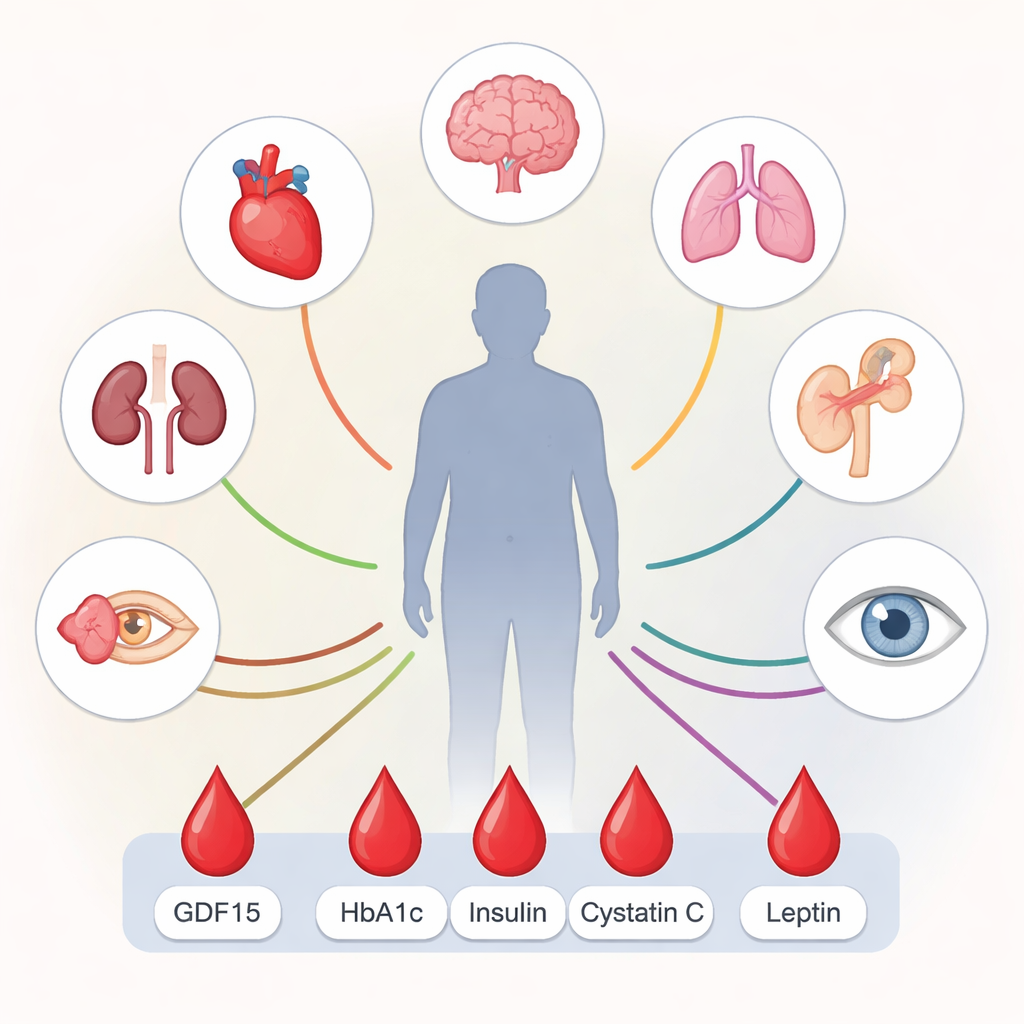
Five common patterns of illness
When the researchers looked at how diseases clustered together, they found five main patterns among people with at least two chronic conditions. One large group had no particularly dominant disease combination (“Unspecific”), while others were dominated by brain and mental disorders (“Neuropsychiatric”), mood and lung problems (“Psychiatric and Respiratory”), hearing and vision loss plus anemia (“Sensory impairment and Anemia”), or heart‑ and metabolism‑related illnesses such as diabetes and high blood pressure (“Cardiometabolic”). These patterns differed in age, disability, thinking abilities and medication use, and they also predicted later outcomes: for example, the Neuropsychiatric pattern carried a higher risk of dementia and death, while the Cardiometabolic pattern strongly predicted future heart problems.
Metabolism emerges as the main driver
Across all the ways the team measured multimorbidity—the simple disease count, the five patterns and the long‑term speed of disease accumulation—the same small group of blood markers kept standing out. Higher levels of growth differentiation factor 15 (GDF15), hemoglobin A1c (a measure of long‑term blood sugar), cystatin C (linked to kidney function), leptin (a hormone from fat tissue) and insulin were all associated with having more diseases at baseline and with belonging to any of the multimorbidity patterns. Several of these markers, along with a liver enzyme called gamma‑glutamyl transferase, also predicted a faster build‑up of new diseases over 15 years. By contrast, higher albumin—a protein reflecting good nutrition and general health—was linked to slower disease accumulation. Together, these results point to disturbed metabolism and energy handling, closely intertwined with low‑grade inflammation, as a central engine of multimorbidity.
Shared roots and specific signatures
Not all disease patterns were biologically identical. While some markers were shared across all patterns, others were more specific. For example, neurofilament light chain—a marker of nerve fiber injury—was particularly tied to the Neuropsychiatric profile, in line with its connection to brain damage. A structural heart protein called N‑cadherin was more strongly linked to the Cardiometabolic pattern. Meanwhile, the Unspecific pattern showed no clear unique biomarker fingerprint, suggesting that it may arise from more general aging processes. The researchers also confirmed their key finding—that a small set of metabolic markers predicts the rate of disease accumulation—by testing the same model in a second, independent group of older adults from the long‑running Baltimore Longitudinal Study of Aging in the United States. 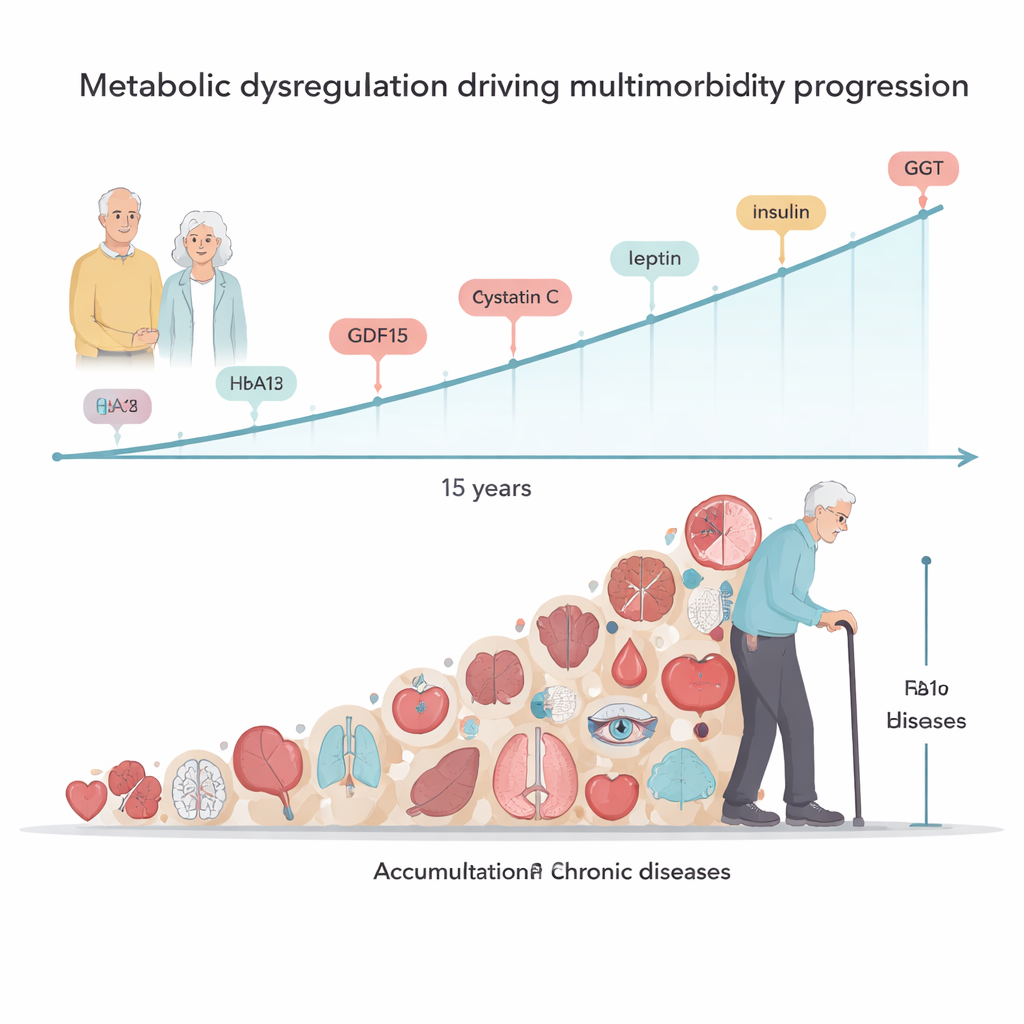
What this means for healthy aging
For non‑specialists, the take‑home message is that many different chronic illnesses in later life appear to share common biological roots, especially in how the body processes sugar and energy and how organs respond to long‑lasting, low‑level inflammation. The study does not prove that these blood markers cause disease, but it shows they can help flag people whose bodies are under greater “metabolic stress” and who are likely to accumulate more illnesses over time. In the long run, this line of research could support new strategies—ranging from lifestyle changes to medicines originally developed for diabetes—that target the aging process itself, rather than treating each disease in isolation, with the goal of slowing the overall build‑up of health problems in older age.
Citation: Ornago, A.M., Gregorio, C., Triolo, F. et al. Shared and specific blood biomarkers for multimorbidity. Nat Med 32, 736–745 (2026). https://doi.org/10.1038/s41591-025-04038-2
Keywords: multimorbidity, aging, blood biomarkers, metabolic health, chronic disease prevention