Clear Sky Science · en
Antigen specificity of clonally enriched CD8+ T cells in multiple sclerosis
Why this research matters to people
Multiple sclerosis (MS) is a disease in which the body’s own immune system attacks the brain and spinal cord, but the exact triggers of this attack have remained mysterious. One long-standing suspect is Epstein–Barr virus (EBV), a very common virus that infects most people in their lifetime. This study looks directly into the fluid that bathes the brain to see which immune cells are present, what they are doing and, critically, what they are reacting to. Understanding this connection could reshape how we diagnose, monitor and ultimately treat MS.
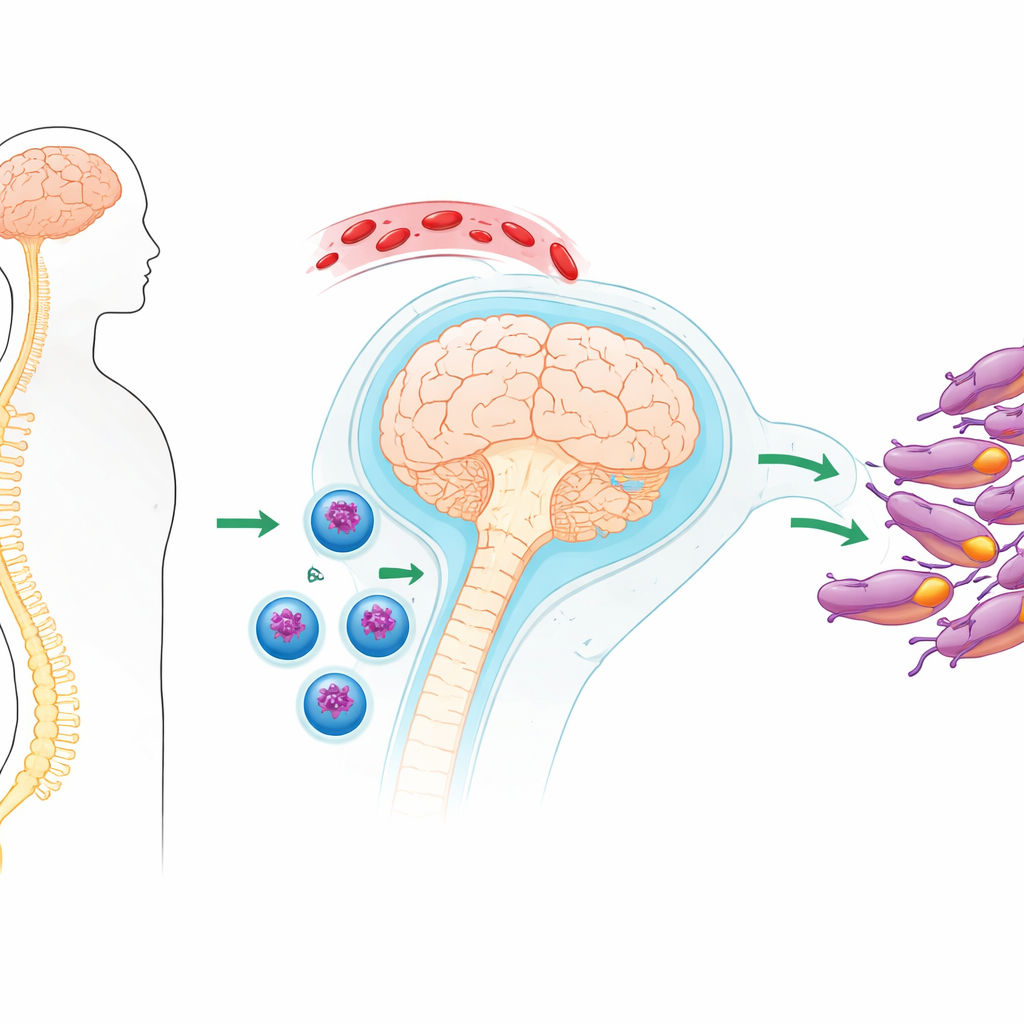
The immune cells at the scene
The researchers analyzed blood and cerebrospinal fluid samples from 18 people: patients with early MS or a related first attack, people with other inflammatory brain conditions and healthy volunteers. Using high‑resolution single‑cell sequencing, they cataloged tens of thousands of individual T cells, a type of white blood cell that can recognize and kill infected or abnormal cells. They found that in the fluid around the brain, T cells in MS patients looked more activated and better equipped to move into tissues and carry out destructive functions than T cells from control participants.
A small but powerful group of repeat offenders
T cells that repeatedly encounter their target expand into clones—large families of nearly identical cells. When the team examined T cell receptor sequences, which serve as ID tags for each clone, they found a small subset of CD8 T cell clones that were highly expanded and unusually enriched in the cerebrospinal fluid compared with the blood. More than 70% of these enriched clones were CD8 T cells, the subtype specialized for killing. These cells carried gene signatures of experienced fighters: they expressed molecules linked to tissue entry, residence in the central nervous system and potent cell‑killing machinery. In some MS patients, a handful of such clones made up a striking fraction of all T cells in the cerebrospinal fluid.
Following the trail to a common virus
The key question was what these dominant T cell clones were recognizing. The authors cloned the receptors from 23 of the most enriched CD8 T cell clones and tested them against huge libraries of candidate fragments from viruses and human proteins. Several artificial “mimic” peptides bound to some receptors but did not reliably trigger them to respond, suggesting these were not their true targets. However, three independent CD8 T cell clones from three different MS patients reacted strongly and specifically to known EBV proteins. These virus‑focused clones were not only abundant in the cerebrospinal fluid; their genetic profiles suggested they were actively engaged in controlling infection rather than quietly resting.
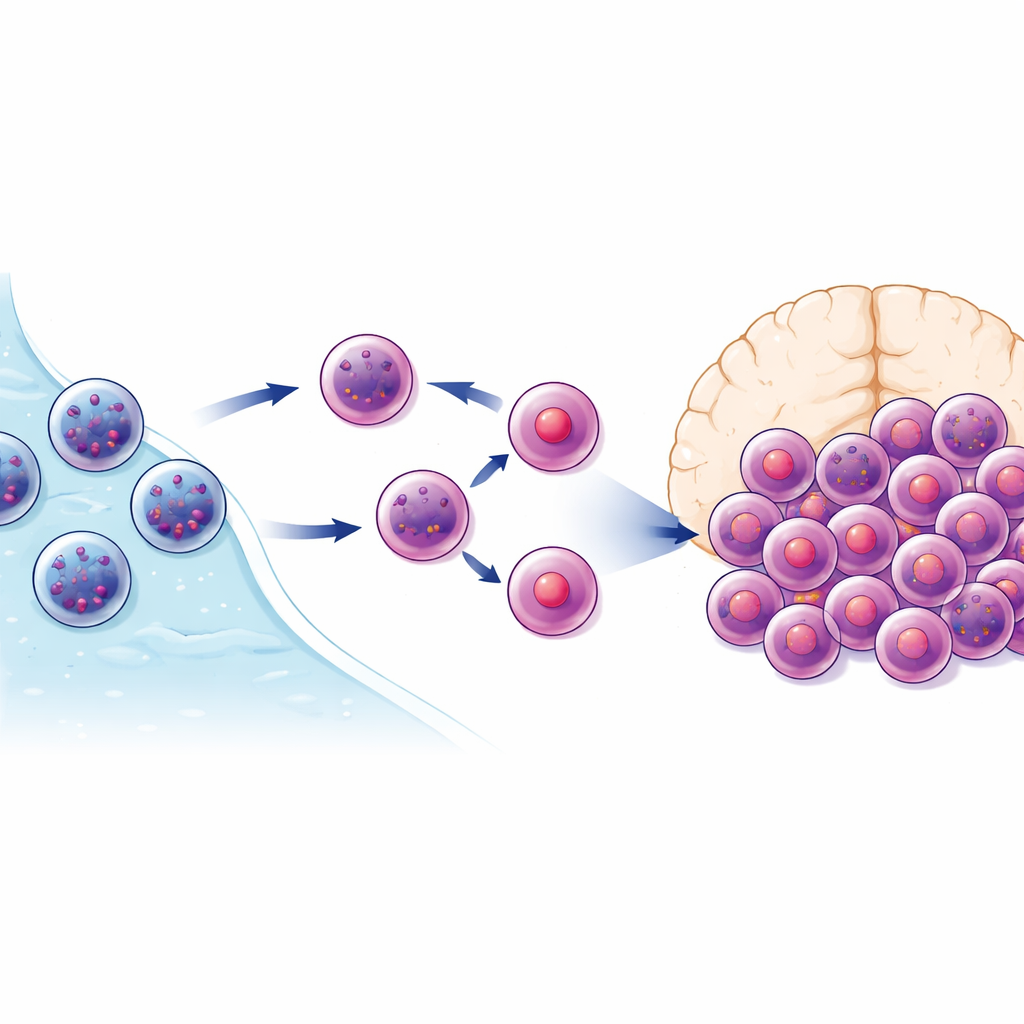
Signs of viral activity in brain fluid
To see whether EBV itself was present, the researchers measured EBV DNA and RNA in cerebrospinal fluid. They detected EBV genetic material in most participants, reflecting how widespread the virus is in the general population. Yet certain EBV transcripts associated with viral reactivation were higher in people with MS or a first demyelinating event than in controls. Notably, patients who carried highly expanded EBV‑specific CD8 T cells in their cerebrospinal fluid also tended to have EBV signatures in that fluid. This pattern points to a scenario in which EBV becomes active in or near the central nervous system, drawing in and expanding specialized virus‑fighting T cells.
What this means for understanding MS
Overall, the study reveals that in early, untreated MS, the brain’s surrounding fluid contains a small but prominent population of CD8 T cells that are highly expanded, armed for tissue damage and, in several cases, specifically tuned to recognize EBV. At the same time, EBV genetic traces are more abundant in these patients’ cerebrospinal fluid. While the work does not prove that EBV directly causes MS or that these T cells attack myelin, it provides strong support for EBV playing an important role in the disease environment. This connection may eventually enable doctors to track disease‑relevant immune cells in spinal fluid and inspire therapies that either target EBV itself or modulate the virus‑specific T cells that gather in the brains of people with MS.
Citation: Hayashi, F., Mittl, K., Dandekar, R. et al. Antigen specificity of clonally enriched CD8+ T cells in multiple sclerosis. Nat Immunol 27, 490–502 (2026). https://doi.org/10.1038/s41590-025-02412-3
Keywords: multiple sclerosis, Epstein–Barr virus, CD8 T cells, cerebrospinal fluid, autoimmune neuroinflammation