Clear Sky Science · en
Fine-tuning BACH2 dosage balances stemness and effector function to enhance antitumor T cell therapy
Helping Cancer-Fighting Cells Last Longer
Many of today’s most exciting cancer treatments rely on turbocharged versions of the body’s own immune cells. Yet these engineered T cells often tire out too quickly inside tumors, limiting how well they work. This study explores a way to make cancer-fighting T cells last longer without dulling their killing power, by carefully tuning the activity of a single control molecule inside the cells.
Why Immune Cells Need Both Youth and Strength
Our immune system relies on a division of labor. Some T cells act like hardy stem-like "seed" cells that live a long time and can keep making fresh fighters. Others become short-lived "soldier" cells that do most of the immediate tumor killing but quickly wear out. Effective cancer therapy needs both: a durable reservoir of seeds and a steady supply of soldiers. In chronic infections and tumors, however, many T cells drift into an exhausted, terminal state that can no longer multiply or respond well to treatment. Clinical results with existing T cell therapies show that patients fare better when their infused cells contain more of the stem-like subset and persist longer in the body.
A Molecular Dial for T Cell Rest and Activity
The researchers focused on a protein called BACH2, which helps keep T cells in a resting, memory-like state. In natural immune responses, BACH2 levels are high in naive and stem-like T cells and drop as cells become fully armed killers. Earlier work showed that BACH2 protects against overactivation and even acts as a tumor suppressor in engineered T cells, making it an appealing but tricky tool: too much rest might leave cells too sleepy to fight cancer. When the team forced T cells to make large amounts of BACH2, that is exactly what happened. The cells stayed in a quiescent, stem-like condition, expressed fewer activation markers, produced little of the toxic molecules needed to kill tumor cells, and controlled tumors poorly in mice.
Finding the “Just-Right” Dose
To see whether BACH2 could help rather than hinder therapy if dialed to the right level, the authors built genetic constructs that produce only a small fraction of the usual overexpression—about as much BACH2 as found in healthy memory T cells. They confirmed these doses by tagging the protein and by using mass spectrometry to count its copies. With this low-dose system in hand, they repeatedly stimulated mouse T cells in culture to mimic the chronic stress of a tumor. Both high and low BACH2 reduced the emergence of terminally exhausted cells and preserved markers associated with stem-like behavior. The crucial difference was that low-dose BACH2 allowed the cells to retain strong production of key cytokines and enzymes, while high-dose BACH2 sharply suppressed these effector functions and even reduced cell size, a sign of poor activation.
At the molecular level, the team found that BACH2 works by competing with a family of activator proteins known collectively as AP-1 at specific DNA motifs. Genes that depend heavily on AP-1 carried many of these motifs and were especially sensitive to BACH2. High BACH2 almost completely displaced AP-1 from these sites, switching off many effector genes. Low-dose BACH2 only partially reduced AP-1 binding, selectively dampening genes that drive terminal exhaustion while sparing much of the beneficial effector program. In tumors, T cells engineered with low-dose BACH2 accumulated better, maintained both stem-like and more differentiated subsets, and generated more cytokine-producing cells per gram of tumor, leading to markedly improved control of melanoma and colorectal cancers in mouse models. 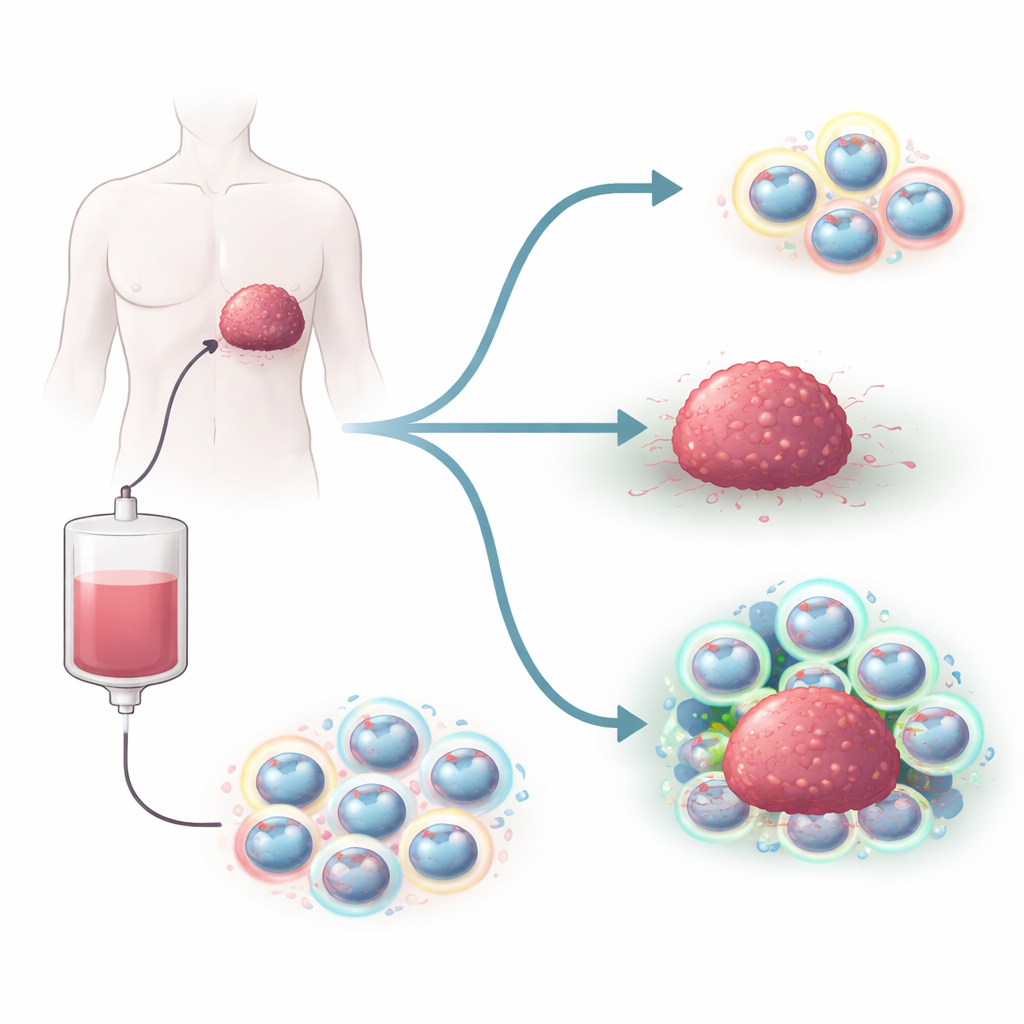
Creating Hybrid T Cells That Endure and Attack
By examining T cells that either did or did not express a surface marker linked to stem-like behavior, the researchers showed that low-dose BACH2 reshaped the most differentiated, exhausted cells into a hybrid state. These cells gained selected features of stem-like T cells—such as genes associated with longevity and homing—while keeping core traits of active effectors, including vigorous cytokine production and proliferation. In other words, instead of forcing all cells into a quiet stem state, dose-tuned BACH2 raised a floor of self-renewal and restraint, especially in cells that would otherwise burn out. 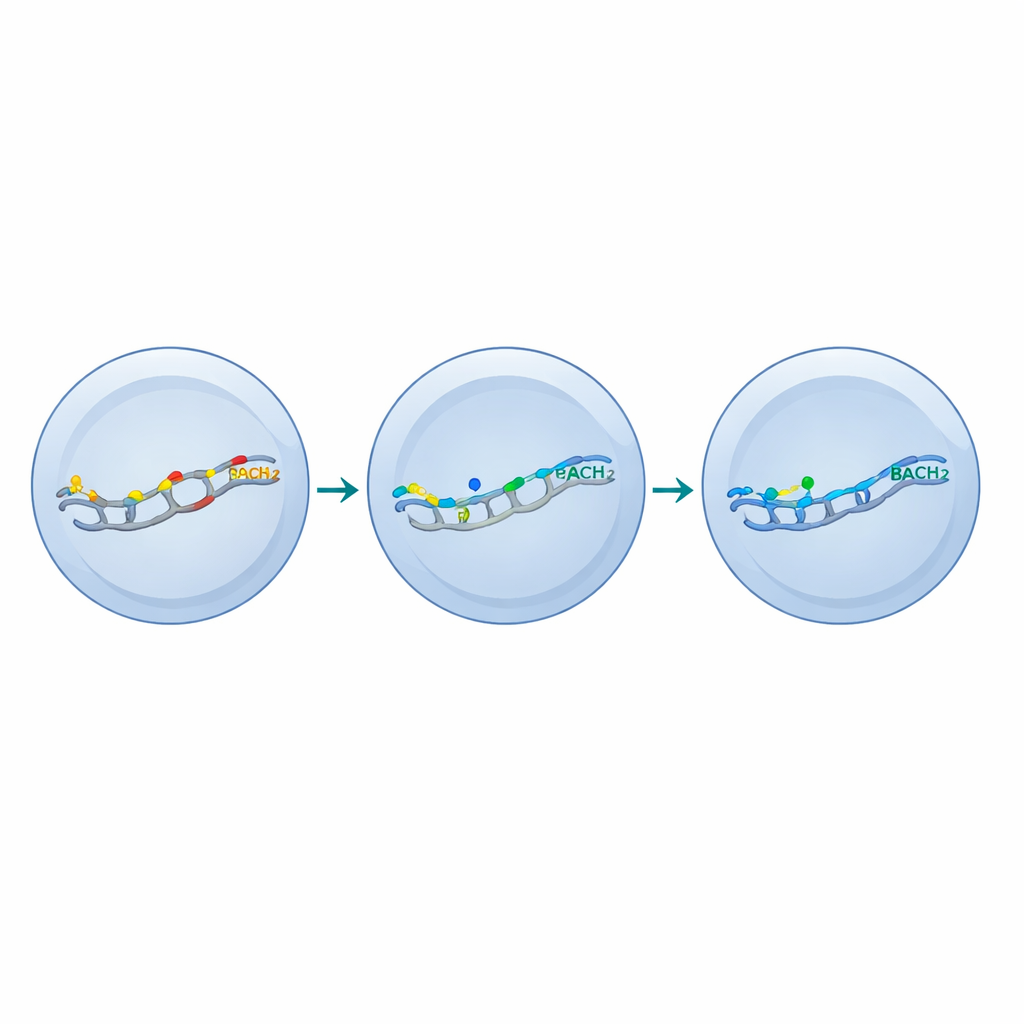
A Broader Strategy for Safer, Stronger Cell Therapies
To test whether this concept extends beyond BACH2, the authors applied the same dosing trick to another quiescence-promoting protein, FOXO1. Once again, high levels boosted stem-like markers but crippled effector functions, while low, carefully set doses preserved both durability and killing capacity and enhanced tumor control in mice. Together, these findings show that how much of a regulatory protein is expressed can completely change the behavior of engineered T cells. Rather than relying on permanently hyperactivated, potentially cancerous circuits, clinicians may be able to design safer therapies by fine-tuning natural “rest and repair” factors so that T cells stay in the fight longer without losing their punch.
Citation: Conti, A.G., Evans, A.C., von Linde, T. et al. Fine-tuning BACH2 dosage balances stemness and effector function to enhance antitumor T cell therapy. Nat Immunol 27, 436–451 (2026). https://doi.org/10.1038/s41590-025-02389-z
Keywords: T cell therapy, cancer immunotherapy, BACH2, cellular quiescence, gene dosing