Clear Sky Science · en
Allelic variation at a single locus distinguishes spring and winter faba beans
Why cold-hardy beans matter
Faba beans are protein-rich seeds that can replace imported soy and even some meat in our diets, while also enriching soils with nitrogen. Farmers can grow them either in spring or as winter crops that sprout in autumn, endure the cold, and are harvested earlier the next year. Winter faba beans often yield much more than spring types, but they run a serious risk: a harsh winter or late frost can kill the plants. This study explains, in genetic terms, what makes some faba bean plants withstand winter better than others and offers tools to breed hardier, more sustainable crops.
A closer look at a giant genome
To uncover the secrets of winter hardiness, the researchers first had to refine the faba bean’s enormous genetic blueprint, which is more than three times larger than the human genome. They combined several advanced methods—long-read DNA sequencing, high-resolution optical maps, and 3D chromosome contact data—to assemble the DNA into six chromosome-length pieces with far fewer gaps than before. They then overlaid this map with detailed information about genes, repeated DNA, and open chromatin regions, which mark where the cell’s machinery can easily access and read the genome. The result is a high-quality reference that makes it possible to pinpoint genetic changes linked to useful traits.
Spring beans, winter beans, and their hidden differences
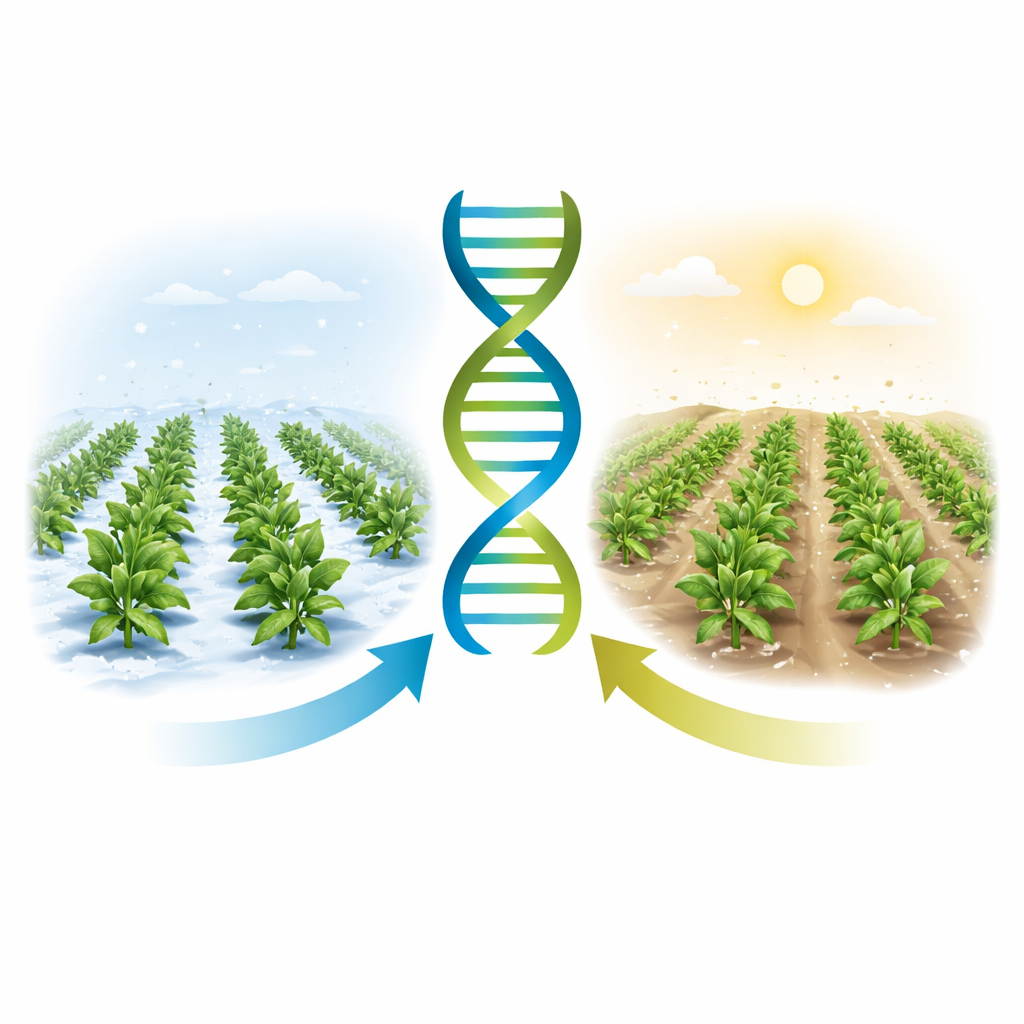
Using this reference, the team compared the DNA of more than 400 faba bean lines: modern spring breeding lines and winter types adapted to colder climates. Despite their different lifestyles, the two groups turned out to be surprisingly similar at most of their DNA, suggesting that only a limited number of regions might control whether a plant behaves as a spring or winter bean. The researchers scanned the genome for telltale patterns of selection—stretches where breeding has sharply reduced genetic diversity—and for statistical links between DNA variants and traits such as survival after winter or damage from late frosts. This approach highlighted a handful of candidate regions, with one site on chromosome 1 standing out as especially important.
One major site that decides life or death in the cold
The key region, which the authors call FROST RESISTANCE 1 (FR-1), behaves almost like an on–off switch. A single DNA variant near this site cleanly separates winter and spring types and explains most of the observed differences in how plants survive freezing conditions in the field. Within FR-1 lies a tight cluster of genes known as CBF/DREB1, which in many plants act as master switches for cold acclimation. When the team exposed a winter-hardy line and a cold-sensitive spring line to gradually falling temperatures, several CBF/DREB1 genes in the winter type switched on strongly at just-above-freezing temperatures, a stage when plants can prepare their tissues for coming frosts. The same genes responded weakly or differently in the spring type, pointing to this cluster as a central controller of winter hardiness.
Other helpers in the fight against frost
Winter survival, however, is not governed by a single dial. In winter-only populations, the researchers also tracked visual damage symptoms—loss of leaf firmness and color—during controlled freeze tests. Genome-wide searches in this set revealed additional regions on chromosomes 3 and 5 that influence how leaves withstand freezing and recover. One gene in the chromosome 5 region encodes an enzyme from the flavonoid pathway, which helps plants produce protective pigments such as anthocyanins; its activity rose at low temperatures. Another gene is related to flowering-time control, hinting that the timing of growth and flowering may also affect how well plants cope with winter. When these frost-linked DNA markers were built into prediction models for breeding, they substantially improved the ability to forecast how new winter lines would perform under freezing stress.
From DNA markers to tougher winter crops
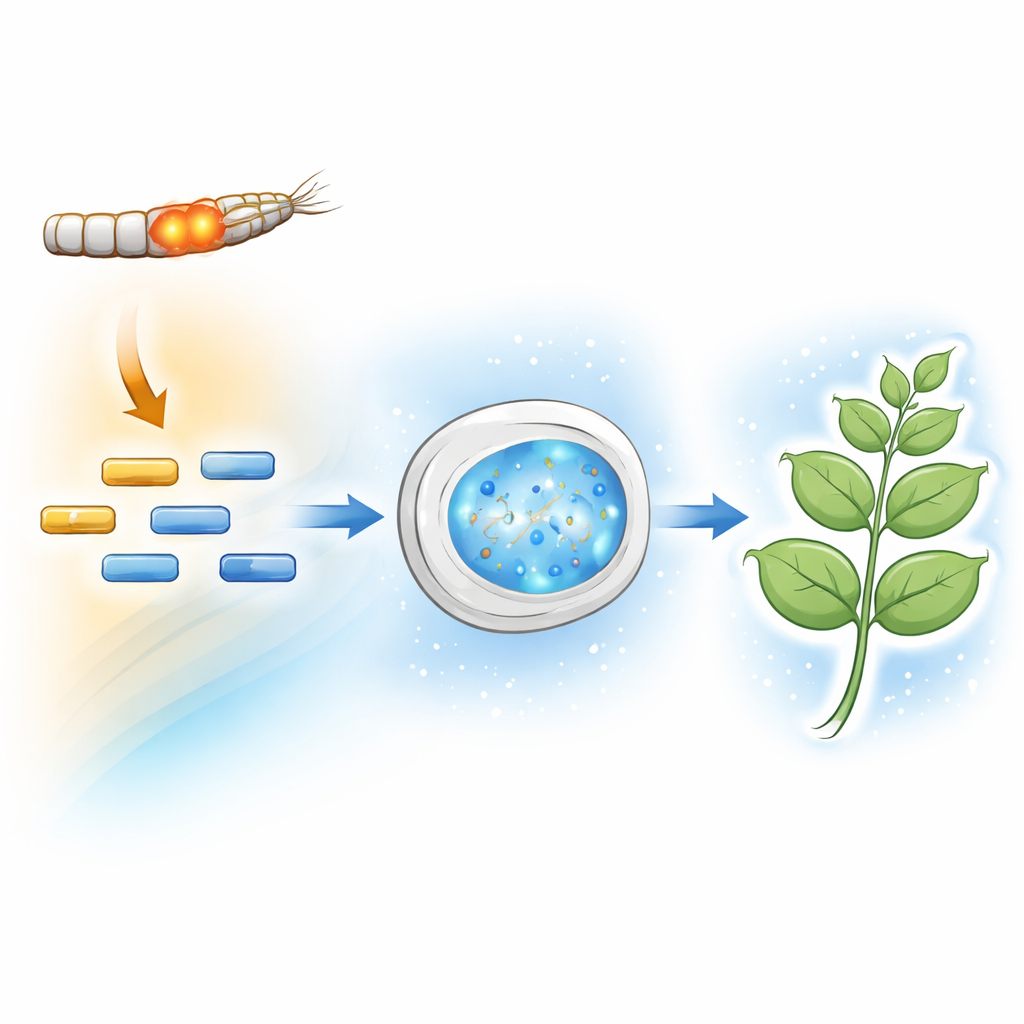
By tying a few key stretches of DNA to the ability of faba bean plants to survive winter and late frosts, this work turns a complex, poorly understood trait into something breeders can track rapidly with genetic tests. The improved genome map, together with precise markers at the FR-1 locus and other frost-related sites, will allow breeders to select seedlings carrying the “winter-hardy” versions long before exposing them to the elements. Because related cold-response genes occur in other legumes, the insights may also help improve crops such as pea. In practical terms, the study lays the groundwork for developing high-yielding winter faba beans that weather harsh seasons, support local protein production, and make farming systems more resilient and climate-friendly.
Citation: Zhang, H., Windhorst, A., Bornhofen, E. et al. Allelic variation at a single locus distinguishes spring and winter faba beans. Nat Genet 58, 655–663 (2026). https://doi.org/10.1038/s41588-026-02524-y
Keywords: faba bean, winter hardiness, frost tolerance, crop breeding, cold acclimation