Clear Sky Science · en
Quantifying climate loss and damage consistent with a social cost of carbon
Why the Climate Debt Matters to Everyone
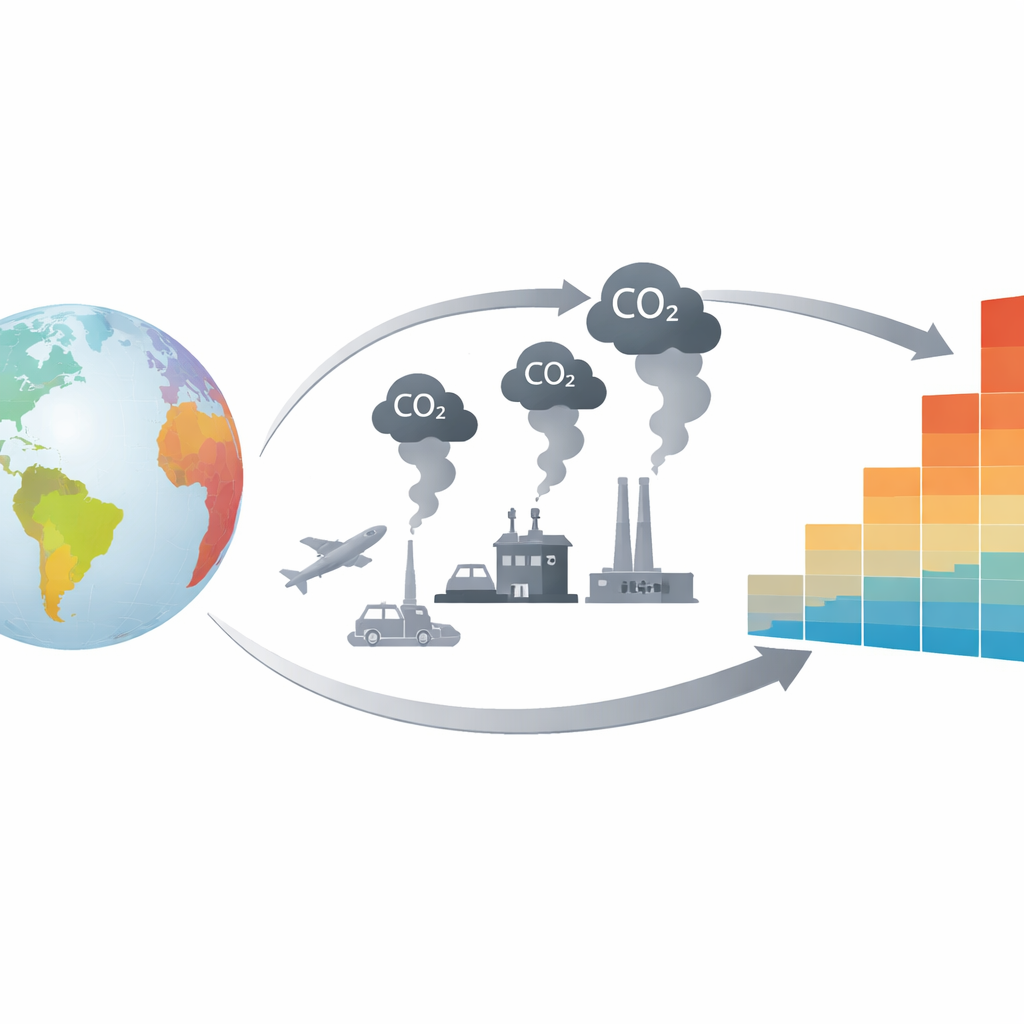
When we burn coal, oil or gas, the resulting carbon dioxide lingers in the air for decades or longer, quietly reshaping the world’s climate and economies. This study asks a simple but powerful question: if we treated each tonne of carbon pollution like a financial asset that creates harm over time, how big is the unpaid bill, and who owes what to whom? The answers show that the economic damage from past emissions is far from over, that much more harm is still to come, and that these impacts fall unevenly across countries and people.
Turning Pollution into an Unpaid Bill
The authors recast carbon emissions as if they were a kind of long-lived asset. Instead of delivering profits, this asset mostly delivers economic losses as higher temperatures slow growth, damage crops, strain workers and disrupt infrastructure. Every burst of emissions today sets off a stream of yearly harms around the globe. The team defines three pieces of this climate bill: damages from past emissions that have already occurred, further future damages that those same past emissions will still cause, and future damages from emissions yet to come. This framing links the emerging political idea of “loss and damage” to an established economic concept known as the social cost of carbon, which tallies how much harm a single extra tonne of carbon dioxide causes.
Adding Up the Global Economic Harm
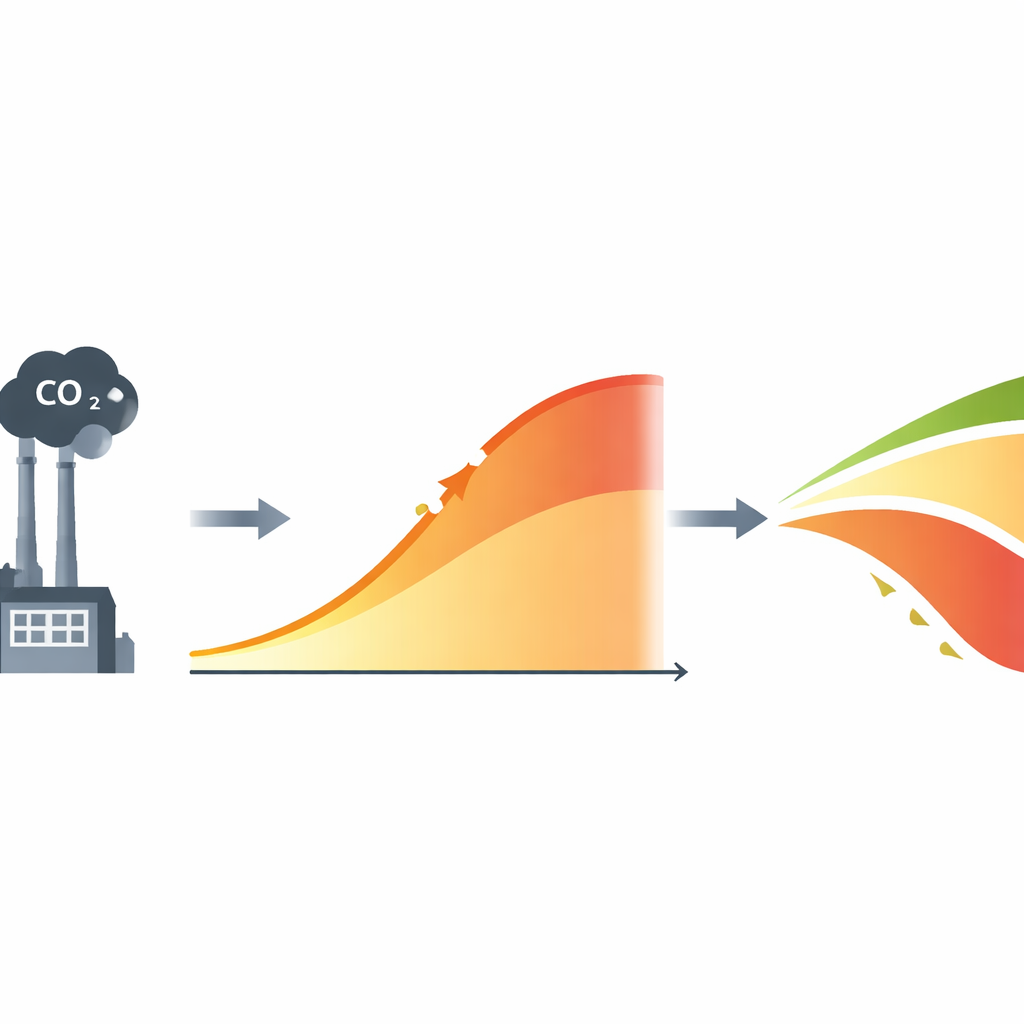
To put numbers on this bill, the researchers combine several lines of evidence. Simple climate models estimate how much additional warming specific emissions cause. Those global temperature changes are then translated into local temperature shifts for each country using a large set of climate simulations. Finally, an updated statistical model relates changes in a country’s average temperature to its long-run economic growth, drawing on six decades of global data. This approach captures how warming nudges national income paths up or down over many years, rather than just causing short-lived shocks. The resulting damage estimates are uncertain but robust across many tests and modeling choices.
Past Emissions, Future Damages
The results show that the future economic harm from past emissions is far larger than the damage already realized. For a tonne of carbon dioxide released in 1990, the study estimates about 180 US dollars of discounted damages by 2020, but roughly ten times more—about 1,840 dollars—between 2021 and 2100 under a moderate discount rate. In other words, most of the cost of yesterday’s pollution still lies ahead. The pattern is stark at every scale. A single extra long-haul flight taken once a year for a decade generates only a few hundred dollars of global losses by 2020 but around 25,000 dollars of additional damages by 2100. Emissions from major fossil fuel companies since the late 1980s have already produced trillions of dollars in harm and are projected to cause many times more in the future.
Who Is Hurt, and Who Is Responsible
The harm is unevenly spread. Cooler, high-latitude countries may see modest gains or limited losses, but warmer mid-latitude and tropical nations experience large, compounding economic setbacks. Low-income countries often face the biggest percentage hits to their economies, even if the largest absolute dollar damages occur in major economic powers simply because their economies are larger. Using detailed emissions records, the authors trace how the carbon output of one country translates into losses in others. For example, emissions from the United States since 1990 have caused trillions of dollars in damage worldwide, including hundreds of billions in countries such as India and Brazil. Yet those same large economies have also suffered heavy losses from the rest of the world’s emissions, underscoring the deeply interconnected nature of the climate system.
Paying Back, Cleaning Up, or Adapting
The study also explores what it would mean to “settle” this climate bill. Direct financial transfers are one option for compensating communities for damage already done. Another idea is to use carbon removal technologies to pull past emissions back out of the air. But the longer society waits to remove a tonne of carbon, the less future damage can be avoided, because warming has already slowed economic growth and created a lasting gap. Even aggressive removal decades after the fact erases only part of the harm. The authors conclude that their framework can help quantify who has contributed what to climate damages, but it cannot by itself determine who should pay. Those decisions ultimately rest on moral and legal choices. What the numbers make clear is that the costs of carbon pollution are huge, ongoing and disproportionately borne by those least responsible, raising urgent questions about fairness and responsibility in a warming world.
Citation: Burke, M., Zahid, M., Diffenbaugh, N.S. et al. Quantifying climate loss and damage consistent with a social cost of carbon. Nature 651, 959–966 (2026). https://doi.org/10.1038/s41586-026-10272-6
Keywords: climate damages, social cost of carbon, loss and damage, carbon responsibility, climate justice