Clear Sky Science · en
Dogs were widely distributed across western Eurasia during the Palaeolithic
How Long Have Dogs Walked Beside Us?
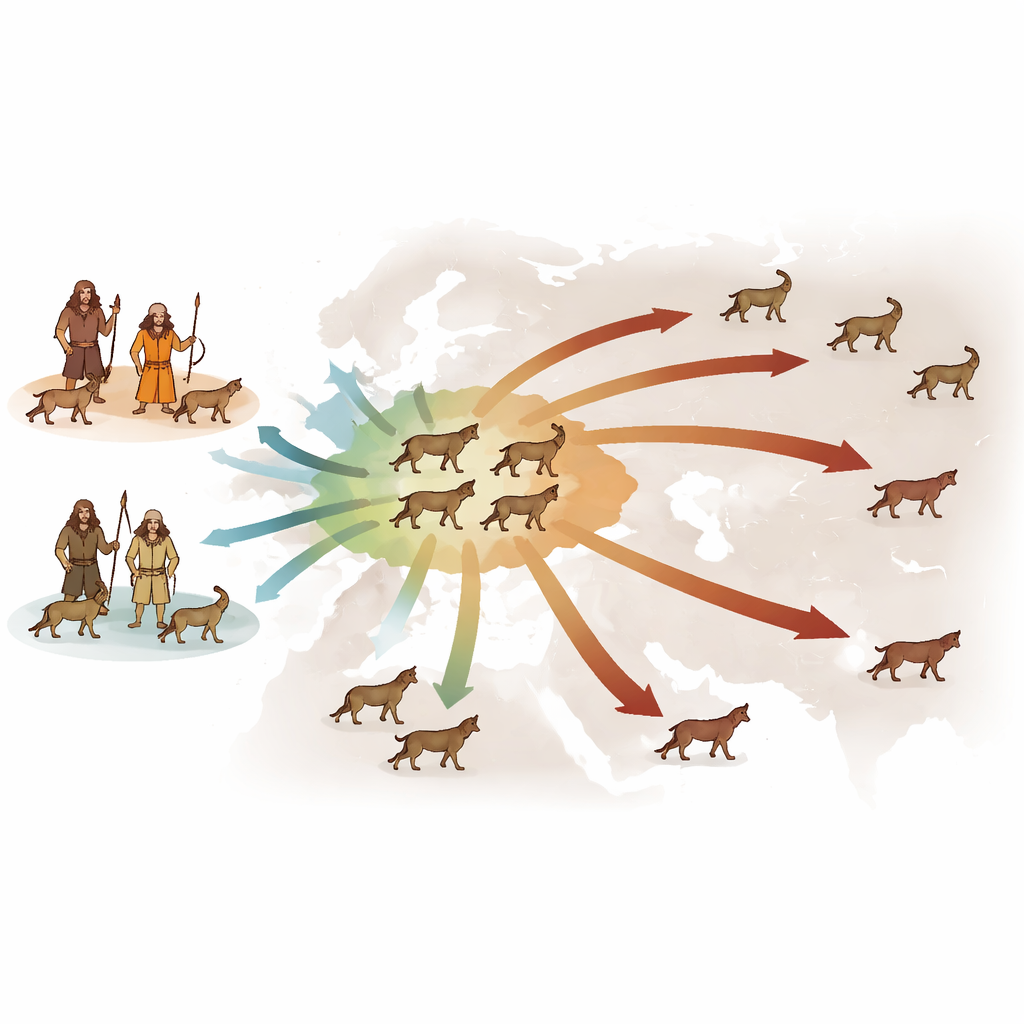
Anyone who has ever looked into a dog’s eyes and wondered, “How far back does this friendship go?” will find this study compelling. For years, scientists have debated when and where wolves first became dogs, and how quickly they spread with people across the globe. This paper digs into ancient bones from caves across Europe and the Near East, reading the DNA they contain to show that dogs were already widespread companions of hunters in western Eurasia more than 14,000 years ago—much earlier, and in a more connected way, than the clearest genetic evidence had previously shown.
Ancient Bones, Hidden Stories
The researchers focused on canid remains—dogs and wolves—from key archaeological sites in modern Türkiye, the UK, Serbia, Italy and Iran. Earlier work had suggested dog-like animals in some of these places based on bone shape and burial practices, but that can be misleading, because early dogs and wolves look very similar. Here, the team extracted both nuclear DNA (the main genetic blueprint) and mitochondrial DNA (a smaller genetic “battery” passed down the maternal line) from these ancient bones. They combined this with precise radiocarbon dating and chemical analysis of bone collagen to reconstruct when these animals lived, how they were related, and even what they were eating.
Dogs Spread Far, While People Stayed Distinct
The genomes revealed that several Late Ice Age canids from Pınarbaşı in central Türkiye and Gough’s Cave in Britain were true dogs, not wolves. These dogs, dating to about 15,800 and 14,300 years ago, turned out to be strikingly similar to one another genetically, even though they lived thousands of kilometers apart and were associated with different human cultures. When the team placed these and other suspected early dogs onto a family tree built from mitochondrial DNA, they fell into a dog-only branch alongside specimens from Germany, Switzerland and Italy. Together, this pattern shows that a relatively homogeneous dog population was already spread across western Eurasia during the Late Upper Palaeolithic, moving between human groups that themselves remained genetically and culturally distinct.
Shared Lives and Shared Meals
The relationship between people and dogs in this period was not just practical, but also social and symbolic. At Gough’s Cave, dog remains show the same unusual postmortem treatment as human bones, including deliberate perforations and modifications seen in ritual practices of the time. At Pınarbaşı, neonatal and juvenile dogs were buried in the same areas as human burials. To see whether dogs also shared people’s food, the team measured detailed carbon and nitrogen isotope signatures in bone amino acids. At Gough’s Cave, humans, dogs and even a local wolf occupied similar positions in the food web, implying comparable, mixed diets. At Pınarbaşı, dog offspring (and by extension their mothers) show evidence of an aquatic component to their diet, consistent with humans provisioning them with freshwater fish.
Genetic Journeys and Lasting Legacies
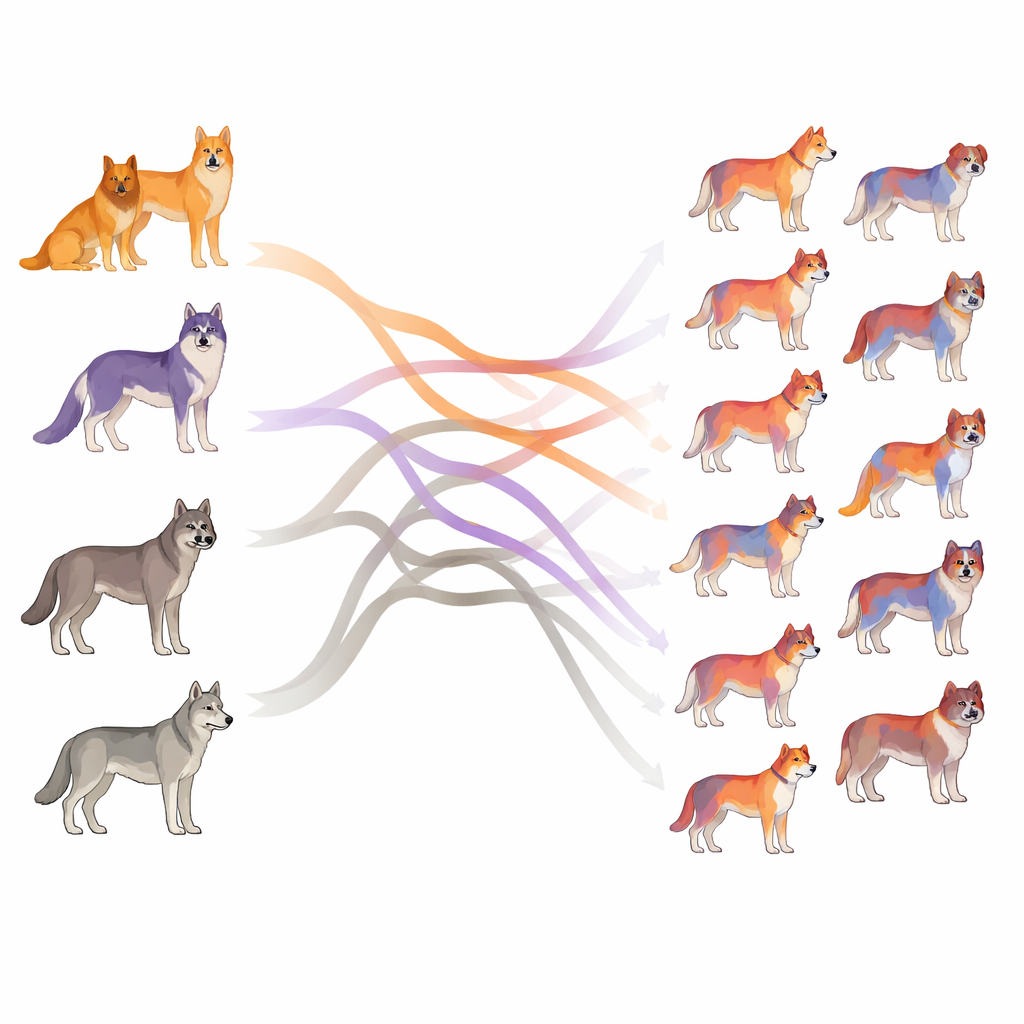
By comparing ancient dog genomes from Europe and Siberia, the authors show that these Palaeolithic dogs belonged to the “western” branch of dog ancestry, which had already split from an “eastern” branch by at least 15,800 years ago. Later, during the Mesolithic, dogs linked to eastern hunter-gatherer groups carried significant eastern dog ancestry into Europe, where it mixed with the older western stock. At the same time, some dogs in the Near East interbred to a limited degree with local wolves, but such wolf input into dog genomes remained surprisingly rare overall. Using models of ancestry, the study finds that both eastern and western dog components were firmly established in European dogs by about 10,900 years ago and have persisted through the Neolithic, Bronze Age, Iron Age, Medieval times and into modern breeds.
What This Means for Our Bond With Dogs
For a general reader, the key message is that the partnership between humans and dogs is both ancient and dynamic. By the end of the Ice Age, a population of dogs—already genetically distinct from wolves—had spread across a wide swath of Europe and Anatolia, moving between hunter groups that did not always mix with one another. Those early dogs lived, ate and were buried alongside people, and their genetic fingerprints still echo in today’s pets. The study shows that our relationship with dogs is not a recent invention of herders or farmers, but a deep-time alliance that began among Ice Age hunters and has shaped both species ever since.
Citation: Marsh, W.A., Scarsbrook, L., Yüncü, E. et al. Dogs were widely distributed across western Eurasia during the Palaeolithic. Nature 651, 995–1003 (2026). https://doi.org/10.1038/s41586-026-10170-x
Keywords: dog domestication, ancient DNA, hunter-gatherers, wolves, Palaeolithic Europe